

The Q&A segment of a presentation can feel like the most unpredictable moment on stage. Yet it is also one of the most powerful opportunities to build credibility, deepen engagement, and reinforce your core message. Research suggests that presentations with active Q&A sessions are rated up to 23% more engaging than one-way talks with no interaction. Whether you present quarterly results, pitch to investors, or lead a team meeting, knowing how to field questions with composure and clarity separates good speakers from great ones. Below you will find proven techniques used in presentation skills training programs to help you master every Q&A session.
Why the Q&A Matters More Than You Think
A Q&A session is the portion of a presentation where audience members ask questions about your content and you demonstrate mastery of your subject. When people ask questions, it means they have been listening and want to know more. Great discussions evolve from Q&As, and the questions your audience asks can provide valuable feedback and insight for your business.
Many speakers treat Q&A as an afterthought, but audiences remember the last thing they hear. If you fumble through questions after delivering a polished talk, that shaky finish is what sticks. Learning to handle audience questions effectively is therefore a key part of any successful presentation.
Prepare for Questions Before You Present
Preparation is the single biggest factor in Q&A confidence. Before you step on stage, list the tough questions someone might ask, especially the ones you hope nobody brings up. Work out answers to these questions while building your presentation so you can identify where you need deeper research.
Anticipate and Categorize
Divide anticipated questions into three groups: those you are happy to answer, those you cannot answer yet, and those you would rather not answer publicly. Knowing which category each question falls into lets you plan a response strategy in advance rather than improvising under pressure.
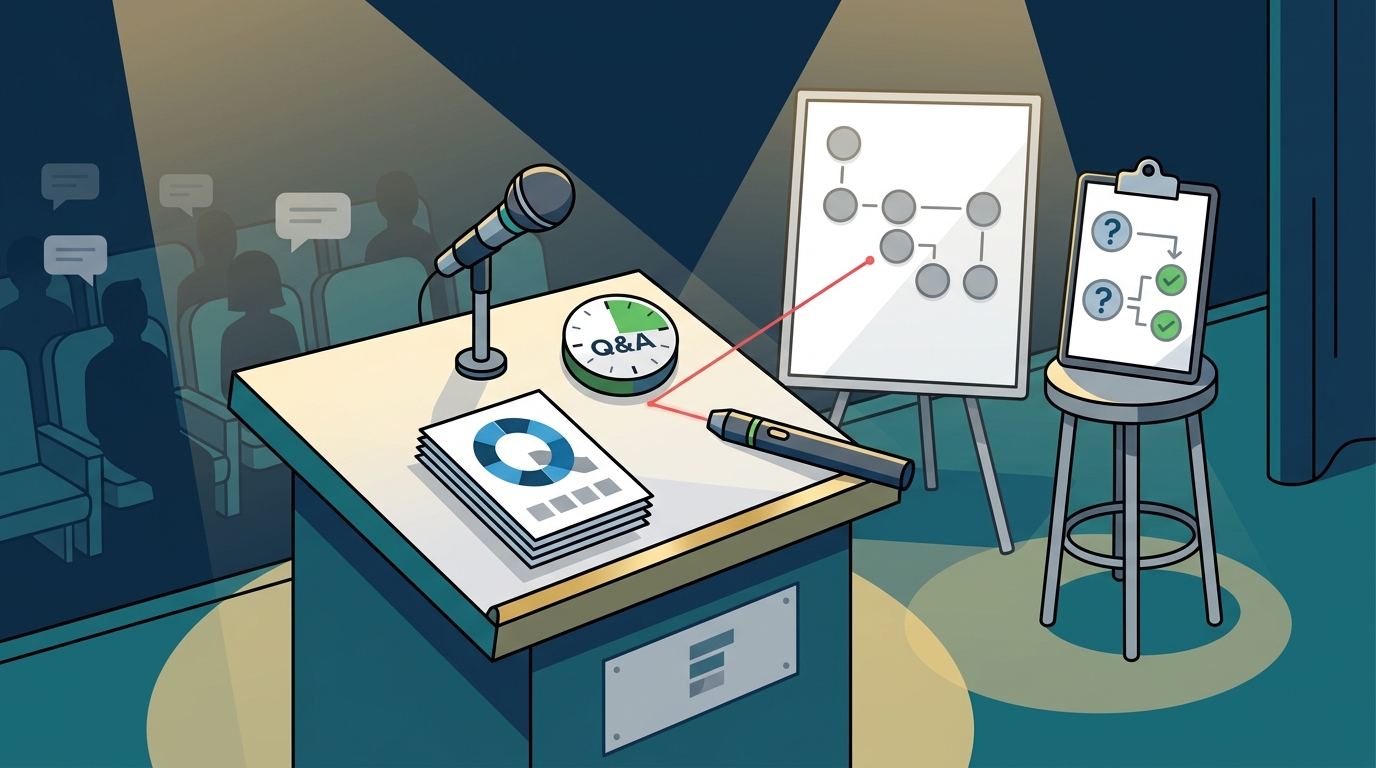
Build Backup Slides
Create supplementary slides with data or visuals that address likely questions. If a question comes up that matches a backup slide, you can navigate directly to it for a more compelling answer. This technique is especially useful for data-heavy or technical presentations.
Use Active Listening to Build Trust
Active listening is a communication skill in which you fully concentrate on, understand, and respond to the speaker before formulating your reply. One of the most important things covered in audience engagement training is that you cannot communicate effectively without listening first.
When someone asks a question, make eye contact, nod to show understanding, and let them finish before you respond. This signals genuine interest and helps build trust with the entire room.
Repeat, Reframe, and Respond
Repeating a question serves two main functions: it allows you to clarify what the questioner has asked, and it ensures the rest of the audience has heard the question. Restate the question in your own words and confirm with the asker: "Are you asking...?" or "Did you mean...?"
| Step | Action | Why It Works |
|---|---|---|
| 1. Repeat | Restate the question aloud for the room | Ensures everyone hears; buys you thinking time |
| 2. Reframe | Put it in your own words and confirm understanding | Shows active listening; corrects misinterpretation |
| 3. Respond | Give a concise 2-3 sentence answer | Keeps momentum; respects audience time |
| 4. Redirect | Tie the answer back to your core message | Reinforces your presentation thesis |
Aim for 2-3 sentences per answer. If a longer explanation is needed, offer a brief summary and invite the questioner to connect with you after the session for more detail.
Handle Difficult or Unexpected Questions
Even the most prepared presenter will occasionally face a question they did not anticipate. The key is composure. If you are asked a question you cannot answer, thank the audience member, admit you did not anticipate it, and ask if you can follow up after the presentation.
When You Don't Know the Answer
It is perfectly acceptable to say, "That is a great question, and I want to give you an accurate answer. Let me follow up with you after today's session." Always collect the person's name and contact information, and make sure you actually follow up. Having a notepad ready for questions you cannot address on the spot shows professionalism.
When a Question Feels Like an Attack
If an audience member criticizes your content, do not attack back. Separate the valid criticism from the personal tone and respond to the substance. Controlled breathing and a deliberate pause help you maintain composure and deliver a clear, confident reply. Our advanced presentation skill training covers these high-pressure scenarios in depth.
Stay in Control of the Room
Room management is the practice of guiding the pace, order, and tone of audience interaction during a presentation. You set the ground rules. Announce how much time you have for questions and how you will take them: "I will take three questions. I will start with you, then you, then you."
Manage Time and Energy
If time is running short, say: "I have time for one more question, and then I will be available afterward for anyone who wants to continue the conversation." This keeps the session productive without cutting anyone off abruptly. Polling your audience or asking a thought-provoking question yourself can also keep energy levels high throughout.
Address the Whole Room
When answering, direct your response to the entire audience, not just the person who asked. This inclusive approach encourages more people to participate and prevents the session from becoming a one-on-one dialogue.
Close Strong After Q&A
Never let your presentation trail off after the last question. After you answer the final question, transition smoothly into a strong closing statement: "Those were excellent questions. Let me leave you with one final thought..." This technique ties your content together and reasserts your authority.
Ending with a clear call to action or a memorable summary leaves the audience with confidence in your message. Professionals who refine their presentation skills consistently report that a strong post-Q&A close dramatically improves audience recall.
Key Takeaways
- Prepare for Q&A with the same rigor you give the presentation itself.
- Anticipate tough questions and categorize them so you have a response plan.
- Practice active listening: make eye contact, let the questioner finish, and acknowledge their input.
- Repeat and reframe every question before answering to ensure clarity for the whole room.
- Keep answers concise at 2-3 sentences; offer follow-ups for complex topics.
- Stay composed when facing hostile or unexpected questions; honesty builds credibility.
- Always close with a strong final statement after Q&A to control the lasting impression.
Frequently Asked Questions
What is the best way to start a Q&A session?
Ask "What questions do you have?" instead of "Are there any questions?" The first phrasing assumes engagement and primes the room for interaction. Step forward, make eye contact, and smile to signal openness.
How long should my answers be during Q&A?
Aim for 2-3 sentences per response. If you need to go deeper, summarize briefly and offer to follow up with the questioner after the presentation.
What should I do if nobody asks a question?
Wait about 30 seconds, then prompt discussion by sharing something that surprised you during your research or by referencing a question you commonly receive on the topic.
How do I handle a question I cannot answer?
Thank the person, acknowledge you did not anticipate the question, and commit to following up. Collect their contact information and deliver on that promise.
Should I allow questions during the presentation or only at the end?
It depends on your format. For shorter talks, holding questions until the end preserves flow. For longer sessions or workshops, periodic check-ins keep engagement high.
How do I deal with a hostile or confrontational question?
Stay calm. Separate any valid point from the aggressive tone, pause before responding, and address the substance without matching the hostility. Composure signals authority.
Can I use slides during the Q&A?
Yes. Prepare backup slides with supporting data. If a question matches a prepared slide, navigate to it for a visual, evidence-backed answer that reinforces your credibility.
How do I regain control if Q&A goes off track?
Politely redirect by saying, "That is an important topic that is outside the scope of today's session. I would love to discuss it with you afterward." Then invite the next question to reset the room's focus.
Take Your Presentation Skills to the Next Level
Mastering Q&A is just one piece of becoming a confident, compelling communicator. Effective Presentations offers hands-on presentation skills workshops where you practice fielding real questions, receive expert coaching, and build the composure that only comes from doing. Explore upcoming training dates and invest in the skill that accelerates every other part of your career.