

Key Elements of a Persuasive Business Presentation for Influencing Stakeholders
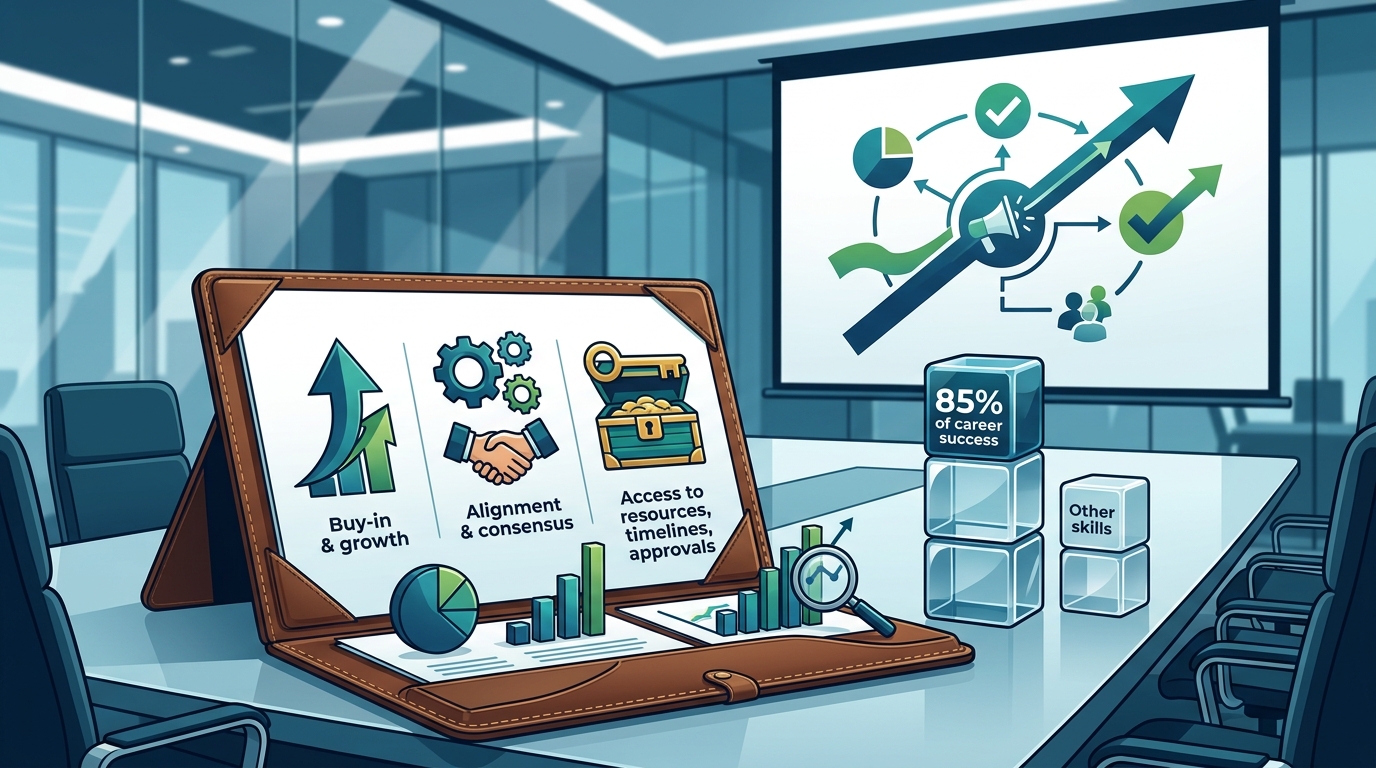
Winning stakeholder buy-in rarely comes down to having the best data. It comes down to how you present that data. A persuasive business presentation is a structured communication designed to align expectations, drive decisions, and secure support from people who control resources, timelines, and approvals. Research from Harvard University, the Carnegie Foundation, and Stanford Research Center found that 85% of career success comes from well-developed soft skills, with communication at the top of the list. Below, you will find the key elements that separate forgettable slide decks from presentations that move stakeholders to action.
1. Know Your Stakeholder Audience
Audience analysis is the process of identifying who your stakeholders are, what they care about, and what will motivate them to act. Without it, even the most polished presentation falls flat.
Segment Your Stakeholders
Not all stakeholders carry the same weight. Decision-makers have authority to approve or reject your proposal. Influencers shape the conversation without making the final call. Skeptics may resist due to conflicting priorities. Tailor your content to each group by asking: What do they care about? What objections might they have?
Lead With Their Priorities
Audience-centered communication ensures your presentation resonates by addressing listener interests and concerns rather than simply broadcasting your own agenda. When stakeholders see that your message aligns with their priorities, they are far more likely to stay engaged. If you want to sharpen this skill, explore messaging and structure training designed to help professionals tailor messages to any audience.
2. Define a Crystal-Clear Objective
A presentation objective is a single, specific outcome you want your audience to walk away with. Too many presentations try to do too many things at once, mixing updates with decision points and overwhelming stakeholders with unnecessary details.
Before you build a single slide, write your core objective in one sentence. Examples include: "Secure leadership approval for Q3 budget allocation" or "Align the executive team on a revised product roadmap." Every piece of content in your presentation should serve this objective. If a slide does not move you closer to that outcome, cut it.
3. Structure Your Message for Impact
Content organization is the backbone of a persuasive presentation. A clear introduction sets the stage for credibility, a structured body highlights key points, and an impactful conclusion delivers a memorable call to action.
The Proven Framework
High-impact stakeholder presentations follow a clear structure where each slide has a specific role. Consider this flow:
| Slide Section | Purpose | Common Mistake |
|---|---|---|
| Opening Hook | Capture attention and frame the problem | Starting with "Today I'll be talking about..." |
| Objective Statement | Define what success looks like | Vague goals like "increase sales" |
| Evidence / Data | Support claims with specific proof points | Data dump with no narrative |
| Key Decision Needed | Ask clearly for what you need | Leaving the ask implied or absent |
| Next Steps | Define who does what and by when | Ending without a clear action plan |
If organizing complex ideas into a persuasive flow feels challenging, a presentation skills workshop can give you reusable frameworks for openings, transitions, and closes.
4. Use Storytelling to Create Emotional Connection
Storytelling in business presentations is the practice of using narrative to anchor your message in a relatable human experience. Data alone rarely persuades. Context does. When a speaker's narrative echoes the audience's own challenges, it transforms a one-way transmission into an engaging dialogue.
The most-watched TED Talks share one common element: the speakers tell stories. In stakeholder settings, you might frame a customer pain point as a narrative arc or describe the journey from problem discovery to proposed solution. This approach makes your content not only heard but felt. Learn how to go from data dumper to captivating storyteller through Effective Presentations' Messaging Skills Workshop.
5. Design Visuals That Reinforce, Not Distract
Most professionals were never taught how to build an effective business slide deck. The result is presentations that become overloaded, hard to follow, and too dependent on the screen. When a deck looks busy, the audience loses confidence fast.
Rules for Clean Slide Design
Follow one idea per slide. Keep bullet points short and only include what is essential. Replace text with diagrams, charts, and infographics where possible. A single well-designed graph is more persuasive than a paragraph of explanation. Consistent formatting, including professional color schemes and font choices, builds credibility before you say a word.
For teams that need to elevate their visual communication, the Winning Slide Decks Masterclass offers practical techniques professionals apply the same day.
6. Master Confident Delivery
Delivery is how you show up, how you sound, and how you connect. Your voice is an instrument, and most people use about 10% of its capabilities. Dynamic variation in volume, pace, and tone serves as a persuasive tool. Strategic pausing creates tension and emphasis through silence.
Non-Verbal Communication
Body language, eye contact, and facial expressions play a pivotal role in making your delivery engaging. Purposeful movement, intentional gestures, and power positioning all communicate authority before you utter a word. Repeatedly rehearsing ensures familiarity with content and builds the confidence essential for a successful delivery.
Professionals looking to build these skills can explore virtual presentation training or find an in-person workshop in cities across the United States.
7. Drive Engagement and Handle Objections
The best presentations are a two-way street. You are not only communicating information but also seeking agreement, gathering feedback, and addressing concerns in real time. Invite questions, brainstorm likely objections beforehand, and prepare data-backed responses.
Close With a Clear Ask
Many presentations fail because they never clearly ask for a decision. As you wrap up, spell out your expectations so everyone understands the next steps: who is responsible, what the deadlines are, and what specific action you need from the room. A presentation that ends without a concrete ask becomes informational instead of actionable.
If handling tough Q&A sessions or high-stakes conversations is a challenge, consider the Ultimate Communicator Coaching Program, which includes live coaching on objection handling and executive presence.
Key Takeaways
- Segment your stakeholder audience by role and influence, then tailor your message to each group.
- Define a single, clear objective before building any slides.
- Structure content using a proven framework: hook, objective, evidence, decision ask, and next steps.
- Use storytelling to create emotional resonance and make data memorable.
- Design clean, minimal visuals that reinforce your message instead of overwhelming your audience.
- Rehearse delivery to build confidence and master vocal variety, pacing, and body language.
- Always close with a specific, actionable ask so your presentation drives decisions, not just discussion.
Frequently Asked Questions
What is a persuasive business presentation?
A persuasive business presentation is a structured communication designed to influence stakeholder decisions by combining clear messaging, supporting evidence, emotional connection, and a specific call to action.
How do I identify what stakeholders care about?
Conduct a stakeholder analysis before your presentation. Segment your audience into decision-makers, influencers, skeptics, and supporters. For each group, identify their priorities, potential objections, and the data or arguments most likely to convince them.
What is the most important slide in a stakeholder presentation?
The "key decision needed" slide is often the most critical. If you do not clearly ask for a decision, your presentation becomes an information session rather than a catalyst for action.
How long should a stakeholder presentation be?
Keep it as short as possible while covering essentials. Senior stakeholders are time-poor. Lead with a summary of your key messages in the first few minutes, then support with evidence. Aim for 15 to 20 minutes with time reserved for Q&A.
How can storytelling improve a business presentation?
Storytelling anchors abstract data in relatable human experiences. It transforms a one-way data dump into an engaging dialogue, helping stakeholders remember your message and feel motivated to act on it.
What are the biggest mistakes in stakeholder presentations?
Common mistakes include unclear objectives, overloaded slides, failing to tailor the message to the audience, skipping rehearsal, and ending without a specific ask or defined next steps.
How do I handle tough questions from stakeholders?
Prepare by brainstorming likely objections in advance. Use data to back your responses, stay composed, and treat every question as an opportunity to reinforce your core message. Practice in a coaching environment to build confidence under pressure.
Can presentation skills training really make a difference?
Yes. Effective Presentations has spent more than 20 years helping professionals communicate with more clarity and confidence, earning over 1,200 five-star Google reviews. Structured, hands-on training with live coaching produces measurable improvement in both delivery and messaging.
Ready to Deliver Presentations That Move Stakeholders to Action?
Strong communication is not a nice-to-have. It is the skill that separates good professionals from great ones. If you are ready to build persuasive presentation skills that drive real business outcomes, explore Effective Presentations' training workshops and find the format that fits your goals, whether that is an in-person workshop, live virtual session, or private coaching.