

Key Elements of a Persuasive Business Presentation for Influencing Stakeholders
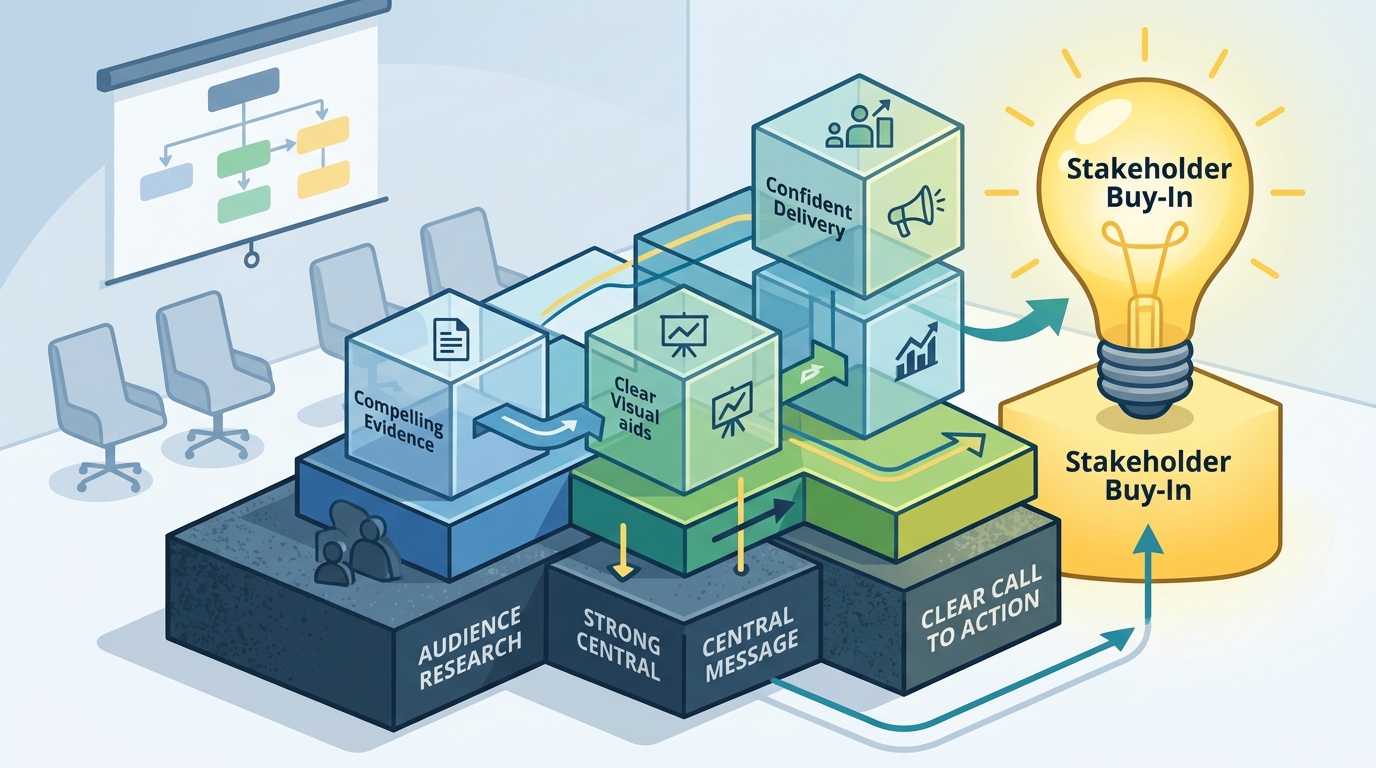
Winning stakeholder buy-in is rarely about having the best data. It is about presenting that data in a way that resonates, builds trust, and moves people to act. A persuasive business presentation is a structured communication designed to align decision-makers around a clear message and drive specific outcomes. Whether you are pitching a new initiative, requesting budget approval, or sharing a quarterly update, the elements below will help you build presentations that influence stakeholders and produce real results. This guide breaks down the essential components every professional needs to master.
1. Start With Audience Analysis
Audience-centered communication is the practice of tailoring your message to the specific interests, concerns, and decision-making authority of your listeners. Before you write a single slide, you need to know who will be in the room and what they care about.
Segment Your Stakeholders
Not all stakeholders carry equal weight. Decision-makers have the authority to approve or reject your proposal. Influencers shape the conversation without making the final call. Skeptics may resist due to competing priorities, and supporters can advocate on your behalf. Tailoring your message to each group dramatically increases your chances of success.
Address Their Priorities
Executives want high-level strategy and ROI. Technical stakeholders want feasibility and detail. When your message aligns with each audience segment's priorities, listeners are far more likely to stay engaged and respond positively. This means doing your homework before the presentation, not during it.
2. Define a Crystal-Clear Objective
A presentation objective is a single, focused statement that describes the outcome you want your audience to reach by the end of your talk. Too many presentations fail because they try to do everything at once, mixing updates with decision points and losing focus along the way.
Write down your core objective in one sentence before you start building. For example: "Secure leadership approval for Q3 budget reallocation" or "Align the team on a revised product roadmap." Every slide, story, and data point in your presentation should serve this one objective. If it does not, cut it.
3. Build a Strong Message Structure
Structure is the backbone of persuasion. A clear introduction sets the stage for credibility, a well-organized body highlights your key points, and an impactful conclusion delivers a memorable close. Without structure, even the strongest ideas get lost.
The Three-Part Framework
| Section | Purpose | Stakeholder Impact |
|---|---|---|
| Opening Hook | Frame the problem and capture attention in the first 15 seconds | Creates urgency and relevance |
| Evidence Body | Present data, stories, and recommendations in a logical sequence | Builds credibility and trust |
| Decisive Close | Summarize key points and state the specific action you need | Drives decisions and next steps |
Our presentation skills training program teaches professionals to organize content using proven frameworks so that complex ideas land clearly with any audience. If message clarity is your biggest gap, a messaging and structure workshop can help you build presentations that flow from the inside out.
4. Use Storytelling to Create Emotional Connection
Data informs, but stories persuade. According to research cited in Inc. Magazine, storytelling plays a critical role in effective business presentations, and presenters who incorporate narrative elements are significantly more persuasive. Stories transform a one-way data dump into a shared experience that stakeholders remember long after the meeting ends.
The most effective approach is to connect your narrative to your audience's real challenges. When the speaker's story echoes the stakeholders' own experiences, the dynamic shifts from passive listening to active engagement. Pair your stories with concrete data, and you create a presentation that appeals to both logic and emotion.
5. Design Visuals That Clarify, Not Clutter
Slide design is a persuasion tool, not a documentation exercise. Most professionals were never taught how to build an effective business slide deck, which is why presentations often become overloaded, hard to follow, and too dependent on the screen.
Best Practices for Stakeholder-Ready Slides
- One idea per slide. If you have more than one takeaway, split it.
- Minimal text. Bullet points should be short. Anything more belongs in your spoken delivery.
- Strategic visuals. A single well-designed chart is more persuasive than a paragraph of explanation.
- Consistent formatting. A visually polished deck builds credibility at a glance.
When a deck looks busy, the audience loses confidence fast. Cleaner visuals and more intentional slide choices strengthen authority and make your message easier to absorb. Explore the Winning Slide Decks Masterclass for practical techniques you can apply the same day.
6. Deliver With Confidence and Presence
Executive presence is the combination of vocal authority, body language, and composure that signals credibility before you even finish your first sentence. Delivery is where preparation meets performance, and it can make or break your influence with stakeholders.
Vocal Delivery
Vary your tone to emphasize key points. Use strategic pauses to let important information land. Eliminate filler words like "um" and "so" that undermine authority. These are skills that can be developed through deliberate advanced presentation skill training.
Non-Verbal Communication
Your body language communicates volumes before you say a word. Maintain purposeful eye contact with decision-makers, use gestures that reinforce your message, and position yourself with confidence. Non-verbal cues build trust and make your delivery more engaging.
7. Close With a Decisive Call to Action
A call to action (CTA) is the specific request or decision you need from your audience at the conclusion of your presentation. Many stakeholder presentations fail not because of bad content, but because they never clearly ask for a decision. The presentation becomes informational instead of actionable.
As you wrap up, make your expectations crystal clear. State exactly what you need: approval, feedback, resources, or alignment. Define who is responsible for what and by when. A strong close transforms your presentation from a status update into a catalyst for forward momentum.
Key Takeaways
- Always start by analyzing your audience. Segment stakeholders by role, influence, and concerns.
- Define one clear objective before building a single slide.
- Structure your content with a hook, evidence body, and decisive close.
- Use storytelling to create emotional resonance alongside hard data.
- Design clean, minimal slides that support your spoken message rather than replace it.
- Develop vocal variety, body language, and executive presence through deliberate practice.
- End every presentation with a specific, unmistakable call to action.
Frequently Asked Questions
What makes a business presentation persuasive?
A persuasive business presentation combines a clear objective, strong message structure, compelling storytelling, clean visuals, confident delivery, and a direct call to action. Each element works together to build credibility and move stakeholders toward a decision.
How do I tailor a presentation for different stakeholders?
Segment your audience into decision-makers, influencers, skeptics, and supporters. Research what each group cares about, anticipate their objections, and adjust your emphasis accordingly. The best stakeholder presentations feel crafted specifically for the people in the room.
How important is storytelling in stakeholder presentations?
Storytelling is one of the most powerful persuasion tools available. Research from Quantified Communications shows that narrative-driven presentations are significantly more effective. Stories create emotional connection and help audiences remember your key points.
What is the biggest mistake in stakeholder presentations?
The biggest mistake is failing to ask for a specific decision. Many presentations share information without ever stating what the presenter needs from the audience. Always close with a clear call to action tied to next steps and deadlines.
How should I design slides for a stakeholder presentation?
Follow the one-idea-per-slide rule. Use minimal text, strategic visuals, and consistent formatting. Avoid text-heavy slides that force the audience to read instead of listen. Your slides should clarify and reinforce your message, not document it.
How can I improve my delivery confidence?
Practice is essential. Rehearse multiple times, record yourself to identify filler words and distracting habits, and seek direct coaching feedback. Programs like Effective Presentations' workshops use live practice and one-on-one coaching to build lasting confidence.
What presentation structure works best for influencing executives?
Lead with the conclusion or recommendation first, then support it with data and evidence. Executives are time-constrained and want to know the ask upfront. Use a hook to frame the problem, present your evidence concisely, and close with a clear decision point.
Can virtual presentations be as persuasive as in-person ones?
Yes, with the right preparation. Virtual delivery requires intentional camera presence, strong vocal energy, and slides designed for screen readability. Virtual presentation training can help you build the specific skills needed for remote and hybrid environments.
Build Presentations That Move Stakeholders to Action
Persuasive presenting is not a talent you are born with. It is a skill you build through practice, structure, and expert guidance. Effective Presentations has spent more than 20 years helping over 100,000 professionals communicate with clarity, confidence, and credibility. Whether you need to sharpen your delivery, strengthen your message structure, or build executive presence, our training programs are designed to produce measurable results. Explore our upcoming workshops and take the first step toward presentations that influence decisions.