

Handling Audience Questions During Presentations: 7 Proven Techniques
The Q&A session is one of the most nerve-wracking parts of any presentation. You have rehearsed your slides, polished your delivery, and nailed your opening, but then someone in the back row raises a hand with a question you did not see coming. The good news? Handling audience questions is a skill you can prepare for and master with the right techniques. Whether you present to five colleagues in a conference room or five hundred attendees at an industry event, these seven strategies will help you respond with clarity, composure, and credibility every time.
Why Q&A Sessions Matter More Than You Think
A Q&A session is the portion of a presentation where the speaker opens the floor to audience questions and responds in real time. Far from being an afterthought, it is one of the most valuable moments in your talk. When people ask questions, it means they have been listening and want to know more.
According to presentation experts, great discussions evolve from Q&A sessions, and the questions audience members ask can provide valuable feedback and insight for your business. Skipping or rushing this segment means missing an opportunity to deepen trust and demonstrate expertise.
1. Anticipate Questions Before You Present
Preparation is the foundation of a confident Q&A. Before you step on stage, ask yourself: what are the questions I am most likely to be asked? What questions have I been asked before? You may not predict every question, but if you prepare for the most common ones and practice your responses, you will look more polished and professional.
How to Build a Question Bank
Write down every question you can imagine an audience member asking. Categorize them into three groups: questions you are happy to answer, questions you cannot answer yet, and questions you would rather avoid. Preparing responses for each category eliminates surprises and builds confidence. This approach aligns with techniques taught in presentation skills training programs that emphasize rehearsal-based readiness.
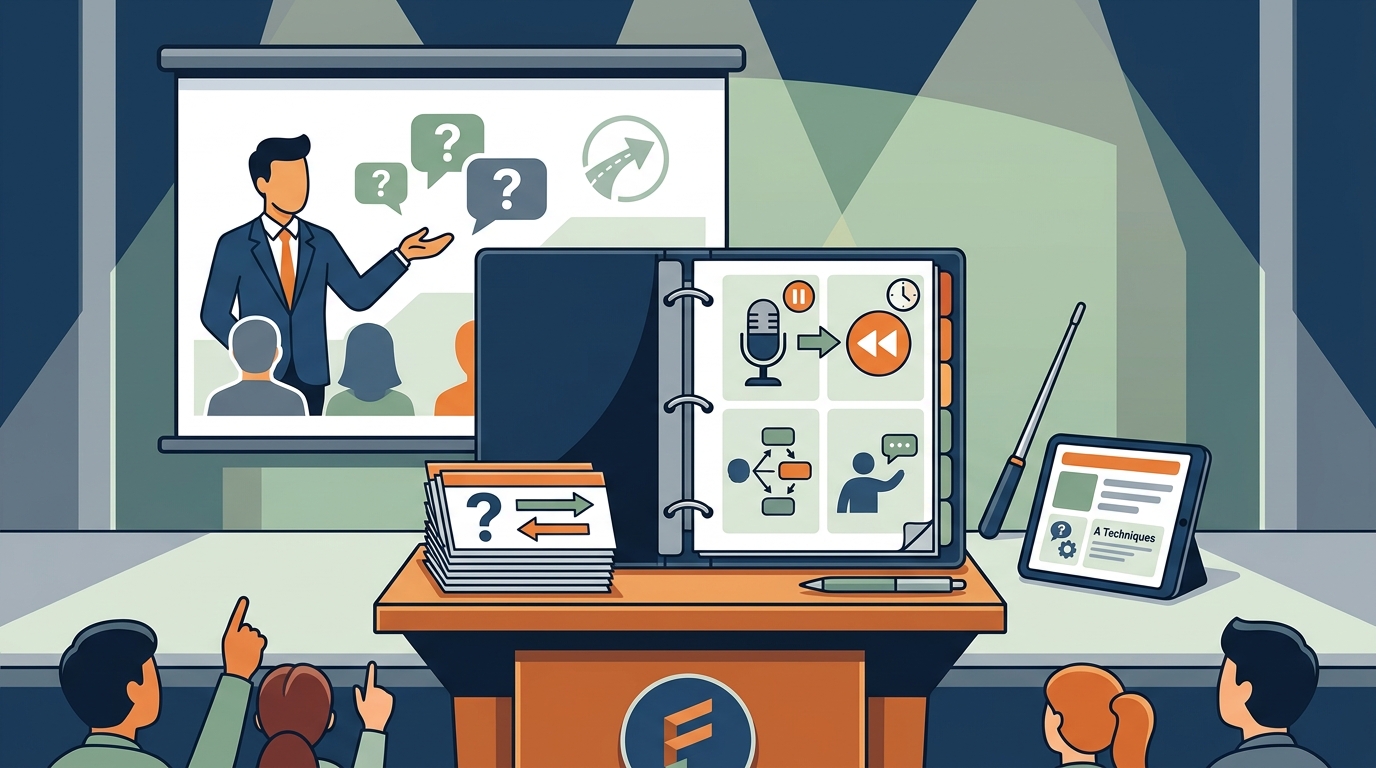
2. Listen Fully, Then Repeat the Question
Active listening is the skill of fully concentrating on a speaker's words before formulating a response. When an audience member asks a question, resist the urge to jump in immediately. Let them finish, then restate the question in your own words. This serves two purposes: it confirms you understood the question correctly, and it ensures the rest of the audience heard it.
Repeating the question also buys you a few seconds to organize your thoughts. As one commenter on the Effective Presentations blog noted, repeating the question back "allows me to think it over in my head before answering and it makes sure I heard the person properly." This simple habit dramatically improves the quality of your responses.
3. Stay Composed Under Pressure
Difficult or unexpected questions can trigger a stress response. Your heart rate may spike and your mind may go blank. The key is recognizing that composure is not about eliminating nerves; it is about managing them. Public speaking training programs teach Q&A control and pressure-moment composure so speakers can handle tough questions without losing their footing.
Techniques for Staying Calm
Pause for one to two seconds before answering. Take a breath. Maintain eye contact with the person who asked the question. These micro-behaviors signal confidence and give your brain time to catch up. If you find yourself frequently rattled during Q&A, consider investing in coached practice where you receive real-time feedback on your delivery under pressure.
4. Admit When You Don't Know the Answer
Many presenters fear being asked a question they cannot answer, but honesty is always the strongest response. Thank the audience member for the question, acknowledge you did not anticipate it, and offer to follow up after the presentation. Always collect the person's name and contact information, and make sure you do follow up.
Having a pencil and paper handy to jot down unanswered questions shows professionalism. It also signals to the audience that you take their concerns seriously, which builds trust far more effectively than bluffing. Learn more about managing these moments in our guide on refining your presentation skills.
5. Use Technology to Invite More Questions
Not everyone in your audience is comfortable raising a hand and speaking in front of a group. Digital tools like Slido allow people to submit questions from their smartphones, either anonymously or with their name. You can also create a hashtag for your presentation and set up a live feed to invite dialogue throughout your talk.
These tools are especially effective in large or hybrid settings. They lower the barrier to participation and surface questions that quieter audience members might never voice aloud. For more strategies on creating two-way dialogue, explore our post on talking with (not at) your audience.
6. Keep Your Answers Concise and Structured
Concise answering is the practice of responding to a question in two to three focused sentences rather than launching into a lengthy explanation. Long, rambling answers lose the audience and eat into time that could be used for additional questions. If your answer requires more depth, offer a brief summary and invite the questioner to continue the conversation afterward.
A useful framework: acknowledge the question, deliver your core point, then add one supporting detail. This structure keeps your response tight and ensures you address the actual question rather than drifting into tangential topics.
7. End the Q&A on Your Terms
Ending with a vague "Any more questions?" followed by silence is one of the weakest ways to close a presentation. Instead, plan a strong closing statement that you deliver after the final question. Summarize your main message, reinforce your call to action, and leave the audience with a memorable final thought.
Advanced presenters craft closings that inspire action rather than trailing off. If no questions come in after about 30 seconds, you can prompt the audience by sharing an interesting aspect of your research or topic to spark discussion. For deeper techniques on audience engagement, visit our Engaging Your Audience masterclass page.
Q&A Approaches Compared
| Approach | Best For | Pros | Cons |
|---|---|---|---|
| End-of-presentation Q&A | Formal talks, keynotes | Preserves flow; audience hears full message first | Audience may forget earlier questions |
| Rolling Q&A (questions during talk) | Workshops, small groups | Immediate clarification; higher engagement | Can derail your timeline |
| Digital Q&A tools (Slido, etc.) | Large or hybrid audiences | Anonymous option encourages participation | Requires tech setup; may miss verbal nuance |
| Planted first question | Any setting with a shy audience | Breaks the ice; models good question behavior | Can feel inauthentic if overused |
| Post-presentation follow-up | Complex or sensitive topics | Allows thorough, researched answers | Loses the energy of live interaction |
Key Takeaways
- Anticipate likely questions and rehearse your answers before every presentation.
- Repeat each question aloud to confirm understanding and give yourself thinking time.
- Composure under pressure is a trainable skill, not a personality trait.
- Admitting you do not know an answer and following up later builds more trust than guessing.
- Digital tools like Slido lower participation barriers for quieter audience members.
- Keep answers to two or three sentences; offer to go deeper offline.
- Always close the Q&A with a prepared final statement, not an awkward silence.
Frequently Asked Questions
What should I do if nobody asks a question?
Wait about 30 seconds, then prompt the audience by sharing something that surprised you during your research or preparation. You can also say, "A question I'm often asked is..." and answer it yourself to break the ice.
How do I handle a hostile or aggressive question?
Stay calm, thank the person for their perspective, and reframe the question in neutral terms before answering. Avoid getting defensive. If the exchange becomes unproductive, offer to continue the conversation one-on-one after the session.
Should I take questions during or after my presentation?
It depends on the format. Formal keynotes usually benefit from a dedicated Q&A at the end, while workshops and small-group sessions work well with rolling questions. Choose the format that best supports your message and audience size.
How long should a Q&A session last?
A good rule of thumb is to reserve 10 to 20 percent of your total presentation time for Q&A. For a 30-minute talk, that means three to six minutes. For a 60-minute session, plan for six to twelve minutes.
Is it okay to say "I don't know" during a Q&A?
Absolutely. Honesty is more credible than a vague or incorrect answer. Thank the questioner, let them know you will find the answer, collect their contact information, and follow up promptly.
How can I prepare for questions I cannot predict?
Focus on understanding your material deeply rather than memorizing scripted answers. Practice with colleagues who can challenge you with unexpected questions. Over time, your ability to think on your feet will improve significantly.
What is the best way to transition from my presentation into Q&A?
Signal the transition clearly by saying something like, "I'd love to hear your questions." Avoid the flat phrase "Any questions?" which often produces silence. A confident, inviting transition sets the tone for productive dialogue.
Take the Next Step
Handling audience questions with confidence is just one part of becoming a stronger communicator. If you want hands-on practice with expert coaching and immediate feedback, explore Effective Presentations' presentation skills training workshops. With over 1,200 five-star Google reviews and training locations across the United States, our programs are built to help you command any room, from the boardroom to the main stage. Visit our homepage to find an upcoming workshop near you.