

The Q&A portion of a presentation can feel like the most unpredictable moment of your talk. Your slides are done, your key points are delivered, and suddenly the floor opens up. For many professionals, that transition triggers anxiety. But here is the truth: handling audience questions well is one of the fastest ways to build credibility and deepen connection with your listeners. A strong Q&A session is a skill you can learn, practice, and master. In this guide, you will learn proven techniques that turn audience questions from a source of stress into one of the most valuable parts of your presentation.
Why the Q&A Session Matters More Than You Think
A Q&A session is the interactive portion at the end (or during) a presentation where audience members ask questions and the speaker responds. It is not an afterthought. When people in your audience ask questions, it signals they have been listening and want to know more. That engagement is gold.
Great discussions evolve from Q&A sessions, and the questions your audience asks can provide valuable feedback and insight for your business. According to Effective Presentations' Q&A guide, opening up the floor to questions is a great way to gauge what your audience has taken from your talk.
Prepare for Questions Before You Present
Preparation is the foundation of a confident Q&A. You may not predict every question, but you can anticipate the most likely ones. Start by listing the tough questions someone might ask, especially the ones you hope nobody raises.
Anticipate and Rehearse
Work out answers as you build your presentation. Decide which questions you will address in your content and which you will save for the Q&A. This approach, recommended by presentation skills experts, ensures you are never caught off guard.
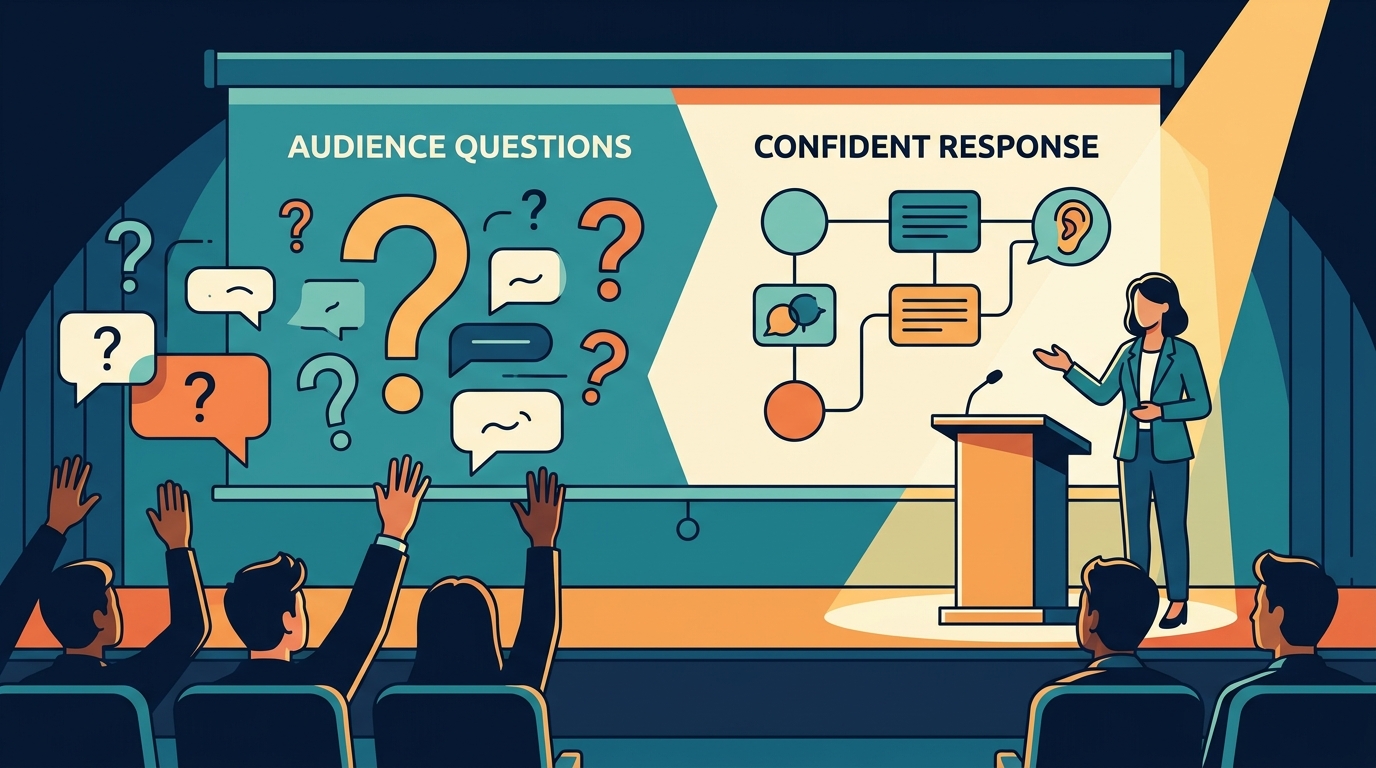
Know Your Material Deeply
The backbone of answering questions is knowledge and confidence. Fully understanding your topic well enough to speak off the cuff is the key to staying composed. As covered in advanced presentation skill training, the best presenters constantly adapt in real time based on audience feedback.
| Preparation Step | Action | Timing |
|---|---|---|
| List likely questions | Write 8-10 questions your audience may ask | 1 week before |
| Draft concise answers | Prepare 2-3 sentence responses for each | 3-5 days before |
| Rehearse with a colleague | Practice fielding questions live | 1-2 days before |
| Identify knowledge gaps | Research any areas where you feel uncertain | During prep |
| Plan your Q&A opening line | Use "What questions do you have?" not "Any questions?" | Day of |
Use Active Listening to Build Trust
Active listening is the practice of fully concentrating on the speaker before forming a response. It is a powerful tool in any Q&A session. When someone asks a question, make eye contact, listen without interrupting, and acknowledge the question before you answer.
This signals genuine interest and builds trust. Your audience wants to feel heard just as much as they want answers. Professionals who develop these skills through presentation skills training consistently outperform those who wing it.
Restate and Clarify Every Question
Before answering, restate the question in your own words. This technique serves two purposes: it confirms you understood the question correctly, and it ensures everyone in the room heard it. You might say, "Are you asking...?" or "Did you mean...?" before rephrasing.
In larger rooms, repeating the question is essential because not every attendee can hear every questioner. This simple habit also gives you a few extra seconds to organize your thoughts before responding.
Structure Your Answers for Clarity
A structured response is a response that follows a logical pattern: acknowledge, answer, and support with evidence. Keep your answers concise. Aim for two to three sentences per response. If a longer answer is needed, summarize your key point first and offer to follow up after the presentation.
The ACE Framework
Acknowledge the question with a brief thank-you. Concisely answer the core question. Elaborate with one supporting example or data point. This framework prevents rambling and keeps your audience engaged. For more on structuring your message effectively, explore techniques for opening and structuring presentations.
Handle Difficult or Hostile Questions
Not every question will be friendly. Some will challenge your data, your conclusions, or even your credibility. The key is to stay composed and separate valid criticism from personal attacks.
When You Don't Know the Answer
It is perfectly acceptable to say you do not have the answer right now. Thank the person for the question, acknowledge you did not anticipate it, and offer to follow up after the presentation. Always collect their contact information and deliver on that promise.
When Facing Pushback
If an audience member criticizes your position, do not attack back. According to Northern Illinois University's presentation skills guide, the best approach is to respond to the criticism calmly while maintaining your authority. Techniques like controlled breathing and strategic pausing help you manage nerves in the moment.
Close the Q&A With Impact
Do not let your presentation trail off after the last question. Instead, transition to a strong closing message. You might say, "Those were great questions. Let me wrap up with one final takeaway..." This simple technique ties your content together and leaves your audience with a clear, confident final impression.
If you want to leave a lasting impression every time you speak, consider exploring Effective Presentations' Creating a Lasting Impression course, which covers how to make every audience interaction memorable.
Key Takeaways
- Prepare for likely questions the same way you prepare your slides and talking points.
- Use active listening and eye contact to show genuine interest in every questioner.
- Restate each question before answering to confirm understanding and buy thinking time.
- Keep answers concise using a structured framework like Acknowledge, Concisely Answer, Elaborate.
- Admit when you do not know the answer, and always follow up afterward.
- Separate valid criticism from personal attacks and respond calmly to hostility.
- End your Q&A with a strong closing statement to reassert your message.
Frequently Asked Questions
What is the best way to start a Q&A session?
Ask "What questions do you have?" instead of "Are there any questions?" This phrasing assumes thoughtful questions are already forming and primes the room for interaction. Step forward, make eye contact, and smile to signal openness.
How long should my answers be during Q&A?
Aim for two to three sentences per answer. If you need to go deeper, offer a brief summary and then follow up with the questioner after the presentation via email or a brief conversation.
What should I do if nobody asks a question?
Seed the Q&A yourself. You can say something like, "One question I often hear is..." and answer it. This breaks the ice and usually encourages others to raise their hands.
How do I handle a question I cannot answer?
Be honest. Thank the person for asking, acknowledge you need to look into it further, and offer to follow up with them. Write down the question so you do not forget, and always deliver on that commitment.
Should I take questions during the presentation or only at the end?
It depends on the format. For shorter presentations, saving questions for the end keeps your flow intact. For longer sessions or workshops, periodic check-ins can boost engagement. Decide in advance and communicate the format to your audience at the start.
How can I stay calm when facing a hostile question?
Pause before responding. Take a breath. Acknowledge the emotion behind the question without matching it. Focus on the factual substance of the concern and respond to that, leaving the personal element aside.
Can presentation training help me improve at Q&A?
Absolutely. Professional presentation skills training programs include guided practice for Q&A scenarios. Working with an expert coach lets you rehearse under pressure and receive feedback you simply cannot get on your own.
Take the Next Step
Mastering audience questions takes practice, feedback, and the right techniques. If you are ready to build real confidence in every part of your presentation, from opening to Q&A, explore the training programs at Effective Presentations. Our hands-on workshops give you the guided practice and expert coaching that turn nervous speakers into compelling communicators. View upcoming workshops and enroll today.