

Speaking at an event or conference is one of the highest-visibility opportunities a professional can have. Yet a Mindful Presenter survey found that 82% of speakers finish a presentation wishing they had done more. The gap between a forgettable talk and one that changes how people see you is not talent. It is technique. This guide breaks down the best practices for delivering a compelling conference presentation, from audience research and message structure to slide design, delivery skills, and post-talk follow-through. Whether you are a first-time speaker or a seasoned executive, these strategies will help you command the room and leave a lasting impression.
1. Know Your Audience Before You Build a Single Slide
Audience analysis is the foundation of every compelling conference presentation. A conference presentation is a structured communication where a speaker delivers information, insights, or research findings to an audience at a formal gathering. Without understanding who is in the room, even brilliant content can fall flat.
Research the attendees' professional backgrounds, industry context, and what they hope to gain from the session. As the team at Effective Presentations explains in their guide to refining presentation skills, an effective presenter meticulously researches the audience's background and interests to tailor the presentation effectively. Matching your depth of detail to the audience's expertise level keeps your talk from being too basic or too technical.
2. Structure Your Message for Maximum Impact
A clear structure is what separates a talk that flows from one that feels random. Use a three-part framework: a compelling introduction, a focused main body with two to four key points, and a conclusion that reinforces your core message with a call to action.
Set Clear Objectives
Define what you want the audience to think, feel, or do after your talk. Setting clear objectives is like plotting a course for a journey; it ensures every section of your presentation earns its place. Content that does not align with your objective should be cut.
Respect the Clock
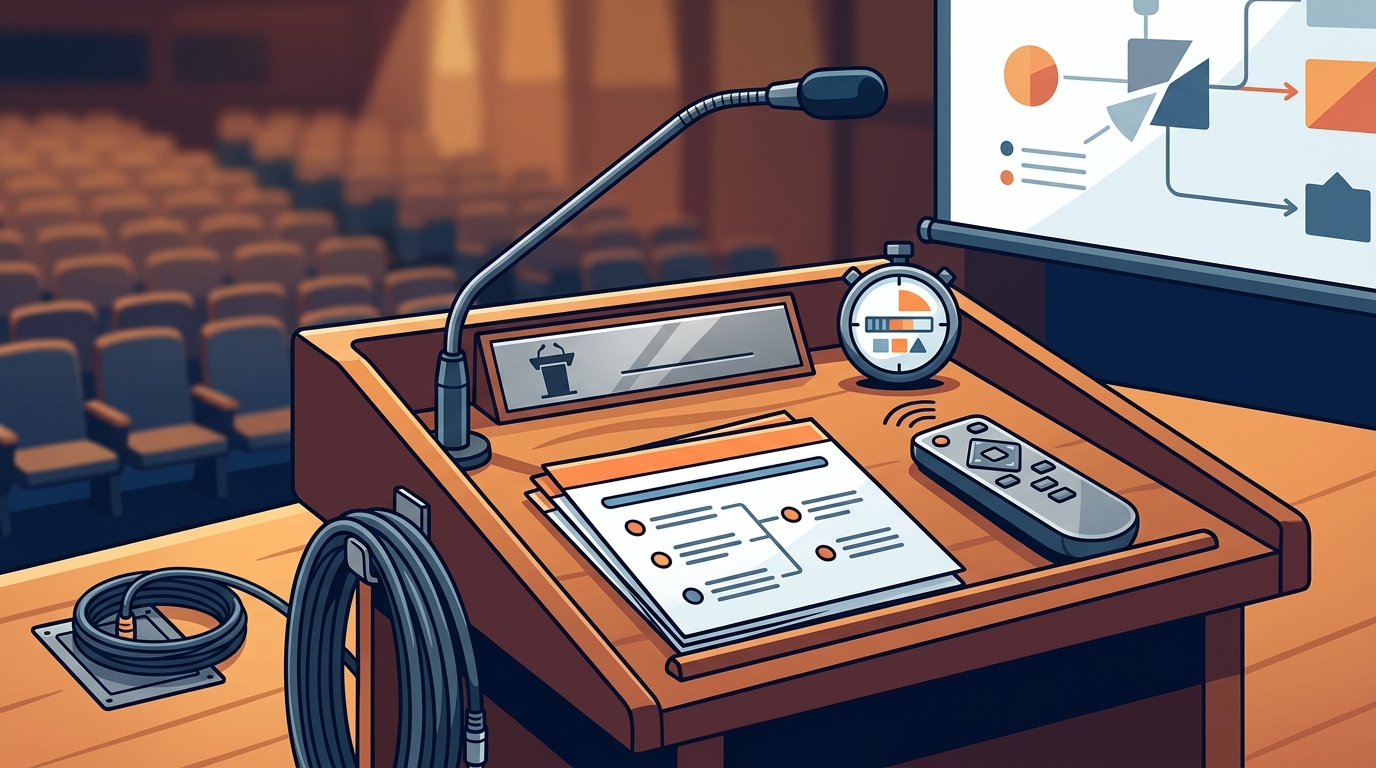
Time management is a non-negotiable conference skill. If you have ten minutes, prepare ten minutes of material. The best presenters tailor their content to fit the allotted time and keep an eye on the clock throughout. Practice your timing with a stopwatch so you never have to rush past your most important findings.
3. Design Slides That Support, Not Compete
Slide design is the visual layer that reinforces your spoken message. In 2026, audiences expect clean, minimal visuals. Slides should support your voice, not compete with it. A common guideline is the 10/20/30 rule: ten slides, presented over 20 minutes, with no font smaller than 30 points.
The team behind Effective Presentations' slide presentation tips recommends using very little text and instead relying on graphics and images. When spoken words are tied to an image rather than text, you engage both sight and sound, which boosts memory retention. According to research cited by Dr. John Medina's Brain Rules, people remember only about 10% of what they hear after three days, but recall jumps to 65% when a relevant image is added.
| Slide Element | Best Practice | Common Mistake |
|---|---|---|
| Text | One idea per slide; bullet phrases only | Full paragraphs that the speaker reads aloud |
| Images | One high-quality image per slide | Multiple small photos that clutter the layout |
| Font Size | 30pt minimum | 12-16pt text invisible past row three |
| Animations | Purposeful transitions that pace information | Excessive effects that distract from the message |
| Color | High-contrast pairings (dark on light) | Low-contrast palettes that reduce readability |
4. Open Strong and Hook Attention in 30 Seconds
An opening statement is the brief, powerful introduction that draws the audience in and sets the scene for everything that follows. According to Effective Presentations' guide on how to open a presentation, listeners form their opinion of a speaker and decide whether to keep listening within the first 30 seconds.
Proven openers include a compelling story, a surprising statistic, a thought-provoking question, or a relevant quote from a recognized figure. Whichever route you choose, connect it directly to the purpose of your talk so the hook does not feel random.
5. Master Delivery: Voice, Pace, and Presence
Delivery is the vehicle that carries your message. Your voice is an instrument, and most people use only about 10% of its capabilities. Advanced presentation skill training teaches speakers to access dynamic variation in volume, pace, and tone, and to use strategic pauses for emphasis.
Body Language and Stage Movement
Your physical presence communicates volumes before you say a word. Purposeful movement across the stage, open gestures, and consistent eye contact build trust and authority. Avoid nervous pacing or hiding behind a podium.
Eliminate Filler Words
Replacing filler words like "um" and "uh" with intentional pauses makes your speech sound more professional and polished. Slowing your delivery also improves pronunciation and message clarity.
6. Engage the Audience Throughout
Audience engagement is the practice of turning passive listeners into active participants during your talk. Interaction keeps attention high and gives you real-time feedback on how your message is landing.
Plan a check-in or interactive moment every 10 minutes. Ask the audience a direct question, run a quick poll, or invite a brief discussion. As highlighted in Effective Presentations' public speaking tips for 2026, engagement transforms passive listeners into active participants and is a hallmark of great conference speakers.
Storytelling is another powerful engagement tool. The brain remembers stories far better than data alone, which is why professional public speaking training programs consistently teach narrative techniques to increase retention.
7. Manage Nerves and Build Confidence
Nervousness before a conference talk is normal, even for experienced professionals. The goal is not to eliminate nerves but to channel them into energy. Proven strategies for calming pre-speech anxiety include breathing exercises, visualization, and thorough rehearsal.
Confidence comes from preparation and presence, not perfection. Audiences connect with authentic speakers who demonstrate command of their material, not flawless robots. Seeking feedback after each talk and setting incremental improvement goals builds lasting confidence over time.
Key Takeaways
- Research your audience's background and expectations before writing a single slide.
- Structure your talk with a clear introduction, two to four key points, and a strong close with a call to action.
- Follow the 10/20/30 rule: minimal slides, concise delivery, and large readable fonts.
- Hook your audience within the first 30 seconds with a story, question, or surprising fact.
- Use vocal variety, strategic pauses, and purposeful body language to project authority.
- Build in audience interaction every 10 minutes to sustain attention and gather feedback.
- Manage nerves through preparation, breathing techniques, and continuous post-talk reflection.
Frequently Asked Questions
What is the most important element of a conference presentation?
Audience relevance is the single most important element. A perfectly designed slide deck means nothing if the content does not connect with the people in the room. Start every preparation process with audience research.
How many slides should I use for a 20-minute conference talk?
A widely accepted guideline is the 10/20/30 rule: roughly 10 slides for a 20-minute talk with fonts no smaller than 30 points. Adjust based on your content, but always err on the side of fewer slides.
How do I calm my nerves before speaking at a conference?
Use breathing exercises and visualization before taking the stage. Thorough rehearsal is the best antidote to anxiety. Many professionals also find that arriving early to familiarize themselves with the room reduces stress significantly.
What makes a strong opening for a conference presentation?
A strong opening hooks the audience within 30 seconds. Effective techniques include telling a brief story, posing a thought-provoking question, sharing a surprising statistic, or using a powerful quote tied directly to your topic.
How can I keep my audience engaged during a long presentation?
Plan interactive moments every 10 minutes. Use direct questions, quick polls, storytelling, and real-world examples. Vary your vocal tone and move around the stage to maintain visual interest.
Should I read from my slides during a conference talk?
No. You should know your material well enough to speak from memory or brief notes. Reading slides signals a lack of preparation and causes audiences to disengage almost immediately.
How can professional training improve my conference presentations?
Professional presentation skills training provides coached practice, expert feedback, and repeatable frameworks that accelerate improvement far faster than self-study alone. Programs like those offered by Effective Presentations focus on real-world scenarios so skills transfer directly to your next speaking engagement.
What is the biggest mistake speakers make at conferences?
Trying to cover too much material in too little time. Overloading your talk leads to rushed delivery, skipped key points, and a confused audience. Focus on two to four core ideas and develop them well.
Take the Stage With Confidence
Great conference presentations are built, not born. If you are preparing for an upcoming event and want hands-on coaching that produces real improvement, explore public speaking training from Effective Presentations. With over 1,200 five-star Google reviews and more than 20 years of experience, our workshops give you the practice, feedback, and tools to own any stage you step onto.