

Sales Presentation Skills: How to Win More Deals in 2026
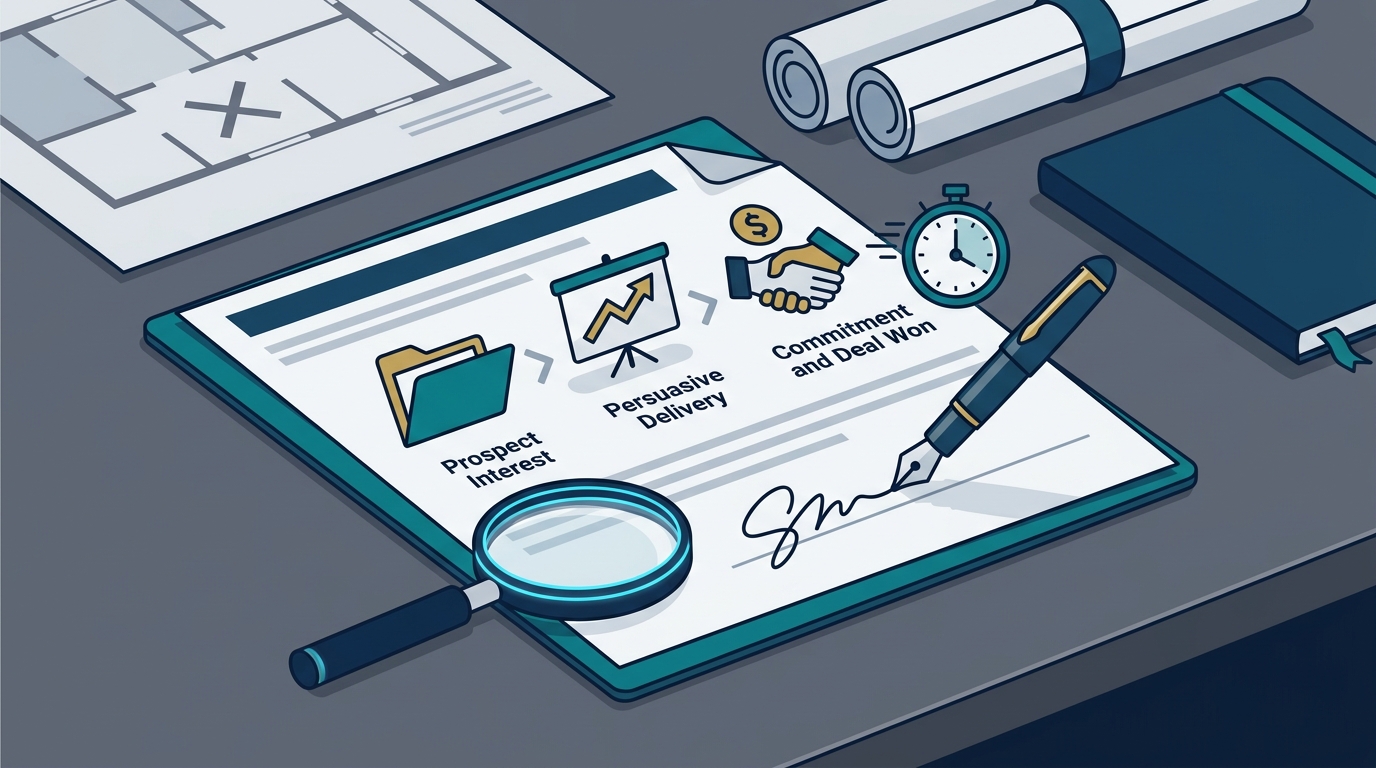
A sales presentation is a persuasive delivery designed to move a prospect from interest to commitment. Yet only 25% of salespeople consistently outperform their quota, and 67% of employees say they lack the presentation skills to communicate effectively with clients or leadership. The gap between knowing your product and actually closing the deal almost always comes down to how you present. Below, you will find a practical, evidence-backed guide to sharpening the skills that turn good pitches into signed contracts. Whether you are refining your own delivery or elevating an entire team, these techniques apply to any industry, product, or service.
Why Sales Presentation Skills Matter More Than Ever
The business case is clear. According to Amra and Elma's 2025 research, sales teams that undergo presentation skills training experience a 30% increase in client engagement and conversions. Meanwhile, 72% of North American businesses reported increased demand for presentation training in 2025.
In a world where B2B buyers complete 57-70% of their research before contacting a rep, your pitch is no longer the starting point. It is the moment of decision. A consultative approach delivers 25% higher close rates compared to traditional product-led pitching. That means your delivery, structure, and interpersonal skills carry enormous weight.
If you want to build a foundation in high-impact communication, presentation skills training is the fastest path to measurable improvement.
Structure Your Pitch for Maximum Impact
Structure is the backbone of every successful sales presentation. Research from Storydoc's analysis of over 1.3 million presentation sessions shows that sales pitch decks kept under 10 slides achieve a 32% completion rate, compared to just 22% for longer decks.
The Winning Framework
Open with a bold statement, a surprising statistic, or a question that taps into your prospect's core challenge. Organize your middle section around three key points maximum. Close with a clear, specific call to action that defines the next step.
Optimal Length by Format
| Format | Recommended Length | Slide Count |
|---|---|---|
| In-person meeting | 10-20 minutes | 8-12 slides |
| Virtual pitch | 5-10 minutes | 5-8 slides |
| Email pitch | Under 200 words | N/A |
| Elevator pitch | 30-60 seconds | N/A |
Keeping decks concise is not about cutting substance. It is about focusing every slide on comprehension and value. As the data shows, shorter presentations consistently outperform longer ones.
Use Storytelling to Make Your Message Stick
Storytelling is the technique of framing information inside a narrative arc so audiences connect emotionally and remember key points. A survey by Decktopus found that storytelling is the number one factor that makes a presentation memorable, ahead of statistics and visuals.
You do not need a long anecdote. A single sentence that paints a before-and-after picture can transform a dry feature list into a compelling case. For example: "Last quarter, a client in your industry cut reporting time in half after implementing this solution." Stories build trust, evoke emotion, and make your pitch human in a way raw data cannot.
Learn more about structuring messages that land in our guide to presentation secrets that transform communication skills.
Master Delivery: Voice, Body Language, and Presence
Executive presence is the combination of confidence, composure, and credibility that makes an audience trust you before you finish your first sentence. Your non-verbal communication speaks louder than your slides.
Eye Contact
Sustained, purposeful eye contact signals confidence and honesty. In virtual settings, that means looking at your camera, not at the faces on your screen.
Gestures and Posture
Purposeful hand gestures reinforce your verbal message. Avoid pockets, crossed arms, or wild hand movements that distract from your content.
Voice and Pacing
Vary your tone, slow down on key points, and eliminate filler words like "um" and "uh." Top performers use collaborative language 10 times more often than average reps, which drives a 35% increase in success rates.
Personalize Every Pitch to Your Buyer
Generic presentations kill deals. Buyers in 2026 expect you to understand their industry, role, and specific pain points before you open your deck. A CMO cares about brand reach; a VP of Sales focuses on pipeline health. Adjust your proof points accordingly.
This means doing pre-call research, tailoring your case studies, and using language that mirrors your buyer's priorities. Personalized cold emails generate a 32% higher response rate than generic ones, and the same principle applies in live pitches. The sales presentation training workshop at Effective Presentations teaches professionals how to adapt a proven sales formula to any industry, product, or service.
Handle Objections With Confidence
An objection is a buying signal wrapped in hesitation. It means the prospect is engaged enough to push back. The worst response is defensiveness. The best response is alignment: acknowledge the concern, reframe it, and tie your answer back to the buyer's stated goal.
Ask open-ended questions that show genuine interest. Be flexible enough to let the conversation move in the direction the client needs. As Effective Presentations notes in its guide to common sales presentation mistakes, forcing a rigid script on a client who wants a dialogue is one of the fastest ways to lose a deal.
Practice, Get Feedback, and Iterate
Practice is the non-negotiable skill multiplier. Record yourself, rehearse with peers acting as prospects, and collect structured feedback after every pitch. Hands-on coaching, where you present and receive real-time guidance, accelerates improvement far faster than passive learning.
Effective Presentations workshops include multiple practice presentations with extensive one-on-one coaching so participants can fast-track their new skills. If you want to overcome stage fright and replace anxiety with genuine confidence, consistent practice in a supportive environment is the proven path.
Key Takeaways
- Sales teams with presentation training see up to 30% higher engagement and conversions.
- Keep pitch decks under 10 slides for significantly better completion rates.
- Lead with storytelling; it is the top factor in making presentations memorable.
- Personalize every pitch to the buyer's role, industry, and specific challenges.
- Use collaborative language and a consultative approach for 25% higher close rates.
- Treat objections as buying signals and respond with alignment, not defensiveness.
- Invest in hands-on practice with real-time coaching to build lasting confidence.
Frequently Asked Questions
What is the most important skill for a sales presentation?
Storytelling consistently ranks as the number one factor that makes a presentation memorable. Pairing narrative with relevant data and a clear structure creates the strongest impact on prospects.
How long should a sales pitch be?
For in-person meetings, aim for 10-20 minutes. Virtual pitches should stay between 5-10 minutes. Email pitches perform best under 200 words. Match the length to your format and your audience's attention span.
How many slides should a sales presentation have?
Data from over 1.3 million presentation sessions shows the sweet spot is 8-12 slides for mid-funnel sales decks. Decks with more than 18 slides see significant drops in engagement and completion rates.
How can I overcome nervousness before a sales pitch?
Replace memorization with structured preparation. Focus on knowing your key points and transitions rather than scripting every word. Consistent practice in realistic settings builds genuine confidence over time.
Does presentation training actually improve sales results?
Yes. Research shows sales teams that complete presentation skills training experience a 30% increase in client engagement and conversions. A consultative delivery approach alone drives 25% higher close rates.
What are the biggest mistakes in sales presentations?
Common pitfalls include showing up late, using a rigid script that ignores the client's needs, talking too much without listening, and failing to end with a clear next step. Each of these erodes trust and costs deals.
How do I personalize a sales presentation effectively?
Research your prospect's industry, role, and recent challenges before the meeting. Tailor your case studies and proof points to their specific situation. Using the buyer's own language and priorities shows respect and builds credibility fast.
Take Your Sales Presentations to the Next Level
Strong sales presentation skills are not a nice-to-have. They are the difference between quota and commission checks. If you are ready to close more deals with confidence, clarity, and credibility, explore the Sales Presentation Skills workshop at Effective Presentations. With 20+ years of experience, 100,000+ professionals trained, and 1,200+ five-star reviews, it is the hands-on training that turns good pitches into winning ones.