

Key Elements of a Persuasive Business Presentation for Influencing Stakeholders
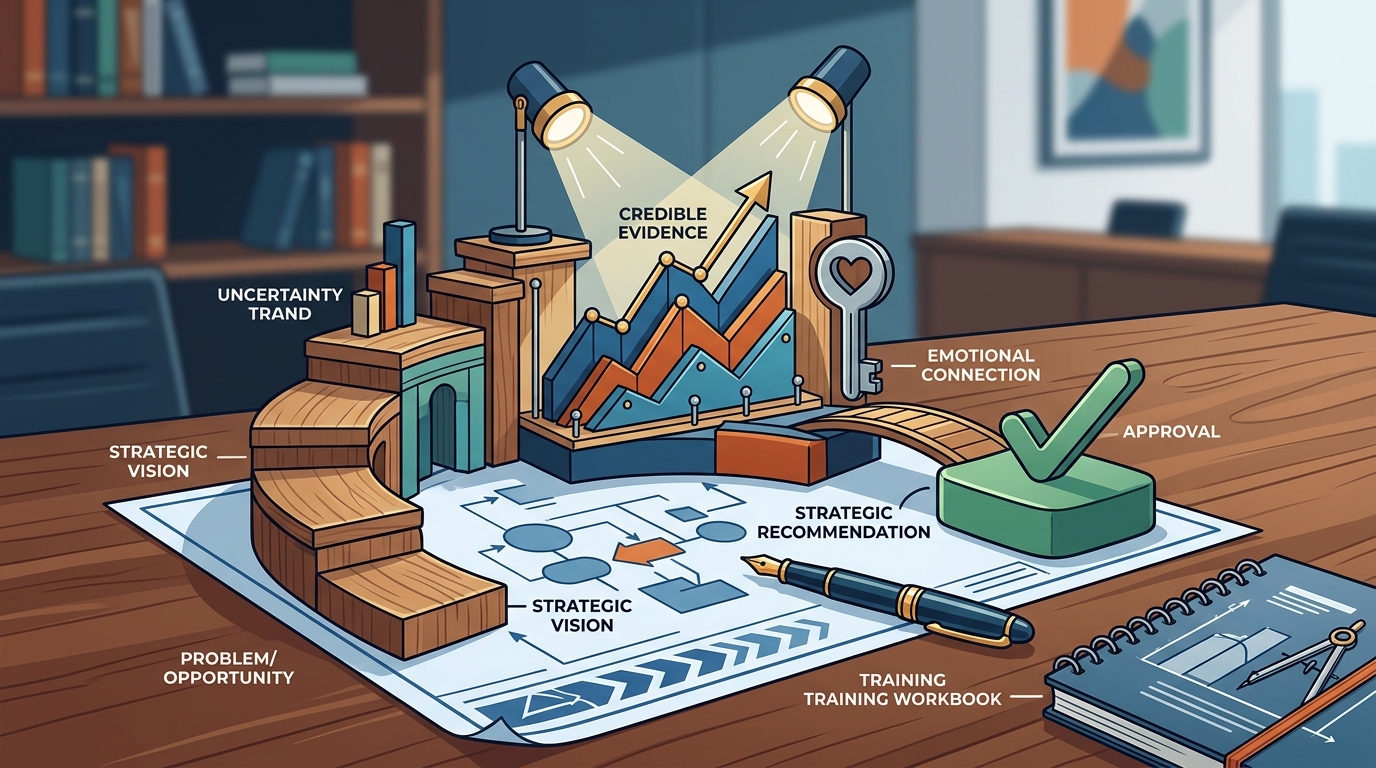
Every business professional eventually faces a high-stakes moment: presenting an idea, a budget request, or a strategic recommendation to stakeholders who hold decision-making power. The difference between approval and delay often comes down to how persuasively you present, not just what you present. A persuasive business presentation is a structured communication designed to move an audience from uncertainty to commitment through clear messaging, credible evidence, and emotional connection. In this guide, we cover the key elements that turn a routine slide deck into a compelling case stakeholders actually act on.
1. Know Your Stakeholders Before You Build a Single Slide
Stakeholder analysis is the practice of identifying who is in the room, what they care about, and what will drive their decision. Skipping this step is the single most common reason presentations fall flat.
Map Priorities by Role
Senior executives typically focus on return on investment and strategic alignment. Marketing teams want actionable strategies, while product development looks for user feedback. Investors seek proof of concept and validation. When you tailor the message to each group's priorities, engagement rises dramatically.
Ask the Right Pre-Meeting Questions
Before building your deck, find out what decisions need to be made, what concerns exist, and who the real influencers are. This intelligence shapes everything from your opening line to your call to action. Strong messaging and structure skills start with knowing your audience inside out.
2. Structure Your Message for Decision-Making
A well-structured presentation is easier to follow and more persuasive. Stakeholders do not have time to hunt for your point. Lead with the recommendation, then support it.
The Problem-Solution-Benefit Framework
Open by framing the problem your stakeholders recognize. Present your solution with supporting evidence. Close by spelling out the specific benefit in terms they value. This framework works for pitches, project updates, and board-level recommendations alike.
Front-Load the Ask
In stakeholder presentations, bury the lead and you lose the room. State your recommendation in the first 90 seconds, then use the remaining time to justify it. This approach respects executive attention spans and creates a clear throughline. For more on structuring openings that command attention, see our guide on how to open a presentation.
3. Build Credibility Early and Often
Credibility is the audience's perception that you are trustworthy, competent, and worth listening to. Without it, even brilliant ideas get dismissed.
According to the Hovland-Yale model of persuasion, developed at Yale University in the 1950s, the source of a message is one of the strongest predictors of persuasive impact. You can strengthen source credibility by citing data from recognized authorities, referencing past results, and demonstrating deep knowledge of the stakeholder's context.
Practical credibility builders include naming specific metrics, showing awareness of constraints, and acknowledging risks before the audience raises them. Professionals who invest in executive presence techniques consistently score higher on perceived competence in stakeholder settings.
4. Use Storytelling to Make Data Stick
Data persuades the logical brain. Stories persuade the whole person. The most effective stakeholder presentations combine both. A case study or client example transforms abstract numbers into a vivid picture of impact.
Research on storytelling in business shows that narrative structures increase information retention by connecting facts to emotional context. When presenting quarterly results, for example, pair the revenue number with a short story about the customer initiative that drove it.
| Element | Data-Only Approach | Data + Story Approach |
|---|---|---|
| Audience retention after 24 hours | 5-10% | 65-70% |
| Emotional engagement | Low | High |
| Decision speed | Slower (more follow-up questions) | Faster (context already clear) |
| Stakeholder buy-in rate | Moderate | Significantly higher |
5. Design Visual Aids That Clarify, Not Clutter
Visual support is any graphic, chart, or slide element used to reinforce your spoken message. The goal is clarity, not decoration.
Keep slides to one idea per screen. Use charts to show trends and comparisons rather than tables full of raw numbers. Avoid walls of text that force stakeholders to read instead of listen. Our winning slide decks masterclass walks through the principles behind slides that support persuasion rather than undermine it.
If you are presenting virtually, visual discipline is even more critical. Screen fatigue is real, and cluttered slides accelerate disengagement in remote settings.
6. Deliver With Confidence and Executive Presence
Your delivery shapes how stakeholders perceive your message. Vocal variety, purposeful pauses, eye contact, and confident body language all signal authority. Monotone delivery or nervous filler words can erode trust before you get to your strongest evidence.
Executive presence is the combination of composure, clarity, and confidence that signals leadership readiness. It is trainable. Professionals who practice delivery through structured feedback loops, such as those offered in presentation skills training programs, see measurable improvement in how they are perceived by senior audiences.
Record yourself presenting and review the playback. You will catch habits you did not know you had, from pacing issues to distracting gestures.
7. Handle Objections and Questions Like a Pro
Stakeholder presentations rarely end with applause. They end with questions, pushback, and requests for clarification. How you handle that moment often matters more than the presentation itself.
Anticipate the Top Three Objections
Before you present, list the three most likely objections and prepare concise, evidence-backed responses. This preparation builds confidence and prevents you from being caught off guard.
Invite Questions Strategically
Inviting questions throughout the presentation maintains engagement and allows stakeholders to express concerns in real time. This interaction leads to a richer understanding of the findings and creates a collaborative tone rather than a defensive one. Explore more techniques in our resource on handling audience questions.
Key Takeaways
- Start with stakeholder analysis. Tailor every element of your presentation to the priorities, concerns, and decision criteria of your specific audience.
- Lead with your recommendation. Front-load the ask so stakeholders know what you are proposing within the first 90 seconds.
- Use the problem-solution-benefit framework. This structure keeps your message tight and decision-oriented.
- Combine data with storytelling. Numbers prove the case; stories make it memorable and emotionally compelling.
- Design slides for clarity. One idea per slide, minimal text, and charts that reinforce your spoken message.
- Invest in delivery skills. Executive presence is trainable and directly impacts how credible and persuasive you appear.
- Prepare for objections. Anticipating pushback and handling questions confidently is what separates good presenters from great ones.
Frequently Asked Questions
What is the most important element of a persuasive business presentation?
Audience analysis. If you do not understand what your stakeholders care about, no amount of polish will make your message land. Tailoring your content to their priorities is the foundation of persuasion.
How should I structure a presentation for senior executives?
Lead with the recommendation, follow with evidence, and close with a clear call to action. Executives want the bottom line first and the supporting detail second.
How long should a stakeholder presentation be?
Most stakeholder presentations should target 15 to 20 minutes of content, leaving 10 to 15 minutes for questions. Shorter is almost always better when decision-makers are in the room.
Can storytelling really improve a business presentation?
Yes. Research consistently shows that audiences retain information delivered through narrative far longer than data alone. A short case study or client example can make abstract results concrete and memorable.
What is executive presence and why does it matter?
Executive presence is the combination of composure, clarity, and confidence that signals leadership readiness. In stakeholder settings, it directly influences whether your recommendations are trusted and acted upon.
How do I handle tough questions from stakeholders?
Prepare for the top three objections before you present. Listen fully to each question, pause before responding, and answer with evidence rather than defensiveness. If you do not know the answer, say so and commit to a follow-up.
Should I use PowerPoint or other visual aids?
Visual aids should support your message, not replace it. Use slides when a chart, image, or diagram makes your point clearer. Avoid text-heavy slides that compete with your spoken delivery.
How can I improve my persuasive presentation skills quickly?
The fastest path is structured practice with expert feedback. Programs like those offered by Effective Presentations provide coached practice, video review, and actionable techniques you can apply immediately.
Take the Next Step
If you are preparing for a high-stakes stakeholder presentation and want to sharpen your message, delivery, and confidence, talk to a trainer at Effective Presentations. With over 20 years of experience and more than 100,000 professionals trained, our coaches help you turn good ideas into messages people follow.