

Handling audience questions effectively separates competent speakers from industry leaders. Recent industry data shows that over 78 percent of professionals experience significant anxiety when fielding unexpected inquiries during live sessions. This stress often derails carefully planned messaging and reduces overall audience retention. Mastering the Q&A segment requires structured preparation, active listening, and controlled delivery. Organizations that train their teams in these specific communication frameworks consistently report higher client engagement and stronger conversion metrics. The following guide outlines proven methodologies to transform unpredictable inquiries into strategic opportunities. (How Speakers Handle)
Preparation Strategies
Effective Q&A management begins long before the microphone is handed over. Speakers must anticipate the most probable inquiries and draft concise, evidence-based responses. This proactive approach eliminates hesitation and projects absolute subject matter expertise. Anticipatory scripting is the systematic process of predicting audience inquiries and drafting structured replies in advance. Teams that practice this method consistently report reduced cognitive load during live events. You should compile a master document containing the top twenty questions your audience typically asks. Review this document repeatedly until the answers become second nature. This preparation directly supports the core messaging framework used in our business presentation skills programs. (How Speakers Handle)
Mock Audience Drills
Simulating real-world conditions bridges the gap between theory and execution. Practice sessions should include unexpected interruptions and challenging follow-ups. Recording these drills allows speakers to analyze their verbal pacing and nonverbal cues. Adjustments made during rehearsal prevent costly mistakes during high-stakes corporate events. This rigorous testing phase ensures that presenters remain composed under pressure.
Content Alignment Checks
Every anticipated question must directly tie back to your core presentation objectives. Irrelevant tangents dilute your primary message and confuse the audience. Align each prepared answer with your central value proposition. This alignment maintains narrative cohesion throughout the entire session. Speakers who enforce strict content boundaries consistently deliver more persuasive arguments.
Active Listening Protocols
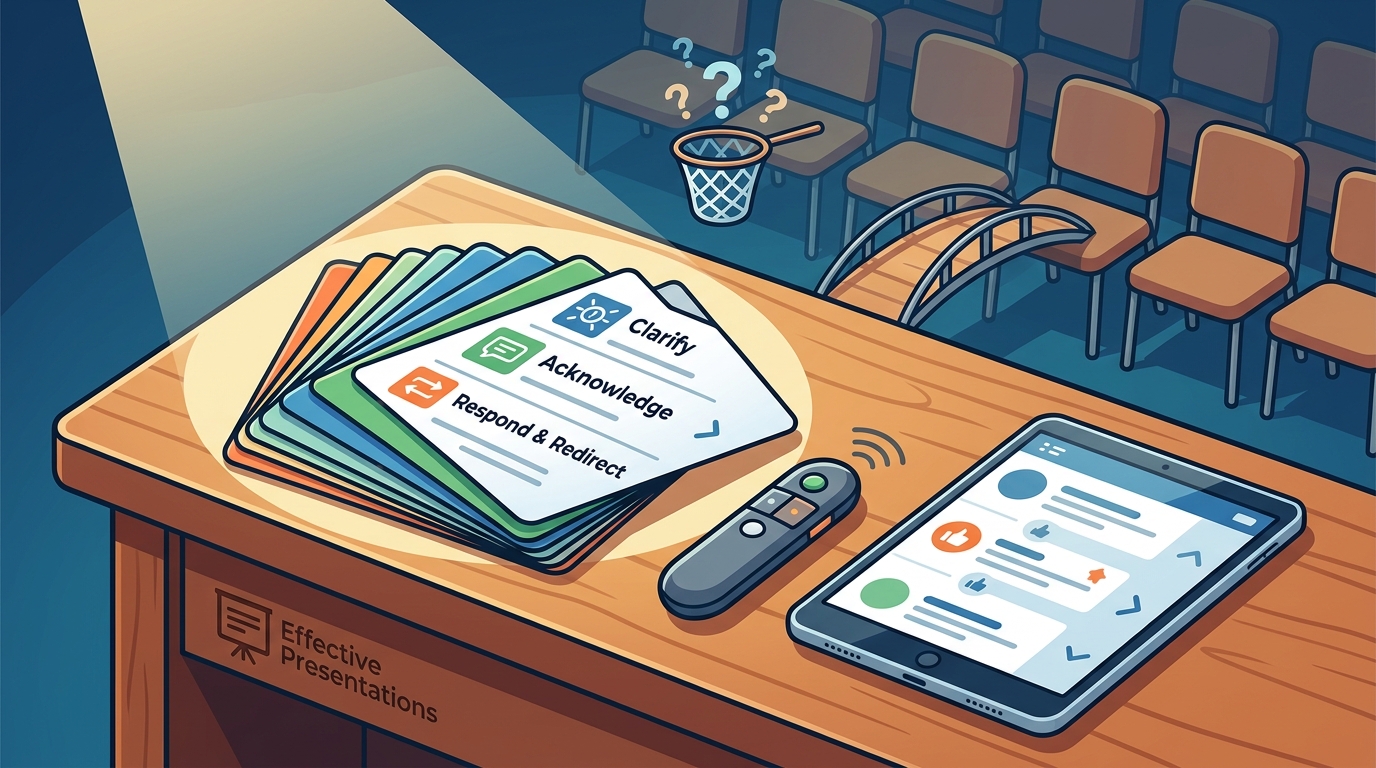
Many presenters fail during Q&A because they listen only to respond rather than to understand. Active listening requires complete mental focus on the speaker. You must suppress the urge to interrupt or formulate your reply while the question is still being asked. Reflective listening is the deliberate practice of paraphrasing the inquiry back to the audience before answering. This technique confirms accuracy and buys valuable processing time. It also demonstrates deep respect for the questioner. When you hear a complex inquiry, pause briefly. Restate the core concern in your own words. This simple pause reduces tension and clarifies the exact parameters of the question.
Verbal Cues and Body Language
Nonverbal signals heavily influence how your response is received. Maintain steady eye contact with the questioner while acknowledging the broader room. Nodding occasionally signals comprehension without interrupting the flow. Avoid crossing your arms or shifting your weight nervously. These subtle physical adjustments project confidence and control. Speaking anxiety frequently triggers defensive postures that undermine credibility. Professional coaches emphasize that physical composure directly impacts audience trust. Speaking anxiety training programs consistently validate this connection.
Question Categorization
Quickly classify each inquiry into technical, strategic, or operational categories. This mental sorting mechanism allows you to select the appropriate response framework. Technical questions require precise data and specific examples. Strategic inquiries demand broader business context and long-term vision. Operational questions need practical implementation steps. Categorizing inquiries on the fly streamlines your delivery and prevents rambling.
Answering Frameworks
Structuring your responses prevents rambling and keeps the session on schedule. The most reliable method follows a clear three-step progression. First, state the direct answer immediately. Second, provide supporting evidence or a brief example. Third, connect the response back to the main presentation theme. This structure ensures clarity and reinforces your core message. Bridge technique is a structured communication method that answers the question directly before pivoting back to your primary talking points. Speakers who master this technique maintain full control over the narrative flow. They avoid getting trapped in endless back-and-forth exchanges that drain audience attention.
Handling Unknown Variables
Not every question will have an immediate answer. Attempting to guess or fabricate responses destroys credibility instantly. Acknowledge the gap honestly and commit to following up. Offer to research the specific data point and provide a written summary within forty-eight hours. This transparent approach builds long-term trust. Audiences respect honesty far more than confident speculation. Our case studies consistently highlight how transparent handling of unknowns strengthens client relationships.
Time Management Tactics
Q&A sessions frequently run over allocated time slots. Establish clear boundaries before the session begins. Announce the exact duration available for questions. Use a visible timer to track progress. Politely interrupt repetitive or overly detailed inquiries by summarizing the core concern and moving to the next question. Time management ensures that every attendee receives a fair opportunity to participate. Event momentum relies heavily on strict schedule adherence. Professional facilitators use these boundaries to maintain event momentum. Event momentum guides successful corporate training schedules.
Managing Difficult Questions
Hostile or highly technical inquiries require specialized handling techniques. These questions often test your expertise or challenge your core assumptions. Remain completely calm and avoid defensive body language. Validate the questioner's perspective before delivering your counterpoint. De-escalation framing is the strategic use of neutral language to acknowledge tension while redirecting the conversation toward constructive solutions. This approach prevents arguments from derailing the entire session. You can acknowledge the complexity of the issue without conceding your position. Maintain a steady tone and focus strictly on facts and data.
Redirecting Aggressive Tactics
When an audience member becomes confrontational, shift the focus to shared objectives. Acknowledge their passion for the subject matter. Redirect the conversation toward collaborative problem-solving rather than debate. Invite them to discuss specific details during a scheduled networking break. This tactic removes the audience from the equation and diffuses public tension. Professional event managers consistently recommend this separation strategy for high-stakes corporate environments.
Technical Escalation Protocols
Highly specialized technical questions may fall outside your immediate expertise. Recognize these boundaries early and defer to subject matter experts. Introduce a colleague who possesses the specific technical knowledge required. This collaborative approach demonstrates team competence and thorough preparation. Audiences appreciate organizations that prioritize accuracy over ego. Our corporate training programs frequently incorporate expert delegation strategies to handle complex inquiries.
Tool Comparison Matrix
Selecting the right preparation method depends on your specific presentation format and audience size. The following matrix outlines the most effective frameworks for different scenarios.
| Framework Type | Best Use Case | Primary Benefit | Implementation Difficulty |
|---|---|---|---|
| Anticipatory Scripting | High-stakes executive pitches | Eliminates hesitation and projects expertise | Low |
| Reflective Listening | Interactive workshops and seminars | Builds audience trust and confirms accuracy | Medium |
| Bridge Technique | Keynote addresses and product launches | Maintains narrative control and prevents tangents | Medium |
| De-escalation Framing | Controversial industry panels (Industry Controversies Oil) | Defuses tension while preserving credibility | High |
Key Takeaways
- Anticipate the top twenty audience inquiries and draft structured responses before stepping on stage.
- Practice reflective listening to confirm question accuracy and reduce speaker anxiety.
- Apply the bridge technique to answer directly while pivoting back to core messaging.
- Admit knowledge gaps honestly and commit to providing written follow-up documentation.
- Use de-escalation framing to neutralize hostile inquiries without conceding your position.
- Enforce strict time boundaries to ensure equitable participation across all attendees.
- Delegate highly technical questions to subject matter experts to maintain accuracy.
Frequently Asked Questions
How do I handle a question I do not know the answer to?
Admit the gap honestly and commit to researching the specific data point. Offer to provide a written summary within forty-eight hours. This transparent approach builds long-term trust and prevents credibility damage.
What is the best way to stop a rambling questioner?
Politely interrupt by summarizing the core concern in your own words. Restate the question clearly and provide a concise answer. This technique maintains control while respecting the audience.
How many questions should I allocate for a standard presentation?
Reserve fifteen to twenty percent of your total session time for inquiries. This duration allows for meaningful interaction without derailing your core agenda. Adjust the timeframe based on audience size and event format.
Should I answer questions during the presentation or wait until the end?
Answering questions at the end preserves narrative flow and prevents audience distraction. Interrupted presentations lose audience attention and dilute key messaging. Reserve the Q&A segment for the final session block.
How do I manage aggressive or confrontational audience members?
Remain completely calm and validate their perspective before responding. Use de-escalation framing to redirect the conversation toward shared objectives. Invite them to discuss specific details during a scheduled networking break.
What nonverbal cues should I avoid during Q&A sessions?
Avoid crossing your arms, shifting your weight nervously, or checking your watch. These signals project defensiveness and impatience. Maintain steady eye contact and open posture to project confidence.
How can I prepare my team for handling complex client inquiries?
Implement mock audience drills that simulate unexpected interruptions and challenging follow-ups. Record these sessions to analyze verbal pacing and nonverbal cues. Our consulting and partnership program provides structured frameworks for team-wide Q&A mastery.
Next Steps
Transform your presentation delivery by mastering these proven Q&A techniques. Our comprehensive training modules are designed to eliminate speaking anxiety and build unshakable confidence. Schedule a free consultation with our expert trainers today. Visit effectivepresentations.com to explore our full workshop schedule and secure your spot in an upcoming session.