

Organizations that invest in structured presentation skills communication techniques for teams consistently outperform their peers in stakeholder engagement. Recent workplace analytics indicate that companies implementing standardized messaging frameworks experience a twenty percent increase in cross-departmental project success rates. This measurable advantage stems from eliminating redundant communication loops and establishing clear delivery protocols. Teams that master these techniques reduce meeting duration while increasing decision velocity. The following guide outlines the exact methodologies required to transform individual speakers into a unified organizational asset. (About Effective Presentations 20)
The Foundation of Collaborative Messaging
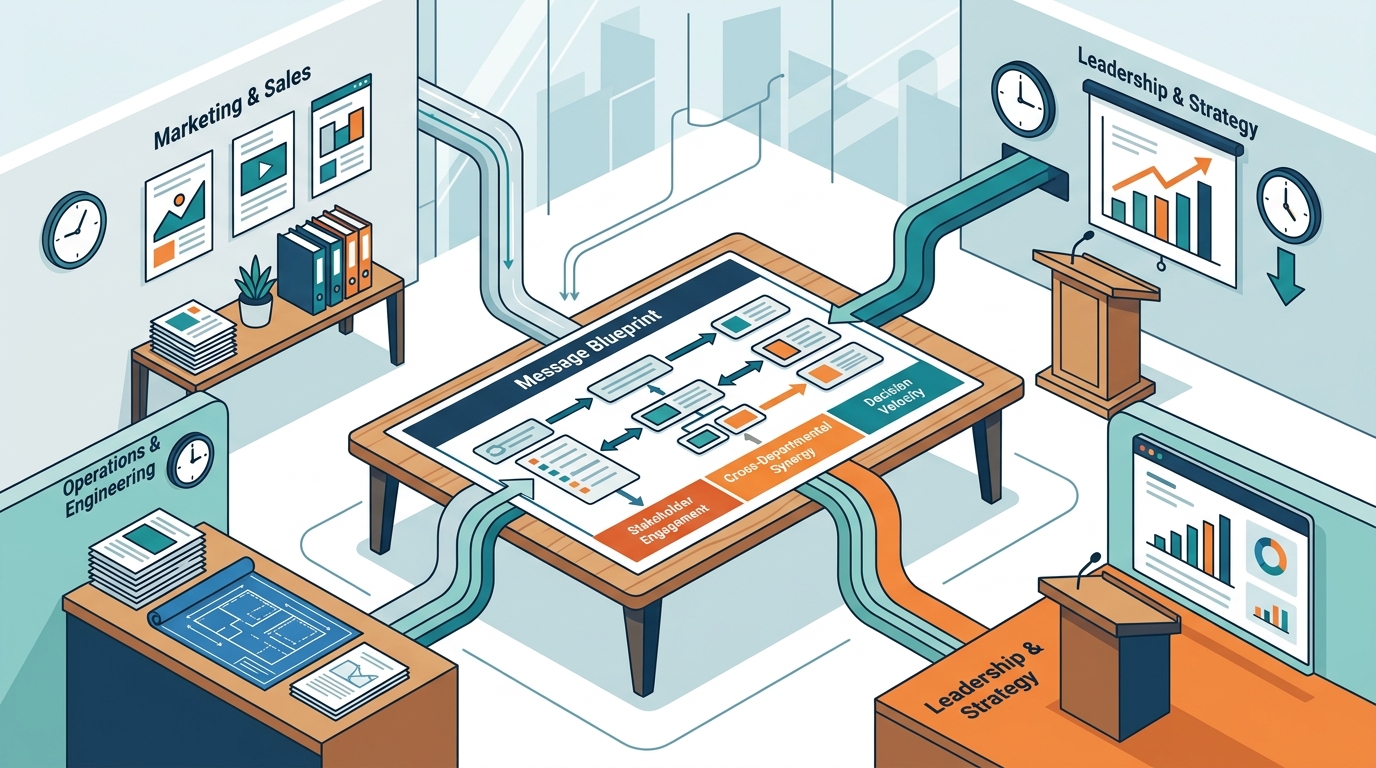
Effective team presentations require a shared architectural blueprint. Collaborative messaging is a structured communication framework where multiple speakers deliver a unified narrative without overlapping arguments. Every participant must understand how their segment connects to the overarching storyline. This process begins with rigorous content mapping before any slide design occurs. Teams should draft a master outline that assigns specific data points to designated speakers. This prevents conflicting arguments and eliminates contradictory messaging during live delivery.
Structuring Group Narratives
Group narratives function as a single continuous argument rather than a series of disconnected updates. Each speaker must reference the previous segment and explicitly introduce the next transition. This technique creates a seamless viewing experience for external stakeholders. Internal alignment sessions should occur at least three days before the scheduled presentation date. These rehearsals identify logical gaps and redistribute workload evenly across the group.
Aligning Core Objectives
Alignment requires explicit agreement on the primary call to action. Teams often fail because members prioritize individual achievements over collective outcomes. Leadership must establish a single success metric before drafting materials. This metric dictates which data points receive emphasis and which details get removed. Clear objectives prevent scope creep and keep the presentation tightly focused on business priorities.
Delivery Mechanics for Unified Audiences
Delivery mechanics determine how information lands with the audience. Technical proficiency matters less than psychological readiness. Speakers must manage physiological stress responses through controlled breathing and deliberate pacing. Teams should practice transitions until they occur without verbal hesitation. This synchronization projects competence and builds immediate audience trust.
Managing Speaking Anxiety
Speaking anxiety remains the primary barrier to effective team communication. Organizations report that over sixty percent of professionals experience elevated cortisol levels before high-stakes presentations. Guided exposure therapy through simulated environments drastically reduces these physiological responses. Teams should record practice sessions and review them collectively. This objective feedback loop replaces subjective worry with actionable improvement strategies.
Synchronizing Visual Cues
Visual synchronization ensures that slides, handouts, and verbal commentary move in perfect unison. Mismatched visuals create cognitive friction and distract the audience from core arguments. Design teams must establish a unified template before content creation begins. Consistent typography, color coding, and data visualization standards reinforce brand authority. Speakers should rehearse clicking transitions in exact rhythm with their spoken sentences.
Interactive Frameworks for Dynamic Engagement
Modern audiences expect active participation rather than passive listening. Interactive frameworks transform static presentations into collaborative problem-solving sessions. Facilitators must design specific intervention points where the audience contributes data or feedback. These checkpoints maintain attention spans and surface hidden stakeholder concerns early in the process.
Facilitating Real-Time Feedback
Real-time feedback mechanisms require structured question windows rather than open-ended interruptions. Teams should schedule dedicated polling segments after each major section. This approach captures audience sentiment without derailing the primary agenda. Facilitators must train all speakers to acknowledge responses and integrate them into subsequent arguments. This adaptive technique demonstrates responsiveness and builds long-term credibility.
Leveraging Audience Participation
Audience participation transforms passive observers into active collaborators. Teams should prepare scenario-based exercises that require attendees to apply presented concepts. These exercises validate comprehension and reveal knowledge gaps before implementation begins. Facilitators must provide clear instructions and time limits for each activity. Successful execution requires meticulous rehearsal and contingency planning for technical failures.
Leadership Communication Protocols
Leadership communication protocols establish the behavioral standards for executive presenters. Senior stakeholders expect concise, data-driven arguments that directly support strategic initiatives. Executives must master the art of executive presence, which combines vocal authority, strategic body language, and decisive pacing. Teams should model these behaviors during internal training sessions to ensure consistency across all client-facing interactions.
Executive Presence Standards
Executive presence is the measurable combination of vocal authority, strategic body language, and decisive pacing that establishes immediate stakeholder trust. Research indicates that audiences form initial credibility judgments within the first seven seconds of a presentation. Leaders must eliminate filler words, maintain steady eye contact, and utilize purposeful gestures. These nonverbal cues signal competence and reduce audience skepticism. Training programs should include video analysis to identify and correct distracting mannerisms.
Decision-Driven Storytelling
Decision-driven storytelling is a presentation methodology that prioritizes actionable business outcomes over historical context or background data. Leaders must frame every narrative around a specific business problem and its corresponding solution. This structure eliminates unnecessary background information and accelerates executive decision-making. Teams should practice condensing complex data into three core arguments. This discipline ensures that presentations remain focused on driving measurable organizational growth.
Measuring Team Presentation Effectiveness
Quantifying presentation success requires standardized evaluation metrics. Organizations must track conversion rates, stakeholder satisfaction scores, and follow-up action items. The following table outlines the primary evaluation frameworks used by top-performing teams.
| Framework Type | Primary Metric | Implementation Strategy | Target Outcome |
|---|---|---|---|
| Pre-Post Assessment | Knowledge Retention Rate | Identical quizzes before and after delivery | Measures content absorption accuracy |
| Stakeholder Sentiment | Net Promoter Score | Post-presentation digital surveys | Tracks audience satisfaction and trust |
| Action Conversion | Follow-Through Percentage | Project milestone tracking | Links presentation to operational results |
| Engagement Index | Interaction Frequency | Live polling and Q&A participation | Measures audience attention and involvement |
Key Takeaways
- Structured messaging frameworks increase cross-departmental project success by twenty percent.
- Teams should conduct alignment sessions at least three days before live delivery.
- Speaking anxiety affects over sixty percent of professionals before high-stakes events.
- Visual synchronization requires unified templates and rehearsed transition timing.
- Real-time feedback mechanisms must include scheduled polling segments.
- Executives form credibility judgments within the first seven seconds of speaking.
- Decision-driven storytelling prioritizes actionable outcomes over historical context.
Frequently Asked Questions
How do teams prepare for high-stakes client presentations?
Teams should begin preparation by mapping core objectives and assigning specific content segments to individual speakers. Internal rehearsals must occur at least three days before the scheduled event. This timeline allows sufficient time for video review and structural adjustments.
What is the most effective way to handle technical failures during live delivery?
Technical failures require pre-planned contingency protocols that keep the presentation moving forward. Teams should maintain printed handouts and offline backup files for all critical slides. Speakers must practice verbalizing key data points without relying on visual aids.
How many speakers work best for a standard corporate presentation?
Optimal team presentations typically feature three to five speakers to maintain audience attention while distributing workload evenly. Larger groups require strict timeboxing and explicit transition protocols to prevent narrative fragmentation.
What metrics should organizations track to measure presentation success?
Organizations should track knowledge retention rates, stakeholder sentiment scores, and follow-through percentages. These metrics directly correlate with long-term client retention and internal project velocity.
How can teams reduce speaking anxiety during executive reviews?
Teams can reduce speaking anxiety through guided exposure therapy and structured breathing exercises. Recording practice sessions and reviewing them collectively transforms subjective worry into actionable improvement strategies.
What role does visual design play in team presentation effectiveness?
Visual design establishes credibility and reduces cognitive friction for the audience. Unified templates with consistent typography and data visualization standards reinforce brand authority and keep focus on core arguments.
How frequently should organizations conduct internal presentation training?
Organizations should conduct internal presentation training quarterly to maintain skill proficiency and adapt to evolving audience expectations. Regular workshops ensure that new team members integrate seamlessly into established communication protocols.
Next Steps for Your Organization
Transforming individual contributors into a unified presentation team requires structured coaching and consistent practice. Our corporate training programs provide exactly this framework. We specialize in business presentation skills that align messaging, refine delivery mechanics, and measure long-term impact. Schedule a free consultation with our training specialists today. Visit our Business Presentation Skills page to explore customized team packages. Book your Consulting and Partnership Program to begin transforming your communication infrastructure. Secure your team seat in our next live workshop and experience measurable results within thirty days. Review our client success stories to see how other enterprises achieved breakthrough communication outcomes.