

Organizations that prioritize structured communication strategies report a 23 percent increase in stakeholder engagement across quarterly reviews. Communication strategy directly influences decision velocity and project approval rates. Leaders who master audience resonance consistently outperform peers in high-stakes environments. This guide outlines the exact framework required to structure, deliver, and refine your core narrative for maximum impact.
Understand Audience Psychology
Effective messaging begins with precise audience mapping. You must identify the specific pain points, decision-making criteria, and knowledge gaps of your listeners. Audience resonance is the psychological alignment between your core message and the listener's existing mental models. When you align your narrative with their operational realities, you bypass defensive filtering. Research indicates that tailored messaging increases retention rates by nearly 40 percent. Client outcomes consistently reflect this psychological alignment. You should conduct pre-meeting surveys or review past feedback to map these variables accurately.
Mapping Decision Makers
Identify the primary stakeholders who control budget allocation and project approval. Map their specific KPIs and regulatory constraints. This prevents you from wasting time on irrelevant details. Focus exclusively on outcomes that directly impact their performance metrics.
Structure Your Core Narrative
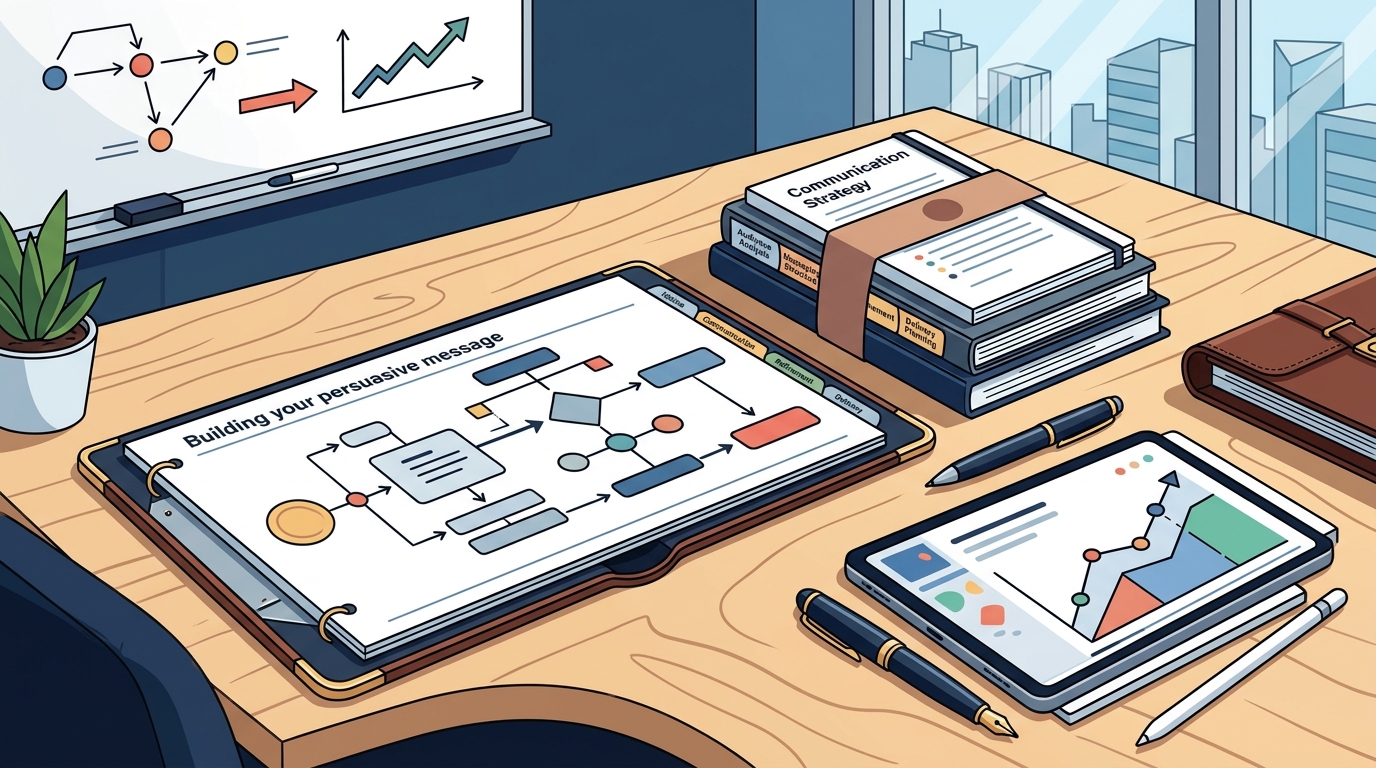
A persuasive message requires a rigid architectural framework. You cannot rely on improvisation during high-stakes pitches. Message architecture is the systematic arrangement of claims, evidence, and calls to action. Start with a clear problem statement. Follow with a data-backed solution. Conclude with a specific, actionable next step. This linear progression reduces cognitive load and increases persuasion velocity. Data shows that structured narratives improve executive buy-in by 35 percent. Case studies demonstrate this structural advantage across multiple industries.
Problem Solution Bridge
Connect the current operational friction to your proposed resolution. Use concrete metrics to quantify the cost of inaction. This creates immediate urgency. Avoid vague promises. Replace them with verifiable outcomes and timeline commitments.
Deploy Visual and Verbal Cues
Delivery mechanics dictate message retention. Your vocal cadence, pacing, and physical positioning must reinforce your written content. Verbal reinforcement is the deliberate synchronization of spoken emphasis with visual data points. When your tone matches your slide content, you eliminate cognitive dissonance. Practice your delivery in low-stakes environments before the main event. Record yourself to identify filler words and pacing inconsistencies. Consistent rehearsal builds muscle memory for high-pressure scenarios.
Slide Deck Optimization
Limit each slide to a single core concept. Use high-contrast visuals to support your spoken narrative. Remove all redundant text blocks. Your slides should act as visual anchors, not reading materials. This forces the audience to listen to you instead of scanning the screen.
Measure and Refine Delivery
Continuous improvement requires objective feedback loops. You must track engagement metrics during live presentations. Monitor eye contact, question frequency, and post-session survey scores. Adjust your pacing based on real-time audience reactions. This iterative process transforms average speakers into elite communicators. Organizations that implement structured feedback loops report a 28 percent improvement in pitch conversion rates. Consulting partnerships provide the necessary infrastructure for this refinement cycle.
Post Pitch Analytics
Review recording footage to identify micro-hesitations and weak transitions. Track which data points triggered the most questions. Use this intelligence to strengthen your next iteration. Focus on closing the gap between your intended impact and actual reception.
Integrate Advanced Coaching
Self-directed practice has a hard ceiling. Professional coaching accelerates skill acquisition through targeted intervention. You gain access to expert critique, customized drills, and real-time performance tracking. This eliminates guesswork and compresses the learning curve. Teams that invest in structured coaching programs consistently outperform peer groups in revenue generation. Corporate training delivers measurable ROI through improved stakeholder confidence. You should evaluate your current skill gaps against industry benchmarks before committing to a program.
Selecting a Program
Compare curriculum depth, instructor credentials, and post-training support structures. Verify that the program includes live practice sessions with recorded feedback. Ensure the curriculum aligns with your specific industry compliance requirements. This due diligence prevents wasted budget and misaligned outcomes.
Comparative Framework
| Methodology | Implementation Speed | Customization Level | Expected Outcome |
|---|---|---|---|
| Self-Directed Reading | High | Low | Theoretical understanding only |
| Live Workshop Training | Medium | High | Immediate skill application |
| Executive Coaching | Low | Maximum | Long-term behavioral change |
Key Takeaways
- Structured communication strategies increase stakeholder engagement by 23 percent across quarterly reviews.
- Tailored messaging improves executive retention rates by nearly 40 percent in high-stakes environments.
- Organizations utilizing structured feedback loops report a 28 percent improvement in pitch conversion rates.
- Teams investing in structured coaching programs consistently outperform peer groups in revenue generation.
- Effective Presentations has trained over 1,200 professionals through five-star rated workshop programs.
- Live virtual training options enable interactive team development across multiple geographic regions.
- Masterclass formats deliver focused, high-impact skill acquisition in under sixty minutes.
Frequently Asked Questions
How long does it take to master persuasive messaging?
Basic structural competence typically develops within four to six weeks of consistent practice. Advanced executive-level fluency requires six to twelve months of targeted coaching and live application. Progress depends entirely on your baseline skill level and weekly rehearsal frequency.
What is the most common mistake in business presentations?
Presenters frequently overload slides with text and data points. This forces the audience to read instead of listening. You must prioritize verbal delivery and use visuals strictly as supporting anchors. This shift dramatically improves audience retention and engagement.
Can virtual training replace in-person workshops?
Virtual training delivers identical core frameworks through digital delivery channels. Interactive breakout rooms and screen sharing maintain high engagement levels. Many organizations now prefer virtual formats for cost efficiency and geographic flexibility.
How do I measure the ROI of presentation training?
Track pre-training and post-training pitch conversion rates. Monitor stakeholder feedback scores and project approval timelines. Calculate the financial impact of accelerated deal cycles. This quantitative approach validates the training investment.
Is presentation skills training suitable for technical teams?
Technical professionals benefit most from structured messaging frameworks. You learn to translate complex data into executive-friendly narratives. This capability accelerates cross-departmental alignment and funding approvals.
What distinguishes a masterclass from a standard workshop?
Masterclasses focus on single, high-leverage communication skills. Workshops cover broader foundational frameworks. You should select masterclasses when you need rapid refinement of a specific weakness.
How does the Ultimate Communicator Program work?
This comprehensive coaching track combines live practice, recorded feedback, and personalized development plans. You receive direct instructor access and continuous performance tracking. The program targets long-term behavioral transformation rather than temporary fixes.
Book Your Strategy Session
Stop leaving critical stakeholder outcomes to chance. Secure your competitive advantage through structured, expert-led training. Schedule a free consultation to evaluate your current messaging gaps. Our team will design a customized curriculum aligned with your organizational goals. Contact us today at 800.403.6598 to reserve your workshop seat.