

Team Presentation Skills Communication Techniques for Modern Workplaces
Organizations that invest in structured communication training consistently outperform peers in project delivery and client retention. Modern teams face increasing pressure to deliver complex information without losing audience engagement. The solution requires systematic frameworks rather than improvisation. Teams must replace scattered speaking habits with synchronized delivery protocols. This guide outlines proven methodologies to elevate group presentations and strengthen internal alignment. (Effective Presentations Presentation Skills)
Structuring Team Narratives for Maximum Impact
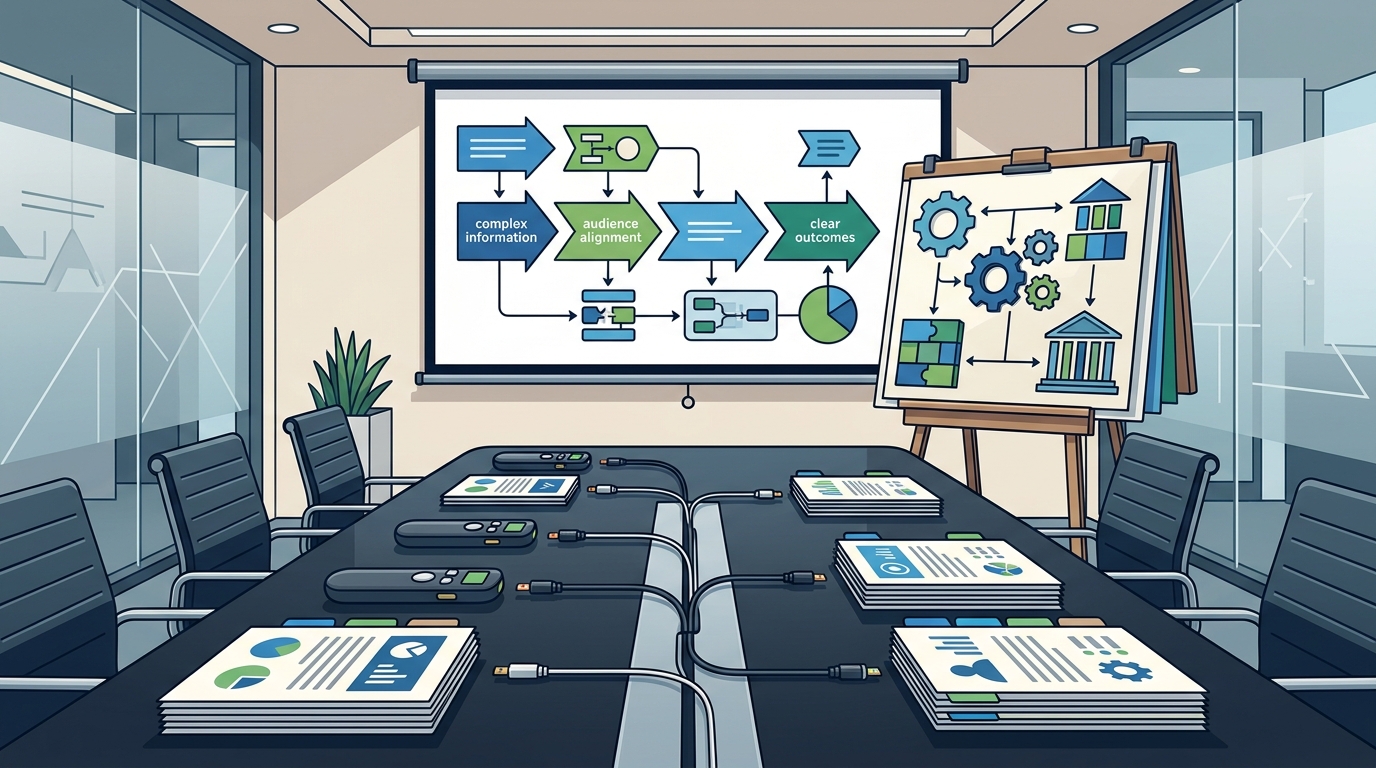
Effective team presentations require a unified narrative architecture. Each speaker must understand their specific role within the broader message. Presentation architecture is the systematic organization of visual and verbal elements to guide audience comprehension. Teams should map out transitions before drafting slides. This prevents overlapping points and eliminates redundant explanations. When every contributor understands the core objective, the final delivery feels cohesive rather than fragmented. Organizations that adopt structured messaging frameworks report significantly higher audience retention rates. You can explore our Messaging and Structure programs to implement this methodology across your department.
Defining Core Objectives
Every team presentation must begin with a single measurable outcome. Speakers should identify the exact decision they want stakeholders to make. This clarity prevents scope creep and keeps discussions focused. Teams should draft a one-sentence mission statement before designing any materials. This statement becomes the anchor for every subsequent slide and speaking segment. When the objective remains visible, team members naturally align their talking points. This alignment reduces cognitive load for the audience and increases persuasive impact.
Mastering Collaborative Delivery Protocols
Group presentations fail when speakers treat their segments as isolated performances. Collaborative delivery is a structured method where multiple speakers transition seamlessly to maintain narrative momentum. Teams must rehearse handoffs until they feel natural rather than mechanical. Speakers should establish clear verbal cues to signal transitions. This technique eliminates awkward pauses and maintains audience focus. Regular practice sessions allow teams to identify friction points before live events. You can access our Business Presentation Skills workshops to practice these transitions in a controlled environment.
Managing Speaking Anxiety
Nervousness often stems from unclear role assignment. When team members know exactly when to speak and what to say, anxiety decreases significantly. Organizations should assign specific content ownership to each participant. This clarity reduces last-minute scrambling and builds individual confidence. Teams should also practice breathing techniques and pacing strategies. These physiological tools stabilize voice quality and project authority. Consistent rehearsal transforms nervous energy into focused delivery.
Implementing Feedback Loops for Continuous Improvement
High-performing teams treat every presentation as a learning opportunity. Feedback iteration is the continuous cycle of recording, reviewing, and refining spoken content to eliminate delivery friction. Teams should record practice sessions and review them objectively. This process reveals pacing issues, filler words, and unclear transitions. Constructive criticism must focus on specific behaviors rather than personality traits. Teams that implement structured review cycles consistently improve their delivery metrics. Our Pitch and RFP Partnership program provides dedicated coaching to refine these review processes.
Building Psychological Safety
Teams cannot improve without a safe environment for honest critique. Leaders must model vulnerability by accepting feedback gracefully. When team members see executives embracing constructive criticism, they follow suit. Organizations should establish clear ground rules for feedback sessions. These rules should prioritize actionable suggestions over vague opinions. Psychological safety accelerates skill acquisition and strengthens team cohesion. Teams that practice open critique consistently outperform rigid hierarchies.
Leveraging Visual Architecture in Group Presentations
Slides should support speakers rather than replace them. Visual architecture must align with the spoken narrative to reinforce key messages. Teams should limit text density and prioritize high-impact graphics. Each slide should communicate one core concept without overwhelming the audience. Speakers must practice referencing visuals naturally without reading directly from the screen. This synchronization keeps audiences engaged and reduces cognitive overload. Organizations that master visual alignment consistently achieve higher stakeholder buy-in. You can explore our Corporate Virtual Training to integrate visual strategies into remote team workflows.
Designing for Remote Audiences
Virtual presentations require adjusted visual pacing and interaction techniques. Teams should incorporate interactive elements to maintain remote attention. Polls, quick questions, and collaborative whiteboards keep distributed audiences engaged. Speakers must project energy slightly higher to compensate for digital distance. Clear audio equipment and consistent lighting also impact perceived professionalism. Teams that adapt their visual strategies for digital platforms consistently achieve better engagement metrics.
Navigating High-Stakes Corporate Environments
Executive presentations demand precision and strategic foresight. Teams must anticipate difficult questions and prepare structured responses. High-stakes environments reward teams that demonstrate deep subject matter expertise. Speakers should research stakeholder backgrounds and tailor messaging accordingly. This preparation demonstrates respect and increases persuasive authority. Organizations that invest in executive coaching consistently secure larger contracts. Our Leadership Training curriculum addresses these advanced communication challenges.
Handling Objections Gracefully
Pushback is inevitable during complex presentations. Teams should view objections as opportunities to clarify value rather than threats. Speakers must acknowledge concerns directly before providing counterpoints. This approach builds trust and demonstrates confidence. Teams that practice objection handling consistently navigate difficult conversations with poise. Strategic preparation transforms potential conflicts into collaborative problem-solving sessions.
Key Takeaways
- Unified narrative architecture prevents overlapping points and eliminates redundant explanations.
- Collaborative delivery requires practiced handoffs and clear verbal transition cues.
- Feedback iteration relies on objective recording and structured review cycles.
- Visual alignment must support spoken content without overwhelming audience attention.
- Psychological safety accelerates skill acquisition and strengthens team cohesion.
- Executive preparation demands deep stakeholder research and strategic objection handling.
- Virtual presentations require adjusted pacing and interactive digital elements.
Frequently Asked Questions
How many speakers work best for a team presentation?
Three to five speakers typically maintain audience attention without causing fatigue. Larger groups require strict segment timing and clear role assignment. Teams should prioritize quality over quantity to maximize impact.
What is the most effective way to handle technical difficulties?
Teams should prepare backup materials and offline presentation files. Speakers must continue delivering core messages while technical issues resolve. Calm troubleshooting demonstrates professionalism and maintains audience confidence.
How can teams measure presentation success after delivery?
Organizations should track stakeholder feedback, follow-up actions, and conversion rates. Post-event surveys provide direct insights into audience perception. Teams that analyze these metrics consistently refine their delivery strategies.
Should team presentations include humor or personal anecdotes?
Strategic humor can build rapport when aligned with audience expectations. Personal anecdotes must directly support core objectives rather than distract. Teams should test relevance carefully before incorporating informal elements.
How does virtual training differ from in-person team coaching?
Virtual programs focus on digital engagement techniques and remote delivery protocols. In-person sessions emphasize physical presence and real-time audience reading. Both formats require structured practice and objective feedback cycles.
What role does leadership play in team presentation success?
Leaders must model prepared communication and accept constructive feedback. Executive support validates the importance of communication training. Teams that receive active leadership endorsement consistently achieve higher performance standards.
Next Steps for Your Organization
Transforming team communication requires structured training and consistent practice. Organizations that invest in professional coaching consistently outperform peers in client retention and project delivery. Schedule a consultation to evaluate your current communication frameworks and identify growth opportunities. Visit our About Us page to learn more about our methodology. Contact our team today to book a customized training session and elevate your team performance.