

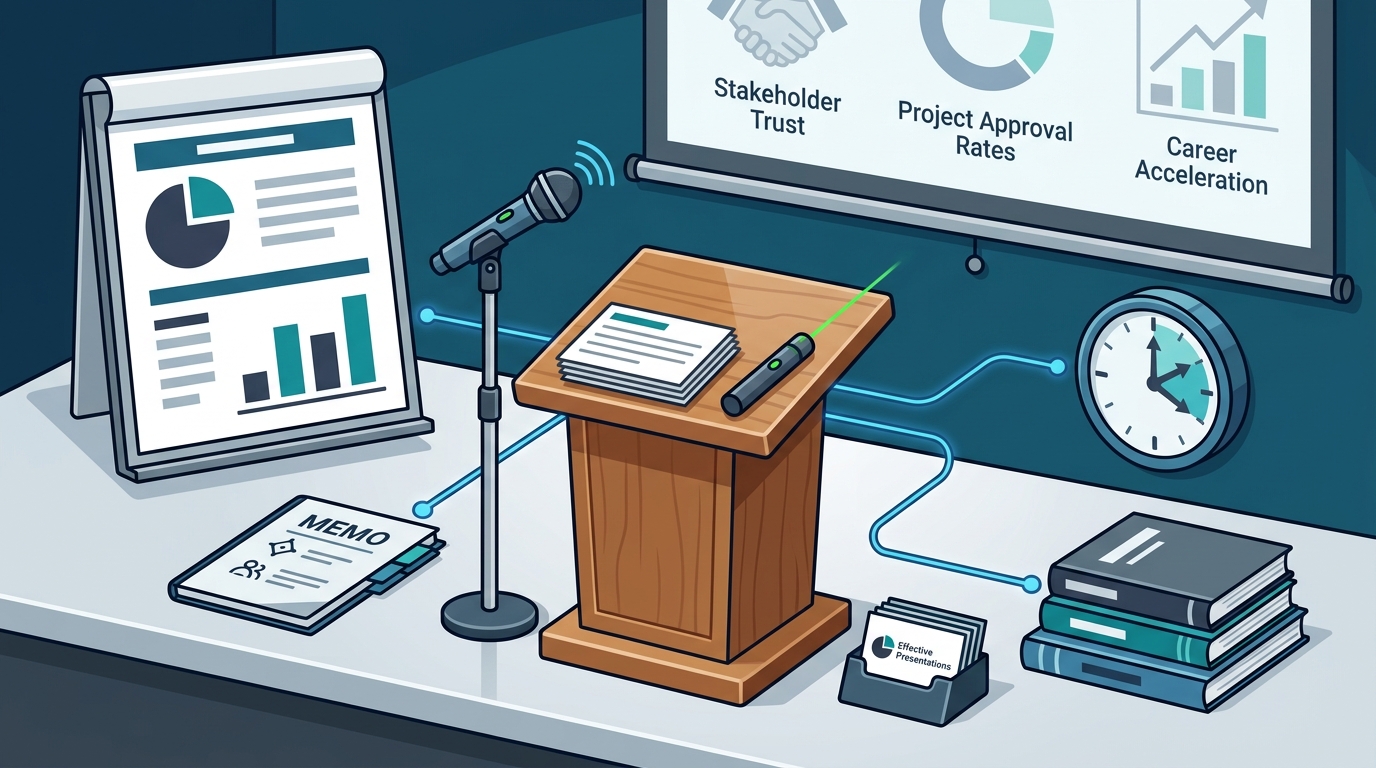
Data shows that 88% of professionals report feeling nervous about public speaking, yet mastering core presentation skills remains a critical career accelerator for leaders and teams alike. According to industry benchmarks, organizations that invest in structured communication training see a significant increase in stakeholder trust and project approval rates. This guide breaks down the essential components required to deliver high-impact presentations that persuade, inform, and drive action. Effective Presentations offers comprehensive training to address these challenges and help your team communicate with clarity.
Clear Messaging and Structure
A presentation is a structured communication event designed to convey specific information or persuade an audience toward a desired outcome. Without a logical flow, even the most compelling data fails to resonate with listeners. Successful communicators prioritize a clear narrative arc that guides the audience from the problem statement to the proposed solution. This structure reduces cognitive load and ensures the core message is retained long after the session ends. Our blog explores how structure influences retention and decision-making. Teams often struggle with messaging because they focus on content volume rather than strategic framing. Our Messaging & Structure training helps speakers distill complex ideas into sharp, influential narratives. Clear messaging transforms presentations from information dumps into persuasive tools that drive business results.
Confident Delivery Techniques
Delivery refers to the vocal and physical execution of a message, encompassing tone, pace, posture, and eye contact. Research indicates that non-verbal cues account for a substantial portion of audience perception. Practicing in low-stakes environments builds the muscle memory required for high-pressure scenarios. Live workshops provide real-time feedback on delivery mechanics and help speakers overcome anxiety. Confidence is not an innate trait but a trainable skill that emerges from preparation and practice. Our Presentation Performance Lab offers advanced coaching for teams ready to perform when it counts. Speakers who master delivery commands attention and establishes credibility instantly. This element is critical for leadership roles where presence influences organizational culture.
Audience Engagement Strategies
Audience analysis is the process of evaluating listener demographics, knowledge levels, and expectations to tailor content effectively. Ignoring audience needs leads to disengagement and wasted time. Effective speakers adapt their language and examples to match the room. Case studies demonstrate how tailored content drives results across diverse industries. Engagement requires interactive elements such as rhetorical questions, polls, or storytelling. These techniques keep the audience mentally active and invested in the outcome. Our Corporate Virtual Training allows teams to practice engagement strategies in remote environments. Understanding the audience's pain points allows presenters to position their message as the solution. This alignment increases the likelihood of securing buy-in and achieving desired objectives.
Visual Aid Best Practices
A visual aid is any graphic or multimedia element used to support spoken content and enhance audience retention. Overloading slides with text creates cognitive friction and distracts from the speaker. Best practices emphasize minimalism and high-impact visuals. Consulting programs help teams refine their visual storytelling and design. Visuals should reinforce the message, not replace the speaker. Effective use of charts, images, and diagrams can accelerate understanding of complex data. Presenters must ensure their visuals are legible and relevant to each section of the talk. Poor visual design can undermine even the strongest content. Our training emphasizes the synergy between speaker and slide to create a cohesive experience. Mastering visual aids ensures that the audience focuses on the key takeaways without distraction.
Handling Q&A and Objections
Q&A sessions test the depth of a presenter's preparation and ability to think on their feet. Anticipating difficult questions allows for smoother transitions and reinforces authority. About our methodology reveals how we train teams to handle objections with grace. This segment often determines the final impression and perceived expertise. Presenters should prepare for common objections and have data-backed responses ready. Active listening during questions ensures accurate understanding before responding. Our Pitch & RFP Partnership provides dedicated training for high-stakes Q&A scenarios. Handling questions confidently builds trust and demonstrates subject matter expertise. This element is essential for sales pitches, executive briefings, and client meetings.
Preparation and Rehearsal Protocols
Rehearsal is the iterative process of refining content and delivery through repeated practice. Statistics suggest that unprepared speakers lose credibility rapidly, while rehearsed speakers command attention. Visit our homepage to schedule a consultation and start your training journey. Effective preparation includes timing checks, technical rehearsals, and content reviews. Our eCourse offers self-paced online learning for individuals seeking flexibility. Rehearsal helps identify weak points in the narrative and allows for adjustments. Presenters should practice in conditions that mimic the actual environment. This includes testing microphones, projectors, and remote connections. Consistent rehearsal builds fluency and reduces reliance on notes. This element is the foundation of all successful presentations and ensures smooth execution.
Key Takeaways
- A presentation is a structured communication event designed to convey specific information or persuade an audience toward a desired outcome.
- Delivery refers to the vocal and physical execution of a message, encompassing tone, pace, posture, and eye contact.
- Audience analysis is the process of evaluating listener demographics, knowledge levels, and expectations to tailor content effectively.
- A visual aid is any graphic or multimedia element used to support spoken content and enhance audience retention.
- Our Presentation Performance Lab offers advanced coaching for teams ready to perform when it counts.
- Trusted by 1,200+ five-star reviews, our approach has been validated across diverse industries.
- Live workshops provide real-time feedback on delivery mechanics and help speakers overcome anxiety.
Frequently Asked Questions
What is the most important element of a successful presentation?
Clear messaging and structure are widely considered the most important elements. Without a logical flow, the audience cannot follow the argument or retain key information. Our training emphasizes distilling complex ideas into sharp, influential narratives that drive action.
How can I improve my presentation delivery skills?
Improving delivery requires practice, feedback, and conscious effort. Our live workshops provide real-time coaching on vocal variety, posture, and eye contact. Repeated practice in low-stakes environments builds the confidence needed for high-pressure scenarios.
What role do visual aids play in presentations?
Visual aids support spoken content and enhance audience retention when used correctly. Best practices emphasize minimalism and high-impact visuals that reinforce the message. Our consulting programs help teams refine their visual storytelling to avoid cognitive friction.
How do I handle difficult questions during a Q&A session?
Handling difficult questions requires preparation and active listening. Anticipating objections and having data-backed responses ready builds authority. Our Pitch & RFP Partnership provides dedicated training for high-stakes Q&A scenarios.
What is the difference between presentation skills training and public speaking training?
Presentation skills training focuses on structure, messaging, and visual design. Public speaking training emphasizes delivery, confidence, and audience connection. Our programs integrate both to provide a comprehensive communication solution.
How long does it take to see results from presentation training?
Results vary based on individual effort and program intensity. Our eCourse offers self-paced learning for flexible progress. Many teams report immediate improvements after our live workshops due to real-time feedback.
Can virtual presentations be as effective as in-person ones?
Yes, virtual presentations can be highly effective with the right strategies. Our Corporate Virtual Training teaches techniques for remote engagement. Mastering virtual delivery ensures your message lands regardless of the format.
Ready to Transform Your Communication?
Mastering the key elements of a successful presentation requires dedication and the right support. Effective Presentations offers tailored training programs to help your team communicate with clarity and confidence. From live workshops to virtual coaching, we provide the tools you need to succeed. Contact us today to schedule a free consultation and start your journey toward impactful communication.