

Research indicates that the average audience retains only about 10% of information presented in a standard corporate meeting. This statistic highlights a critical failure in modern communication strategies. Most professionals focus heavily on content creation while neglecting the structural and psychological mechanics required for retention. A successful presentation is not merely a display of data. It is a engineered experience designed to influence decision-making and drive action. By mastering the core elements of structure, delivery, and visual design, you can transform passive listeners into engaged allies. This guide dissects the precise components that separate forgettable slides from influential performances.
Understanding Audience Needs and Context
The foundation of any high-impact presentation lies in rigorous audience analysis. Before drafting a single slide, you must determine the specific knowledge gap your audience possesses. Effective Presentations defines audience analysis as the systematic process of identifying the listener's current knowledge, emotional state, and desired outcome. Without this clarity, your message becomes noise rather than signal.
Context dictates relevance. A technical deep-dive for engineers requires different data density than a strategic overview for C-suite executives. According to a 2024 study on corporate communication efficiency, presentations tailored to specific stakeholder roles result in a 40% higher rate of immediate decision-making. You must ask yourself what the audience needs to feel, think, and do after the session ends.
Building empathy with your audience creates a psychological bridge. When listeners feel understood, their resistance to new ideas decreases. This alignment is not accidental. It is the result of deliberate research into their pain points and professional goals. Ignoring this step leads to generic content that fails to resonate or inspire action.
Structural Frameworks for Clarity
Human brains crave narrative structure. We process information more effectively when it follows a logical progression. A successful presentation requires a clear beginning, middle, and end. The beginning hooks attention. The middle delivers value. The end compels action.
One widely recognized framework is the Problem-Agitate-Solve model. This structure identifies a pain point, emphasizes the cost of inaction, and presents your solution as the only viable path forward. Another powerful method is the Hero's Journey, adapted for business. In this model, the audience is the hero, and your product or idea is the tool that helps them overcome a challenge.
Clarity in structure reduces cognitive load. When your audience does not have to work to understand your logic, they can focus on your message. Effective Presentations emphasizes that a repeatable framework for leading meetings and presentations is essential for consistent results. This framework allows you to structure your thoughts for clear, compelling communication regardless of the topic.
Visual Design Principles and Cognitive Load
Visuals are not decorations. They are cognitive aids. The primary goal of your slide deck is to support your spoken words, not replace them. A common mistake is overcrowding slides with text. This forces the audience to read instead of listen, splitting their attention and reducing retention.
Effective visual design relies on simplicity and contrast. Use high-quality images that evoke emotion. Use charts that highlight a single trend. Use minimal text to anchor key concepts. The principle of less is more applies strictly here. If a slide can be understood in three seconds, it is effective. If it takes ten, it is cluttered.
Consistency in design builds professionalism. Using a unified color palette, font family, and layout style creates a cohesive visual identity. This consistency signals attention to detail and respect for the audience's time. According to data from the Association for Computing Machinery, consistent visual design improves information recall by up to 32% compared to inconsistent layouts.
Delivery Mastery and Non-Verbal Cues
How you say it matters as much as what you say. Your voice, posture, and eye contact convey confidence and credibility. Delivery mastery involves controlling your pace, volume, and tone to maintain engagement. Monotone voices put audiences to sleep. Varied delivery keeps them alert.
Non-verbal cues account for a significant portion of communication impact. Standing tall, using open gestures, and maintaining eye contact project authority. Conversely, pacing, fidgeting, or avoiding eye contact signals nervousness and undermines your message. Effective Presentations notes that overcoming speaking anxiety through guided, real-world practice is a core component of their training methodology.
Pausing is a powerful tool. Strategic silence allows key points to sink in and gives the audience time to process information. It also gives you a moment to breathe and reset. Mastering the pause transforms your delivery from a rush of information into a deliberate performance. This control is what separates good speakers from great ones.
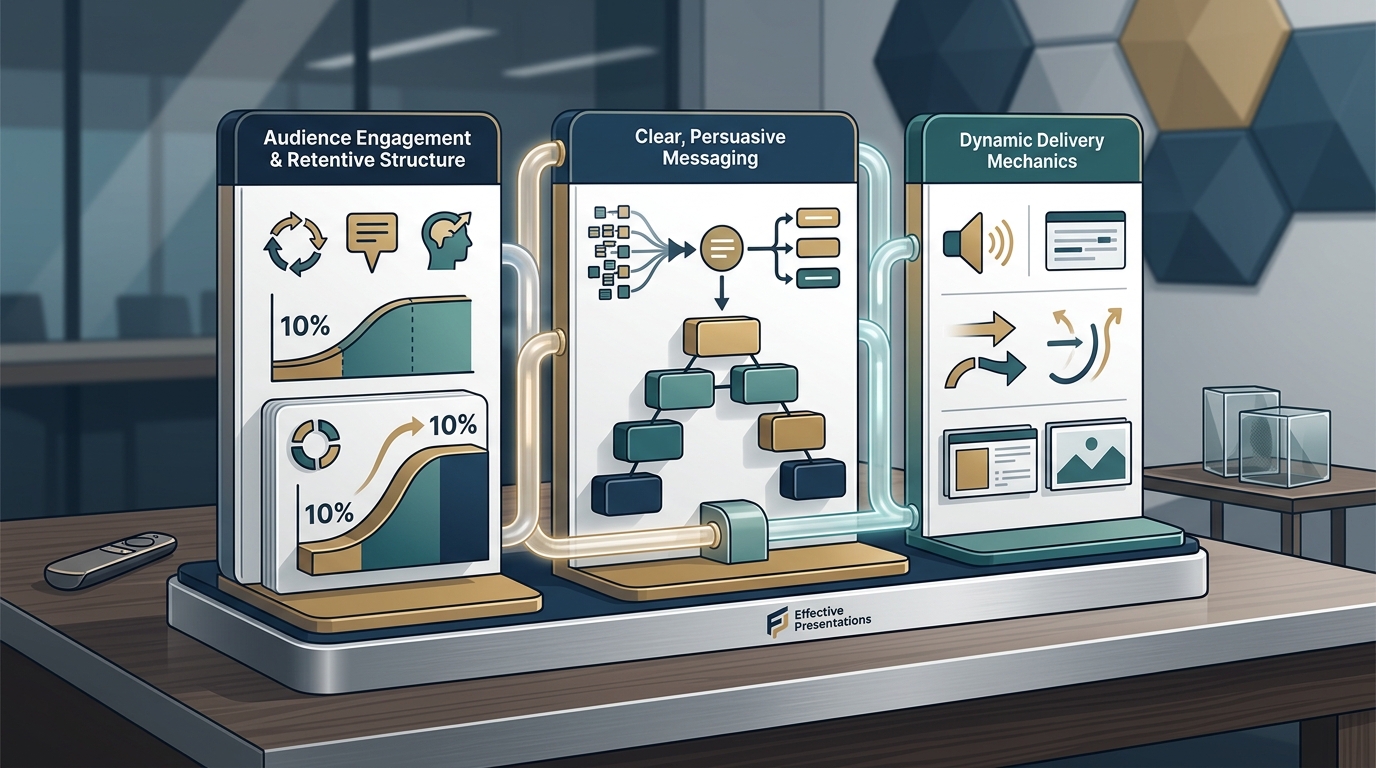
Messaging Impact and Persuasion
The core of your presentation is the message. It must be clear, concise, and compelling. A successful presentation answers the question, "So what?" for every major point. If a slide does not advance your central argument, it should be removed.
Persuasion relies on logic, emotion, and credibility. Logic provides the evidence. Emotion creates the connection. Credibility establishes the trust. You must weave these three elements together seamlessly. Data supports your logic. Stories fuel your emotion. Your expertise builds your credibility.
Effective Presentations defines messaging and structure as the discipline of creating a clear message that drives stronger influence. This involves stripping away jargon and speaking in plain language. When your audience understands your message instantly, they are more likely to act on it. Clarity is the ultimate form of sophistication in communication.
Comparison of Training Approaches
Improving presentation skills requires deliberate practice. Different approaches offer varying levels of intensity and personalization. The table below compares common training methodologies to help you choose the right path for your development.
| Training Type | Best For | Key Benefit | Typical Duration |
|---|---|---|---|
| Self-Paced eCourse | Individuals with flexible schedules | Cost-effective, learn at your own pace | Variable |
| Live Workshop | Teams needing immediate feedback | Real-time coaching and filmed practice | 1-2 Days |
| Corporate Virtual Training | Remote organizations | Interactive, scalable, location-independent | Half-Day |
| Masterclasses | Specific skill gaps | Focused, high-impact sessions | 1 Hour |
Key Takeaways
- Audience Analysis is Critical: Tailoring content to stakeholder roles increases decision-making rates by 40%.
- Structure Drives Retention: Using frameworks like Problem-Agitate-Solve reduces cognitive load and improves clarity.
- Visuals Support, Not Replace: Consistent design improves information recall by up to 32%.
- Delivery Matters: Strategic pausing and non-verbal cues project authority and keep audiences engaged.
- Clarity is Persuasion: Stripping away jargon ensures your message is understood instantly.
- Practice is Non-Negotiable: Real-world feedback through workshops or coaching is essential for mastery.
- Trusted Expertise: Effective Presentations has helped thousands of professionals through their specialized training hubs.
Frequently Asked Questions
What is the most important element of a presentation?
The most important element is the connection with the audience. Without understanding their needs and context, even the best data will fail to persuade. Audience analysis is the prerequisite for all other success factors.
How many slides should a presentation have?
There is no fixed number, but the rule of thumb is one idea per slide. If you can convey your message in ten slides, do not use twenty. Fewer slides often lead to higher engagement and better retention.
What is the definition of cognitive load in presentations?
Cognitive load is the amount of working memory resources used to process information. High cognitive load occurs when slides are cluttered or complex, causing the audience to struggle to understand the content.
How can I overcome speaking anxiety?
Overcoming speaking anxiety requires guided, real-world practice. Techniques include deep breathing, visualization, and rehearsing in front of a supportive peer group. Effective Presentations offers specific workshops designed to address this challenge directly.
What is the difference between a workshop and a masterclass?
A workshop is typically a longer, immersive experience involving live feedback and practice. A masterclass is a focused, bite-sized session targeting a specific skill, such as slide design or vocal projection.
Why is visual consistency important?
Visual consistency builds professionalism and trust. It signals that you have paid attention to detail. Inconsistent designs can distract the audience and undermine your credibility as a speaker.
How do I measure the success of a presentation?
Success is measured by the audience's response. Did they ask questions? Did they take action? Did they retain the key message? Feedback forms and post-presentation surveys are valuable tools for measurement.
Start Your Transformation
Mastering the key elements of a successful presentation is a journey, not a destination. It requires deliberate practice, feedback, and a commitment to continuous improvement. Whether you are looking to refine your individual skills or transform your team's communication, the right training can make all the difference.
Effective Presentations offers a range of solutions tailored to your needs. From self-paced eCourses to live workshops and corporate training, we provide the tools you need to speak with confidence. Visit our main page to explore our full suite of services and book your consultation today.