

Public speaking anxiety affects a significant portion of the professional population, yet it remains one of the most trainable skills in business communication. According to industry data, approximately 75% of people experience some form of communication apprehension when facing an audience. This statistic highlights that the struggle is not a personal failure but a universal challenge that requires systematic correction. Effective Presentations has spent over 20 years helping individuals and teams transform this anxiety into confidence through structured, results-driven training programs.
Mistake 1: Poor Structure and Lack of Clarity
One of the most critical errors speakers make is delivering content without a logical framework. When ideas are presented in a disjointed manner, the audience loses track of the core message. This often happens when speakers rely on improvisation rather than a prepared structure. Clear messaging is the foundation of influence, and without it, even the most passionate speaker fails to persuade.
To correct this, you must master the art of messaging and structure. Start by defining a single, clear objective for your presentation. Every point you make should serve that objective. Use signposting language to guide your listeners through your argument. For example, explicitly state what you will cover and summarize what you have just discussed. This technique reduces cognitive load for the audience and reinforces your key points.
Effective Presentations offers specialized training in messaging and structure to help professionals articulate their thoughts with precision. By focusing on the architecture of your speech, you ensure that your audience retains the information long after you leave the stage.
Mistake 2: Neglecting Vocal Variety and Pace
Monotone delivery is a silent killer of engagement. When a speaker maintains a flat pitch and consistent speed, the brain of the listener begins to tune out. Vocal variety is not just about volume; it is about using pitch, pace, and pause to create emotional resonance. A lack of vocal dynamics makes even the most compelling content feel tedious.
Correcting this mistake requires conscious practice of your vocal instrument. Vocal presence is defined as the ability to use your voice to project power, clarity, and authenticity. You can improve this by practicing pauses. A well-timed pause allows the audience to digest complex information and creates a sense of authority. Additionally, vary your pace to emphasize key points. Slow down for important data and speed up slightly for narrative transitions.
Our presentation skills training includes specific modules on vocal control. Participants learn to eliminate filler words and nervous vocal habits that undermine their credibility. By mastering your voice, you transform from a reader of notes into a commanding presence.
Mistake 3: Ignoring Body Language and Eye Contact
Non-verbal communication accounts for a significant portion of how your message is received. Speakers who stare at their notes, avoid eye contact, or adopt closed postures signal insecurity to the audience. This creates a barrier between the speaker and the listeners, reducing trust and engagement.
To fix this, you must develop an engaging presence. This is the ability to communicate in a way that keeps people focused and involved through natural posture and gestures. Start by establishing eye contact with different sections of the room. Do not scan randomly; instead, hold eye contact with one person for a complete thought before moving to another. This technique makes each listener feel personally addressed.
Furthermore, use open gestures to reinforce your points. Avoid crossing your arms or keeping your hands in your pockets. Our public speaking training provides real-time feedback on body language, allowing you to see exactly how you come across. This visual awareness is crucial for correcting unconscious habits that detract from your message.
Mistake 4: Overloading Slides with Text
Many professionals mistakenly believe that slides are a teleprompter for their speech. This leads to dense slides filled with bullet points that the audience reads instead of listening to you. This is a fundamental error in presentation design because it divides the audience's attention. The goal of a presentation is to have the audience focus on you, not the screen.
Correct this by adopting a visual-first approach. Use high-quality images, charts, and minimal text to support your narrative. Each slide should convey one key idea. If you need to explain complex data, use a simple graph rather than a table of numbers. This allows you to speak to the data while the audience sees the trend.
Effective Presentations provides presentation tools and resources to help you design impactful visuals. By simplifying your slides, you reduce cognitive load and increase the persuasive power of your spoken words. Remember, you are the presentation; the slides are just your backdrop.
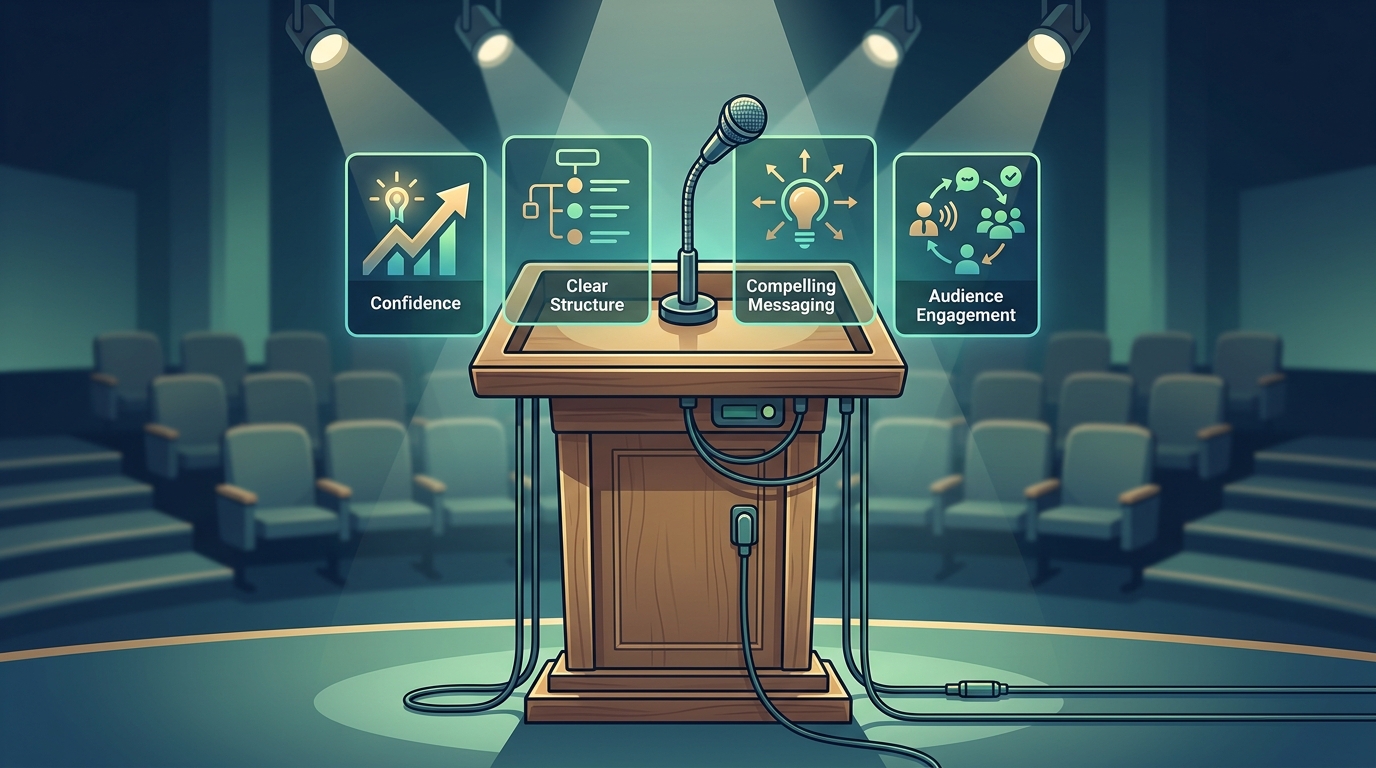
Mistake 5: Failing to Engage the Audience
A common mistake is delivering a monologue rather than a dialogue. Speakers who fail to connect with their audience on an emotional level struggle to inspire action. Engagement is not just about entertainment; it is about creating a shared experience that makes the content relevant to the listeners.
To correct this, you must learn to read the room. Pay attention to non-verbal cues from your audience. Are they leaning in? Are they checking their phones? Adjust your energy and content accordingly. Use storytelling to make abstract concepts concrete. Stories trigger emotional responses and make information more memorable.
Our business presentation skills workshops focus heavily on audience engagement techniques. Participants learn how to open with impact, maintain interest through interactive elements, and close with a clear call to action. By mastering these skills, you turn passive listeners into active participants.
Key Takeaways
- Structure is Key: Always define a clear objective and use signposting to guide your audience through your message.
- Vocal Dynamics: Use pauses, pitch variation, and pace changes to maintain interest and emphasize key points.
- Body Language: Maintain eye contact and use open gestures to build trust and authority.
- Visual Simplicity: Avoid text-heavy slides; use visuals to support, not replace, your spoken words.
- Audience Connection: Engage listeners through storytelling and by reading their non-verbal cues.
- Practice Matters: Skills like vocal control and body language require deliberate practice, not just theoretical knowledge.
- Professional Guidance: Working with expert coaches can accelerate your improvement and provide objective feedback.
Frequently Asked Questions
How long does it take to overcome public speaking anxiety?
While individual experiences vary, most participants in our training programs report significant improvements in confidence within just a few weeks of consistent practice. Our eCourse offers self-paced learning to help you build these skills at your own speed.
What is the difference between public speaking and presentation skills?
Public speaking often refers to impromptu or formal speeches, while presentation skills encompass the broader set of techniques used to deliver structured content, including slide design and audience interaction. Both are covered in our Presentation Performance Lab.
Can virtual training be as effective as in-person workshops?
Yes. Our corporate virtual training programs are designed to replicate the interactive elements of in-person sessions, ensuring that participants receive the same high-quality feedback and engagement.
How do I handle nervousness during a high-stakes pitch?
Preparation is the best antidote to nervousness. Our Pitch & RFP Partnership provides dedicated coaching for high-stakes scenarios, helping you refine your message and manage anxiety through guided practice.
What is the Ultimate Communicator Program?
The Ultimate Communicator Program is our most immersive transformation program, designed for individuals who want to achieve mastery in all aspects of communication, from public speaking to executive presence.
Do you offer training for specific industries?
Yes. We provide specialized training for various sectors, including sales training for persuasive pitches and leadership training for executive communication.
How can I join the Effective Presentations community?
You can join our community for free membership updates, access to resources, and invitations to future webinars and workshops.
Start Your Transformation
Correcting common public speaking mistakes is not just about fixing errors; it is about unlocking your full potential. Whether you are preparing for a single presentation or seeking long-term professional growth, Effective Presentations offers the expertise and support you need. Our team of expert coaches has helped over 1,200 clients achieve remarkable results. Contact us today to schedule a free consultation and discover how we can help you speak with confidence and lead with influence.