

Public speaking is rarely about the presentation itself. It is about the dialogue that follows. According to recent industry analysis, over 60% of audience retention drops during the Q&A session because speakers fail to manage unexpected challenges. This statistic highlights a critical gap in professional training. Most individuals prepare their slides but neglect their responses. When a question catches you off guard, the difference between confidence and confusion becomes apparent. Effective Presentations has observed that this is not a personality flaw. It is a skill gap that can be trained and mastered.
Understanding the Pressure of Live Q&A
The Q&A segment is the most vulnerable part of any presentation. Your audience shifts from passive listeners to active evaluators. They are looking for gaps in your logic or weaknesses in your data. This dynamic creates immediate pressure. You must think on your feet while maintaining composure. Many professionals underestimate this cognitive load. They assume that knowing the material is enough. It is not. Delivery under scrutiny requires a different set of skills.
Effective Presentations offers specialized training to address this exact vulnerability. Their workshops focus on turning anxiety into authority. By practicing in a low-stakes environment, you build the neural pathways needed for high-pressure situations. The goal is not to eliminate nerves. The goal is to perform despite them. This distinction is vital for long-term growth.
Common Failure Modes in Q&A
To recover from a failure, you must first identify the type of failure. Not all questions are created equal. Some are traps. Some are genuine requests for clarification. Others are opportunities to reinforce your message. Recognizing the category allows you to choose the right response. Here are the most common failure modes observed in corporate settings.
The Knowledge Gap
This occurs when you do not know the answer. It is the most feared scenario. The instinct is to bluff or guess. This is a mistake. Audiences can detect uncertainty instantly. A bluff damages credibility more than silence. The failure here is not the lack of knowledge. The failure is the attempt to hide it.
The Hostile Question
Some questions are designed to challenge your authority or expose a flaw. These are often phrased aggressively. The emotional reaction is to defend yourself. This puts you on the defensive and alienates the audience. The failure is taking the bait. You must remain neutral and objective.
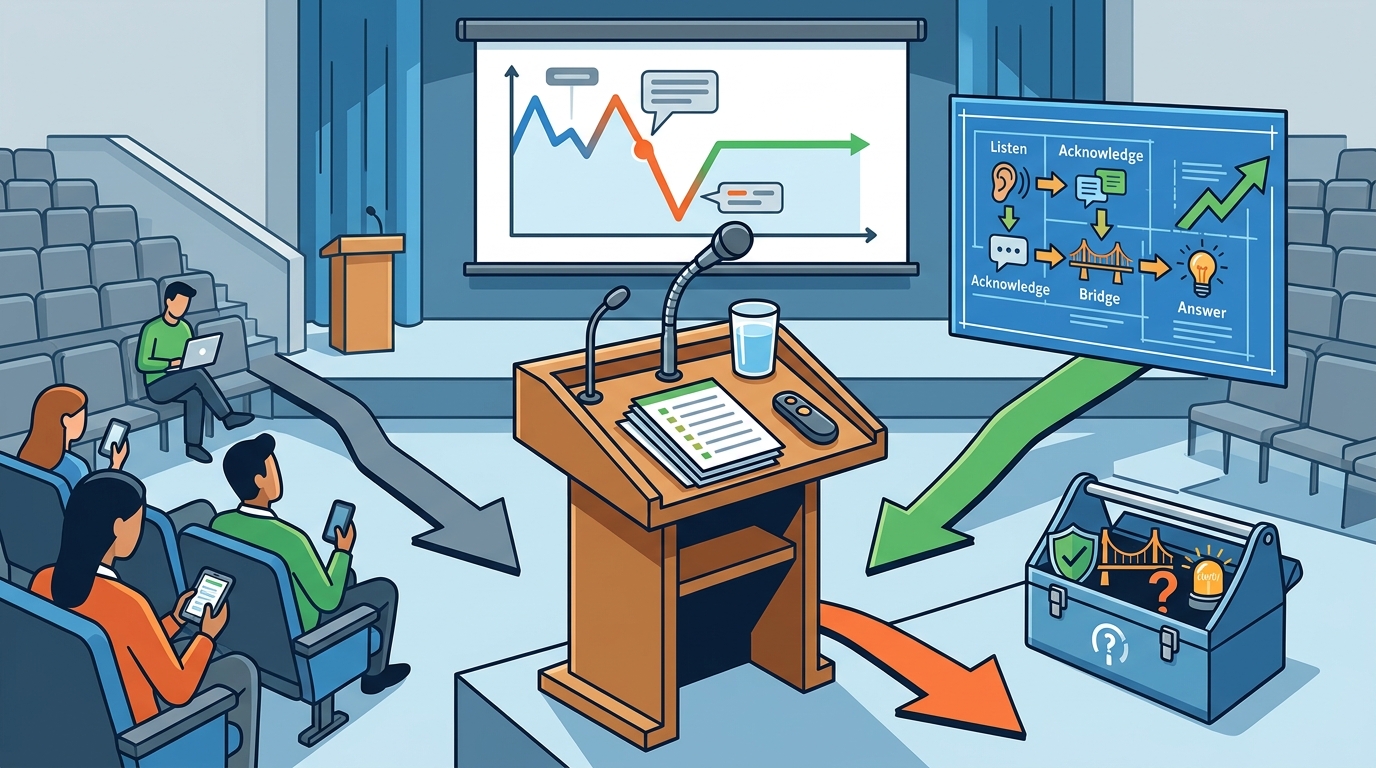
The Tangent
A questioner may go off-topic or provide a long preamble. This can derail your time management. The failure is losing control of the room. You must gently steer the conversation back to the core topic without dismissing the speaker.
Recovery Strategies for Every Scenario
Recovery is not about having the perfect answer. It is about managing the interaction with grace. Each failure mode requires a specific tactical response. These strategies are derived from decades of coaching experience at Effective Presentations. They are designed to preserve your authority and maintain audience trust.
Strategy 1: The Strategic Pause
When faced with a difficult question, do not answer immediately. Take a breath. Count to three. This pause serves two purposes. It gives you time to think. It signals to the audience that you are considering their input seriously. Silence is powerful. It projects confidence. Rushing to fill the silence projects insecurity.
Strategy 2: The Bridge Technique
If you do not know the answer, admit it honestly. Then, bridge to what you do know. For example, say, "I do not have that specific data point right now, but I can tell you about the broader trend." This approach maintains your credibility. It shows intellectual honesty. It also keeps the conversation moving forward. Effective Presentations emphasizes that honesty builds more trust than a fabricated answer.
Strategy 3: The Reframe
For hostile questions, reframe the intent. Assume positive intent. Respond to the underlying concern, not the tone. For example, if someone asks, "Why did you choose such a risky strategy?" you might respond, "That is a great question about risk management. Let me explain the safeguards we put in place." This de-escalates tension. It shifts the focus to your expertise. It demonstrates emotional intelligence.
Strategy 4: The Parking Lot
If a question is too complex or off-topic, acknowledge it and defer it. Say, "That is a nuanced topic. I want to give it the attention it deserves. Let me follow up with you after the session." This respects the questioner. It protects your time. It ensures the main presentation stays on track. This is a professional boundary that seasoned speakers use regularly.
Comparison of Recovery Approaches
Choosing the right recovery strategy depends on the context. The table below summarizes the best approaches for different failure modes. It highlights the risks of incorrect responses and the benefits of strategic recovery.
| Failure Mode | Incorrect Response | Recommended Recovery Strategy | Outcome |
|---|---|---|---|
| Knowledge Gap | Bluffing or Guessing | Honest Admission + Bridge | Preserved Credibility |
| Hostile Question | Defensive Argument | Reframe with Positive Intent | De-escalated Tension |
| Tangent | Ignoring the Speaker | Acknowledge and Defer | Controlled Time Management |
| Complex Data | Over-explaining | Promise Follow-up | Enhanced Professionalism |
Key Takeaways
- Preparation is Key: Anticipate difficult questions before the presentation. Prepare your bridges and reframes in advance.
- Silence is Power: Use pauses to think. Do not rush to fill the silence with filler words.
- Honesty Builds Trust: Admitting what you do not know is more credible than bluffing.
- Reframe Hostility: Assume positive intent in challenging questions to de-escalate tension.
- Control the Room: Use the "parking lot" technique to manage off-topic discussions professionally.
- Practice Under Pressure: Use workshops to simulate high-stakes Q&A scenarios.
- Feedback is Vital: Record your Q&A sessions to identify areas for improvement.
Frequently Asked Questions
What is the best way to handle a question you do not know the answer to?
The best approach is to admit it honestly and offer to follow up. This preserves your credibility and shows professionalism. Avoid guessing or bluffing, as audiences can detect uncertainty.
How do I recover from a hostile question during a presentation?
Reframe the question by assuming positive intent. Respond to the underlying concern rather than the tone. This de-escalates tension and keeps the focus on your expertise.
What is the "parking lot" technique in Q&A?
The parking lot technique involves acknowledging a complex or off-topic question and deferring it to a later time. This protects your time management and ensures the main presentation stays on track.
Why is the strategic pause important in Q&A?
The strategic pause gives you time to think and signals to the audience that you are considering their input seriously. It projects confidence and prevents rushed, inaccurate responses.
Can I practice Q&A recovery strategies in a safe environment?
Yes. Effective Presentations offers workshops and coaching programs where you can practice these strategies in a low-stakes environment. This builds the confidence needed for high-pressure situations.
What are the most common Q&A failures?
The most common failures include bluffing, getting defensive, losing control of the room, and over-explaining. Recognizing these patterns is the first step to improvement.
How does Effective Presentations help with Q&A skills?
Effective Presentations provides targeted training through workshops and coaching. Their programs focus on building confidence, clarity, and competence in live communication scenarios.
Next Steps for Mastery
Mastering Q&A recovery is not a one-time event. It is a continuous process of practice and refinement. If you are ready to transform your communication skills, consider exploring the resources available at Effective Presentations. Their blog offers additional insights into public speaking excellence. For personalized guidance, you can learn more about their team and their approach to training. To see real-world results, review their case studies and client list. Take the first step toward confident communication today.