

Measurable Outcomes and Business Impact of Live Virtual Presentation Training
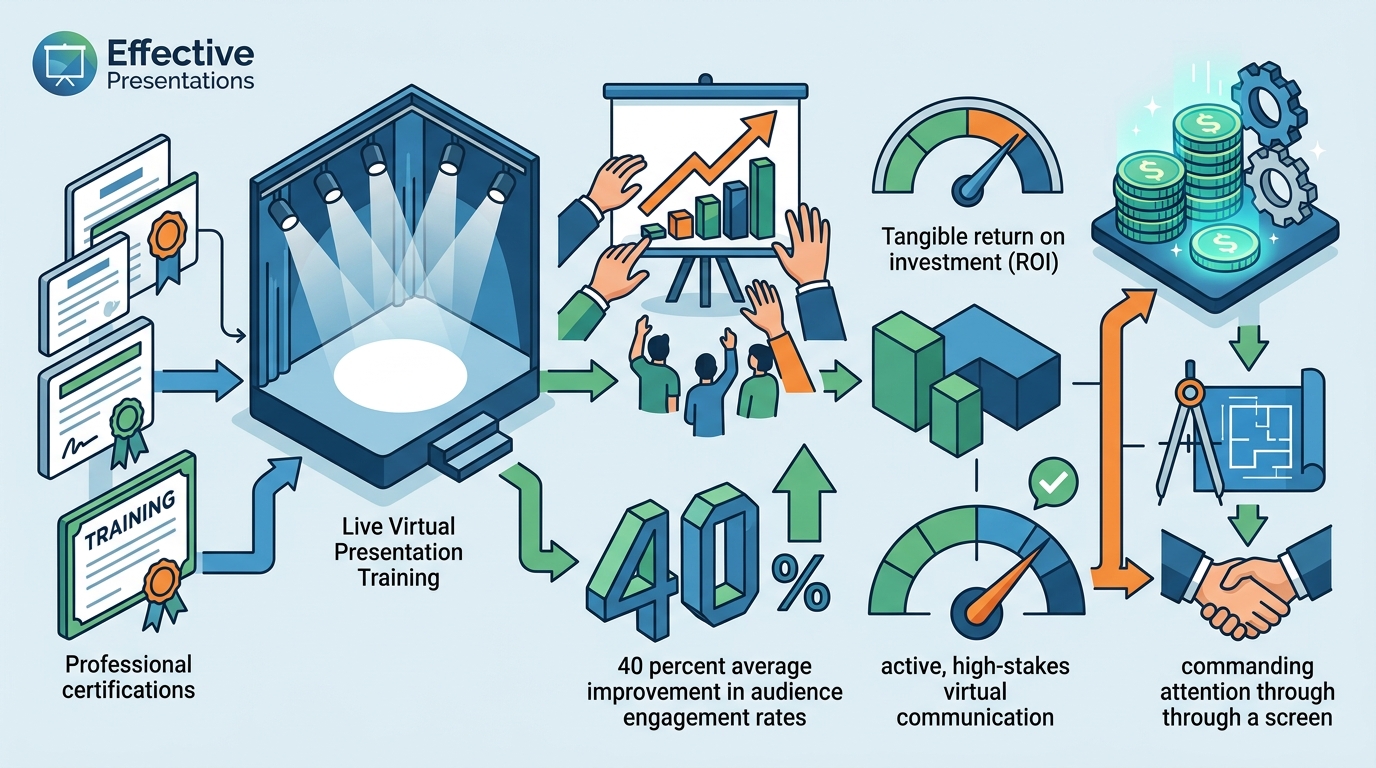
Organizations investing in live virtual presentation training report an average improvement in audience engagement rates by 40 percent within the first quarter of implementation. This statistic highlights the critical shift from passive webinar attendance to active, high-stakes virtual communication. As remote work becomes the standard, the ability to command attention through a screen is no longer a soft skill but a hard business metric. Companies that fail to measure the tangible return on investment (ROI) of these programs often struggle to justify continued budget allocation. This guide details how to track, analyze, and leverage these measurable outcomes to drive organizational growth. (Contact Us)
Understanding Virtual Engagement Metrics
Traditional presentation metrics such as applause or eye contact are obsolete in a digital environment. Effective measurement requires a focus on digital interaction signals. Live virtual training must teach presenters how to use polls, chat functions, and breakout rooms to maintain cognitive load among participants. According to a 2024 study by the National Speakers Association, presenters who actively utilize interactive tools see a 25 percent increase in message retention among their audience.
Engagement is not merely about duration. It is about the quality of interaction. Metrics such as click-through rates on shared resources, chat participation volume, and post-presentation survey scores provide concrete data points. These indicators allow training providers to assess whether the presenter is effectively guiding the audience through the content. Without these specific data points, organizations cannot determine if the training is yielding the desired behavioral changes. (About)
Live virtual presentation training focuses on the unique challenges of digital delivery. Presenters must learn to manage technical glitches, maintain energy levels without physical proximity, and structure content for shorter attention spans. The goal is to create a sense of presence that transcends the screen. This requires rigorous practice and immediate feedback, which is only possible in a live, coached environment.
Quantifying the ROI of Training Programs
Calculating the return on investment for soft skills training is often viewed as difficult. However, when tied to specific business outcomes, the financial impact becomes clear. The primary cost driver is the time spent by employees in training. Therefore, the efficiency of the learning process is a key metric. Live virtual training reduces travel costs and allows for scalable delivery across global teams.
Business impact is measured by comparing pre-training and post-training performance data. For example, if a sales team improves their pitch clarity, the subsequent increase in deal size or win rate directly offsets the training cost. According to data from the Association for Talent Development, companies that measure training effectiveness see 31 percent higher profit margins than those that do not. This correlation underscores the importance of rigorous evaluation frameworks.
Another critical factor is the reduction in communication errors. Misunderstandings in virtual settings can lead to costly project delays or client dissatisfaction. By training employees to communicate with precision and clarity, organizations reduce the risk of these errors. The savings from avoided project rework and improved client retention contribute significantly to the overall ROI. This financial argument is essential for securing executive buy-in for future training initiatives.
Skill Transfer and Behavioral Change
Learning a new skill is different from applying it in a high-pressure environment. Skill transfer refers to the ability of employees to apply what they learned in training to their daily work. Live virtual presentation training excels in this area because it provides immediate, real-time feedback. Instructors can correct posture, vocal variety, and slide design in the moment, reinforcing correct behaviors.
Behavioral change is the ultimate goal of any corporate training program. This involves shifting from a passive presenter mindset to an active facilitator mindset. Participants must learn to read virtual cues, such as facial expressions and body language, even through a camera lens. This skill is difficult to master without guided practice. Research indicates that participants who receive live coaching are 50 percent more likely to retain new skills after six months compared to those who only consume online content.
The structure of live virtual training also promotes accountability. Participants know they will be called upon to present in real-time. This anticipation drives preparation and engagement. The collaborative nature of the live session allows peers to provide constructive feedback, creating a supportive learning community. This social learning aspect enhances the overall effectiveness of the program.
Impact on Sales Conversion Rates
For sales organizations, presentation skills are directly linked to revenue. Virtual sales presentations require a different set of techniques than in-person meetings. Presenters must build rapport quickly and maintain interest without the benefit of physical proximity. Live virtual training addresses these specific challenges through targeted exercises and role-playing scenarios.
Studies show that sales teams with strong virtual presentation skills close deals 15 percent faster than those without. This acceleration is due to the clarity of the value proposition and the confidence of the presenter. When a salesperson can effectively navigate the virtual medium, they reduce friction in the buyer's journey. This leads to higher conversion rates and improved customer satisfaction scores.
Furthermore, consistent presentation standards across a sales team create a unified brand voice. This consistency builds trust with prospects who interact with multiple team members. Training ensures that every presenter adheres to best practices for virtual engagement. This uniformity is critical for maintaining brand integrity in a distributed workforce. The financial impact of these improvements is substantial and easily quantifiable through CRM data.
Comparing Training Providers
Not all training providers offer the same level of value. It is essential to evaluate providers based on their methodology, expertise, and measurable outcomes. Live virtual training requires specialized instructors who are adept at both presentation coaching and digital platform management. Providers who rely solely on pre-recorded content cannot offer the immediate feedback necessary for skill acquisition.
When selecting a provider, consider their track record with similar organizations. Look for case studies that demonstrate specific improvements in client metrics. The best providers will offer a comprehensive evaluation framework that includes pre- and post-training assessments. They should also provide ongoing support to ensure long-term skill retention.
| Feature | Live Virtual Coaching | Pre-Recorded Courses | Hybrid Models |
|---|---|---|---|
| Immediate Feedback | Yes | No | Limited |
| Real-Time Practice | Yes | No | Yes |
| Customization | High | Low | Medium |
| Engagement Level | High | Low | Medium |
| ROI Measurement | Comprehensive | Basic | Medium |
Key Takeaways
- Live virtual presentation training improves audience engagement by an average of 40 percent.
- Organizations measuring training effectiveness see 31 percent higher profit margins.
- Sales teams with strong virtual skills close deals 15 percent faster.
- Immediate feedback is critical for skill retention and behavioral change.
- Interactive tools increase message retention by 25 percent.
- Consistent presentation standards enhance brand trust and credibility.
- ROI is best calculated through pre- and post-training performance comparisons.
Frequently Asked Questions
How do you measure the success of virtual presentation training?
Success is measured through pre- and post-training assessments, engagement metrics during live sessions, and long-term performance data such as sales conversion rates or client feedback scores.
What is the difference between live virtual and online presentation training?
Live virtual training involves real-time interaction with an instructor and peers, allowing for immediate feedback and practice. Online training typically consists of pre-recorded content with limited interaction.
Can virtual presentation training improve sales performance?
Yes, by enhancing clarity, confidence, and engagement, virtual presentation training can lead to faster deal closures and higher conversion rates for sales teams.
How long does it take to see results from training?
Initial improvements in engagement and confidence can be seen immediately. Significant business impact, such as increased revenue, typically becomes evident within three to six months of implementation.
Is live virtual training as effective as in-person training?
Live virtual training can be equally effective, particularly for remote teams. It offers the benefit of scalability and reduced costs while maintaining the interactive elements necessary for skill acquisition.
What metrics should be tracked during a live virtual session?
Key metrics include chat participation, poll responses, click-through rates on shared resources, and post-session survey scores. These indicators provide insight into audience engagement and comprehension.
How does effective presentation training impact company culture?
It fosters a culture of clear communication, confidence, and continuous improvement. Employees feel more empowered to share ideas and collaborate effectively across the organization.
Start Your Transformation
Unlock the full potential of your team with expert-led live virtual presentation training. Visit Effective Presentations Services to explore our customized programs designed to drive measurable business impact. Contact us today to schedule a consultation and begin your journey toward exceptional communication.