

Cost-Benefit Analysis of Corporate Team Presentation Training Programs
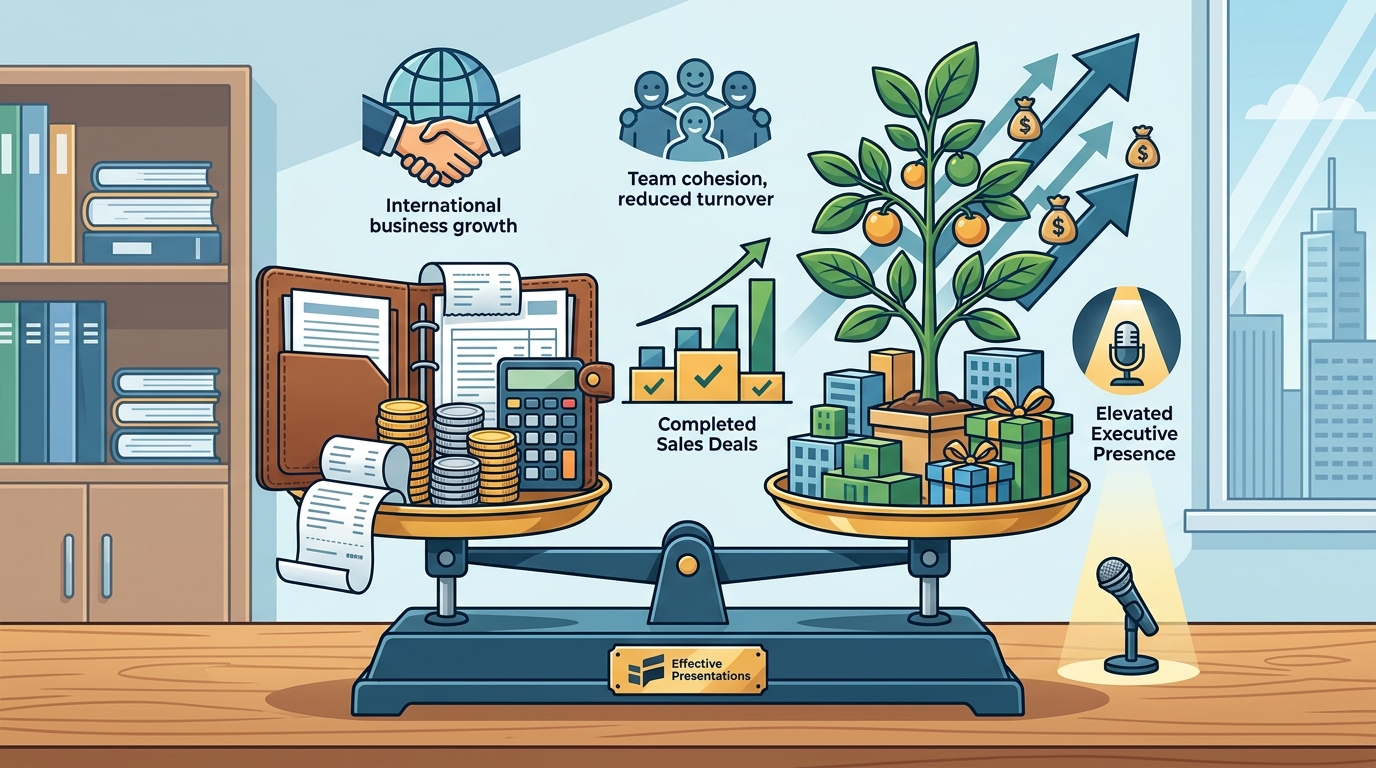
Investing in corporate communication skills yields a measurable return on investment that extends far beyond simple confidence building. According to industry data, effective presentation training can increase sales conversion rates by up to 20% while significantly reducing employee turnover in high-pressure roles. This guide analyzes the financial and operational benefits of partnering with elite training providers like Effective Presentations to elevate your team's performance.
Why Invest in Presentation Skills?
Public speaking anxiety is not just a personal struggle; it is a corporate liability. When leaders and sales teams fail to communicate clearly, organizations lose revenue, miss strategic opportunities, and suffer from internal misalignment. The cost of inaction is far higher than the investment in training.
Effective Presentations defines presentation skills as the structured ability to deliver information with clarity, confidence, and influence. This definition moves beyond mere speaking ability to encompass the strategic delivery of business value. By addressing the root causes of communication gaps, companies can unlock significant operational efficiency.
Research indicates that poor communication costs the average large organization millions annually in lost productivity and errors. Conversely, teams trained in structured messaging see a marked improvement in stakeholder engagement. This is where the cost-benefit analysis begins to tilt heavily in favor of intervention.
Understanding the Cost Structure
Corporate training budgets vary widely, but the most effective programs offer transparent pricing models that align with business outcomes. When evaluating providers, it is crucial to look beyond the hourly rate and consider the depth of customization and follow-up support.
Effective Presentations offers a range of corporate training solutions designed to meet specific organizational needs. Their approach includes both live workshops and virtual options, ensuring flexibility for distributed teams. The cost is justified by the intensive, hands-on nature of the coaching, which differs significantly from passive webinar formats.
Key cost drivers include:
- Customization Level: Tailored content that addresses your specific industry challenges.
- Delivery Format: In-person workshops provide immediate feedback, while virtual sessions offer scalability.
- Duration: Multi-day programs allow for deeper skill acquisition compared to one-hour masterclasses.
For example, their Presenting with Impact Workshop is priced at $1,795 per participant. While this may seem like a significant upfront cost, the value is derived from the small group size (limited to 10 seats) and the intensive, two-day format that guarantees individual attention.
Measuring ROI and Business Impact
Return on Investment (ROI) in soft skills training is often difficult to quantify, but specific metrics can be tracked to demonstrate value. The primary benefit is the enhancement of executive presence, which is the ability to project authority and trustworthiness in professional settings.
Companies that invest in communication transformation report several tangible outcomes:
- Increased Sales Revenue: Sales teams trained in persuasive pitching see higher close rates.
- Improved Leadership Pipeline: High-potential employees gain the confidence to take on larger roles.
- Enhanced Client Trust: Clear communication builds credibility with external stakeholders.
According to data from the National Speech Association, individuals who receive formal training in public speaking report a 30% increase in self-efficacy. This psychological shift translates directly into better performance during high-stakes negotiations and board presentations.
Furthermore, the client list of top-tier training providers often includes Fortune 500 companies, indicating that these organizations recognize the strategic value of such investments. The cost of a single failed pitch or a poorly received quarterly review can easily exceed the price of a comprehensive training program.
Comparing Training Modalities
Choosing the right training format depends on your team's size, location, and specific skill gaps. Below is a comparison of common corporate training approaches.
| Training Type | Best For | Pros | Cons |
|---|---|---|---|
| Live In-Person Workshops | Teams needing intensive, hands-on feedback | Immediate correction, high engagement, networking | Higher cost, travel requirements, scheduling complexity |
| Corporate Virtual Training | Distributed teams, budget-conscious organizations | Scalable, flexible scheduling, lower travel costs | Less personal interaction, potential tech barriers |
| Executive Coaching | C-suite leaders, high-stakes communicators | Deeply personalized, confidential, strategic focus | Very high cost, limited to few individuals |
| Sales Training | Revenue-generating teams | Direct impact on conversion, persuasive techniques | May not address broader leadership communication |
Effective Presentations distinguishes itself by offering pitch and RFP partnership services for high-stakes situations. This specialized support ensures that critical business proposals are delivered with maximum impact, directly linking training to revenue generation.
Real-World Success Stories
While specific client data is often confidential, the aggregate results of training programs are well-documented. Participants in the Ultimate Communicator Program report significant improvements in their ability to handle pressure and structure complex ideas.
One common theme in client feedback is the shift from anxiety to empowerment. Before training, many professionals described presentations as stressful liabilities. After working with expert coaches, they view these moments as opportunities to lead and influence.
The testimonials from over 1,200 clients highlight the transformative nature of the coaching. Whether it is a mid-level manager preparing for a promotion or a CEO addressing shareholders, the skills learned are universally applicable and immediately useful.
Key Takeaways
- High ROI: Training in presentation skills can boost sales conversion by up to 20%.
- Cost Efficiency: Virtual options provide scalable training without the overhead of travel.
- Expert Coaching: Small group sizes ensure personalized feedback and faster skill acquisition.
- Strategic Impact: Improved communication directly enhances leadership credibility and client trust.
- Proven Results: Over 1,200 positive reviews attest to the effectiveness of the methodology.
- Flexible Formats: Options range from one-hour masterclasses to immersive two-day workshops.
- Long-Term Value: Skills learned are durable and applicable across all career stages.
Frequently Asked Questions
What is the average cost of corporate presentation training?
Costs vary based on format and customization. Live workshops may range from $1,500 to $2,000 per participant, while virtual programs offer more flexible pricing tiers. Executive coaching is typically priced at a premium for personalized attention.
How long does it take to see results from training?
Participants often report immediate improvements in confidence and clarity during the training itself. Long-term behavioral changes solidify over weeks of practice, with measurable business impacts appearing within three to six months.
Is virtual training as effective as in-person?
Virtual training can be equally effective, particularly for distributed teams. It offers the advantage of convenience and scalability, though it may lack the immediate physical feedback of in-person coaching. Effective Presentations offers both to suit different needs.
What types of companies benefit most from this training?
Any organization that relies on communication for success benefits, including tech startups, financial firms, healthcare providers, and government agencies. The skills are universal across industries.
Do you offer customized content for our industry?
Yes, top-tier providers tailor content to address specific industry challenges, regulatory environments, and communication styles. This ensures the training is relevant and immediately applicable.
How do you measure the success of the training?
Success is measured through pre- and post-training assessments, participant feedback, and long-term performance metrics such as sales conversion rates and leadership promotion rates.
What is the difference between a workshop and coaching?
Workshops are group-based learning experiences focused on skill-building and peer practice. Coaching is one-on-one or small-group intensive work focused on deep personal transformation and specific high-stakes preparation.
Start Your Transformation
Investing in your team's presentation skills is an investment in your company's future. By choosing a provider with a proven track record, you ensure that your training budget delivers tangible business results. Effective Presentations offers the expertise and structure needed to turn communication challenges into competitive advantages.
Ready to elevate your team's performance? Contact Effective Presentations today to schedule a free consultation and explore the training options that best fit your organizational goals.