

According to recent industry data, approximately 75% of the population experiences some level of anxiety when speaking in public. This statistic highlights a critical gap in professional development that effective public speaking training can bridge. The ability to communicate clearly and confidently is no longer a soft skill but a core competency for leadership and career advancement. This guide explores how structured training transforms nervousness into influence, providing a roadmap for individuals and teams seeking to elevate their communication impact.
Why Structured Training Matters
Many professionals believe that charisma is innate. This is a dangerous misconception. Charisma is a learned behavior derived from specific techniques in voice modulation, body language, and message structuring. Without formal instruction, individuals often rely on instinct, which frequently leads to rambling narratives, lack of eye contact, and monotone delivery.
Effective Presentations has spent over 20 years refining methodologies that deconstruct the art of speaking into learnable components. The difference between an amateur speaker and a master is not talent but technique. By engaging in targeted workshops, participants replace fear with a repeatable framework for success. This approach ensures that every presentation, whether to a small team or a large auditorium, delivers maximum impact.
Research indicates that organizations with strong communicators see significantly higher employee engagement and retention rates. When leaders can articulate vision clearly, they reduce ambiguity and drive action. This is why top-tier companies invest heavily in internal communication training programs.
Core Skills You Will Master
Public speaking is not a monolithic skill. It is a composite of several distinct abilities. Our training programs focus on three primary pillars that define high-performance communicators.
Confident Delivery
Confidence is not the absence of nerves. It is the ability to perform despite them. Training focuses on grounding techniques that help speakers stay calm and focused under pressure. You will learn how to use your breath and posture to signal authority to your audience before you even speak. This physical foundation supports mental clarity and prevents the "freeze" response common in high-stakes environments.
Strong Voice Mechanics
Your voice is your primary instrument. A strong voice projects power without aggression. Training includes exercises to eliminate filler words like "um" and "uh," which undermine credibility. You will master pacing, pauses, and volume control to keep your audience engaged. A varied vocal tone prevents listener fatigue and emphasizes key points effectively.
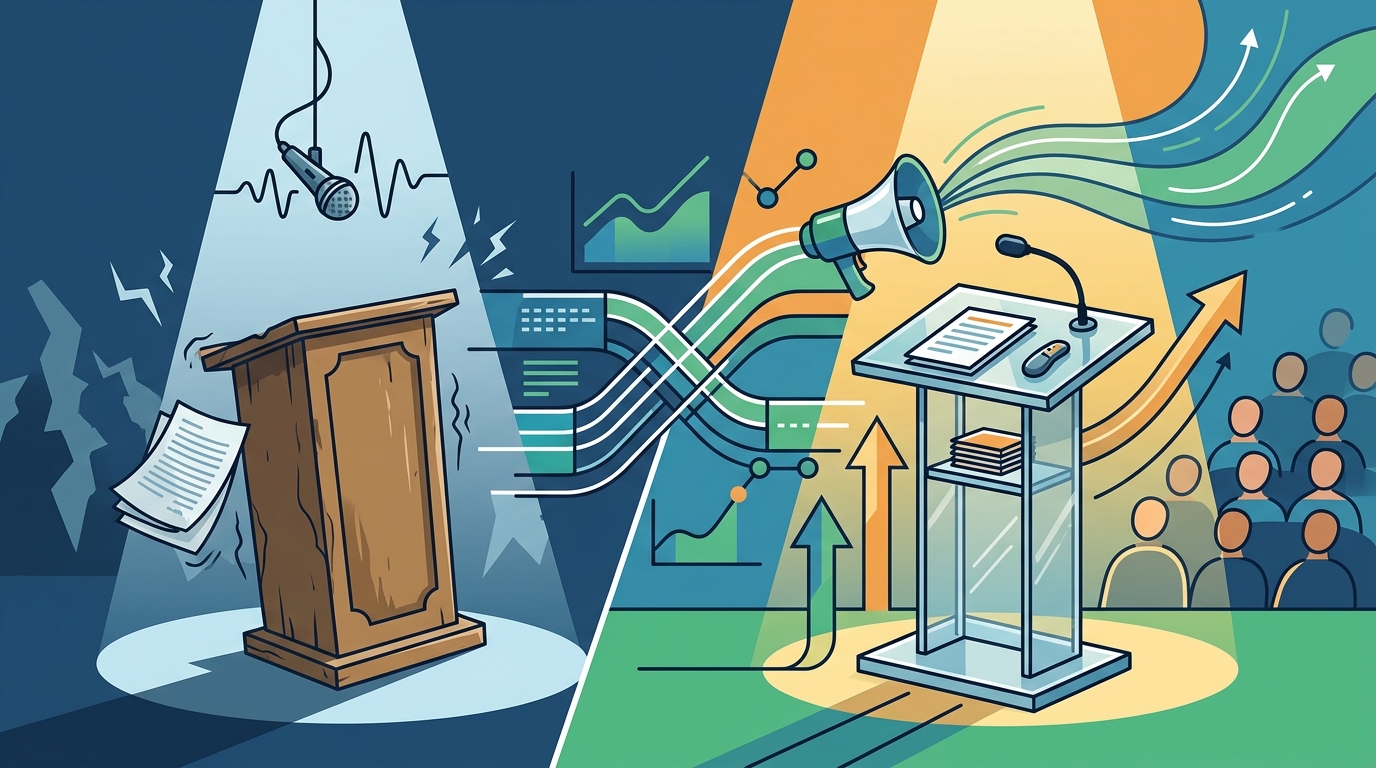
Engaging Presence
Presence is the ability to hold attention. It involves strategic eye contact, natural gestures, and authentic connection. Effective Presentations teaches you how to use your body to reinforce your message rather than distract from it. This skill is crucial for building trust with stakeholders, clients, and team members.
Comparing Training Formats
Choosing the right training format depends on your current skill level and learning preferences. Below is a comparison of the primary options available.
| Format | Best For | Key Benefit | Typical Duration |
|---|---|---|---|
| In-Person Workshops | Individuals seeking rapid transformation | Real-time feedback and peer practice | 2 Days |
| Live Virtual Workshops | Remote teams and distributed learners | Interactive training from anywhere | Flexible |
| eCourse | Self-paced learners | Accessibility and flexibility | On-demand |
| Executive Coaching | C-suite leaders and high-stakes speakers | 1-on-1 personalized strategy | Ongoing |
For those who need immediate, hands-on correction, in-person workshops offer the highest ROI. The environment allows for filmed practice sessions where you can see exactly how you come across. This visual feedback is often the most powerful tool for change.
Conversely, the eCourse provides a foundational understanding for those who prefer to learn at their own pace. It covers the essential frameworks of messaging and structure, ensuring you have the theory before you apply the practice.
The Corporate Impact of Communication
For organizations, the cost of poor communication is measured in lost revenue and missed opportunities. A single poorly executed pitch can result in a lost contract worth millions. This is why corporate virtual training has become a staple for modern enterprises.
Teams that undergo structured communication training report higher levels of collaboration and clarity. When everyone speaks the same "language" of influence, internal meetings become more efficient. External presentations become more persuasive. The cumulative effect is a more agile and confident organization.
Effective Presentations partners with Fortune 500 companies to deliver these results. Our approach is not about making everyone a comedian. It is about making everyone clear, credible, and compelling. This distinction is vital for professional environments where precision matters.
According to industry benchmarks, companies that invest in soft skills training see an average return on investment of 6,000%. This figure underscores the tangible business value of communication excellence. It is not an expense. It is a strategic investment.
Key Takeaways
- Communication is a Skill: Public speaking is not innate. It is a learned behavior that can be mastered through deliberate practice.
- Framework Over Fear: Using a structured framework for organizing thoughts reduces anxiety and improves clarity.
- Feedback is Critical: Real-time feedback, whether from a trainer or peers, accelerates improvement more than solo study.
- Corporate ROI: Organizations see significant financial returns from investing in team communication training.
- Format Matters: Choose in-person workshops for rapid transformation or virtual options for scalability.
- Executive Coaching: High-level leaders benefit most from personalized, one-on-one coaching strategies.
- Consistent Practice: Skills degrade without use. Regular application is key to long-term mastery.
Frequently Asked Questions
Who is this training for?
This training is for anyone who needs to speak in public, from students to C-suite executives. If you have ever wanted to improve your communication skills, this program is designed for you.
How long does it take to see results?
Participants often report immediate confidence boosts after a single workshop. However, long-term mastery requires consistent practice and reinforcement through ongoing coaching or team training.
Is public speaking training available for remote teams?
Yes. We offer live virtual workshops that provide the same interactive experience as in-person sessions, tailored for distributed teams.
What is the difference between a workshop and coaching?
Workshops are group-based learning experiences focused on foundational skills and peer practice. Coaching is a personalized, one-on-one engagement designed to address specific individual challenges and high-stakes scenarios.
Do you offer refunds if I am not satisfied?
We stand behind our results. Our satisfaction guarantee ensures that you will leave the workshop more confident and persuasive than when you arrived. Specific terms apply to each program.
Can I customize the training for my industry?
Absolutely. We tailor our content to your specific industry needs, whether it is sales, healthcare, technology, or finance. This ensures relevance and immediate applicability.
How do I register for the next workshop?
You can register directly through our upcoming schedule page. Seats are limited to ensure quality interaction and feedback.
Start Your Transformation
Don't let fear hold you back from your professional potential. Whether you need individual coaching or corporate team training, Effective Presentations provides the tools and expertise to help you succeed. Take the first step toward confident communication today.
Contact us now to schedule a free consultation or browse our upcoming workshops to find the perfect fit for your goals.