

Common Messaging and Structure Mistakes That Undermine Presentation Persuasiveness
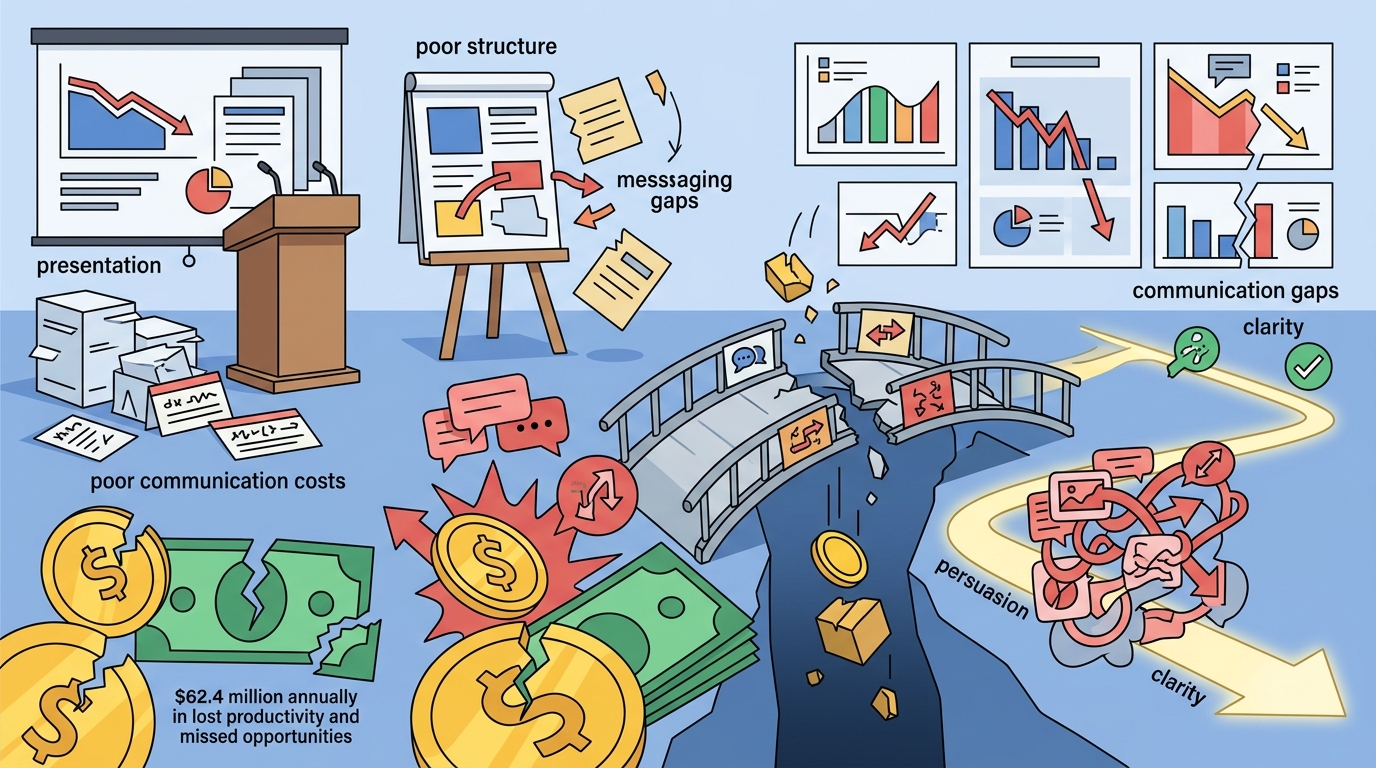
Research indicates that poor communication costs the average large organization approximately $62.4 million annually in lost productivity and missed opportunities. This staggering figure highlights a critical reality: the gap between having valuable ideas and effectively conveying them is often where business success fails. Effective Presentations has spent over two decades analyzing why even the most brilliant professionals struggle to persuade their audiences. The issue is rarely a lack of knowledge. It is almost always a failure in messaging architecture and structural delivery.
The Clarity Crisis: Losing Your Core Message
The most devastating error presenters make is attempting to communicate everything at once. When you try to cover every detail, you dilute your primary argument. Clarity is the foundation of influence. Without a singular, focused message, your audience cannot retain your key points or act on your recommendations.
Many professionals fall into the trap of information dumping. They assume that more data equals more persuasion. This is fundamentally incorrect. Data without context is noise. Your audience needs a clear narrative thread that connects your evidence to your conclusion. If they have to work to understand your point, they will disengage.
To fix this, you must define your core message before you build your deck. Ask yourself what the one thing you want your audience to remember is. If you cannot state it in one sentence, your message is too complex. Messaging and Structure training focuses on distilling complex ideas into compelling, easy-to-digest narratives that drive action.
Structural Failures in Narrative Flow
A strong message requires a strong container. Poor structure causes cognitive load, forcing your audience to struggle to follow your logic. Structure is the skeleton of your persuasion. Without it, your presentation collapses under the weight of its own complexity.
Common structural errors include jumping between topics without transition, starting with background details instead of the hook, and ending without a clear call to action. These errors break the flow of information. When the flow breaks, attention drops. Attention is the currency of persuasion. If you lose it, you lose the deal.
Effective presentations use proven frameworks like the Problem-Agitate-Solve model or the Hero's Journey. These frameworks provide a predictable rhythm that audiences find comforting and engaging. They guide the listener from curiosity to conviction. Presentation Skills Training helps you master these frameworks so you can apply them to any business scenario.
The Delivery Disconnect: Voice and Presence
Even the best message fails if the delivery is weak. Your voice and body language communicate as much as your words. Delivery is the vehicle for your credibility. If the vehicle is broken, the message never arrives.
Filler words, monotone delivery, and lack of eye contact are common killers of persuasiveness. These habits signal nervousness and lack of preparation. When you sound unsure, your audience doubts your expertise. Confidence is contagious. If you believe in your message, your audience will too.
Training your voice involves practicing pacing, pitch, and pause. These elements create emphasis and keep the audience engaged. Public Speaking Training provides the tools to eliminate filler words and project authority. You learn to use silence as a powerful tool for emphasis.
Audience Engagement and Psychological Triggers
Persuasion is not a monologue. It is a dialogue with your audience's psychology. Ignoring their needs and concerns is a major structural mistake. Engagement is the bridge between information and action. Without it, your presentation is just a lecture.
Successful speakers anticipate objections and address them proactively. They use stories and examples that resonate with the audience's experiences. This builds trust and rapport. When your audience feels understood, they are more open to your ideas.
You must also consider the medium. Corporate Virtual Training highlights the unique challenges of digital presentations. On camera, you need more energy and clearer visuals to maintain attention. The principles of persuasion remain the same, but the delivery must adapt to the screen.
Overcoming the Fear of Public Speaking
For many, the biggest barrier to persuasive communication is fear. Anxiety distorts your message and undermines your confidence. Confidence is a skill that can be learned. It is not a personality trait reserved for the born orators.
Fear often stems from a lack of preparation or a fear of judgment. Both are manageable. Preparation builds competence. Competence builds confidence. When you know your material inside and out, you can focus on connecting with your audience rather than worrying about your notes.
Our Ultimate Communicator Program is designed to help you overcome these barriers through guided practice and real-time feedback. You will learn to channel your nervous energy into passion and power. This transformation is possible for anyone willing to put in the work.
Key Takeaways
- Clarity is King: Distill your message to one core idea to maximize impact and retention.
- Structure Matters: Use proven frameworks to guide your audience from curiosity to conviction.
- Delivery Drives Credibility: Eliminate filler words and use vocal variety to maintain authority.
- Engage the Audience: Anticipate objections and use relatable stories to build trust.
- Adapt to the Medium: Adjust your energy and visuals for virtual vs. in-person settings.
- Confidence is Trainable: Overcome fear through preparation and guided practice.
- Invest in Training: Professional coaching yields measurable improvements in communication skills.
Frequently Asked Questions
What is the most common mistake in presentation structure?
The most common mistake is lacking a clear core message. Presenters often try to cover too much ground, which dilutes their impact and confuses the audience.
How can I improve my vocal delivery?
You can improve your vocal delivery by practicing pacing, pitch, and pause. Recording yourself and reviewing the footage helps identify filler words and monotone patterns.
Is public speaking training effective for virtual presentations?
Yes, the core principles of persuasion apply to both. However, virtual presentations require higher energy and clearer visuals to maintain audience engagement.
How long does it take to see results from training?
Many participants report immediate improvements in confidence and clarity after just one workshop. Long-term transformation comes from consistent practice and ongoing coaching.
What is the difference between coaching and training?
Training provides the tools and frameworks for group learning. Coaching offers personalized feedback and tailored strategies to address individual challenges.
Can I overcome my fear of public speaking?
Absolutely. Fear is a natural response that can be managed through preparation, practice, and cognitive reframing techniques taught in our programs.
What types of organizations benefit from your services?
We work with Fortune 500 companies, startups, and individual professionals across all industries who need to communicate with clarity and influence.
Start Your Transformation
Don't let poor messaging hold you back. Take control of your narrative and persuade with confidence. Contact us today to schedule a free consultation and discover how our training can elevate your communication skills.