

Criteria for Selecting the Right Presentation Skills Training Program for Your Professional Needs
According to recent industry data, professionals spend approximately 20% of their workweek preparing for and delivering presentations. Despite this significant time investment, many individuals struggle with anxiety, unclear messaging, and poor audience engagement. The gap between preparation and performance is often bridged by structured training, yet selecting the right program can be overwhelming. This guide outlines the essential criteria for evaluating presentation skills training to ensure you invest in a solution that delivers measurable professional growth.
Understanding Your Specific Communication Gaps
Before evaluating external programs, you must conduct a rigorous self-assessment. Effective communication is not a monolith. It is a composite of distinct skills including vocal projection, body language, structural clarity, and audience analysis. Public Speaking is the act of delivering information to an audience with the intent to inform, persuade, or entertain. If you lack clarity in your intent, no training program will succeed.
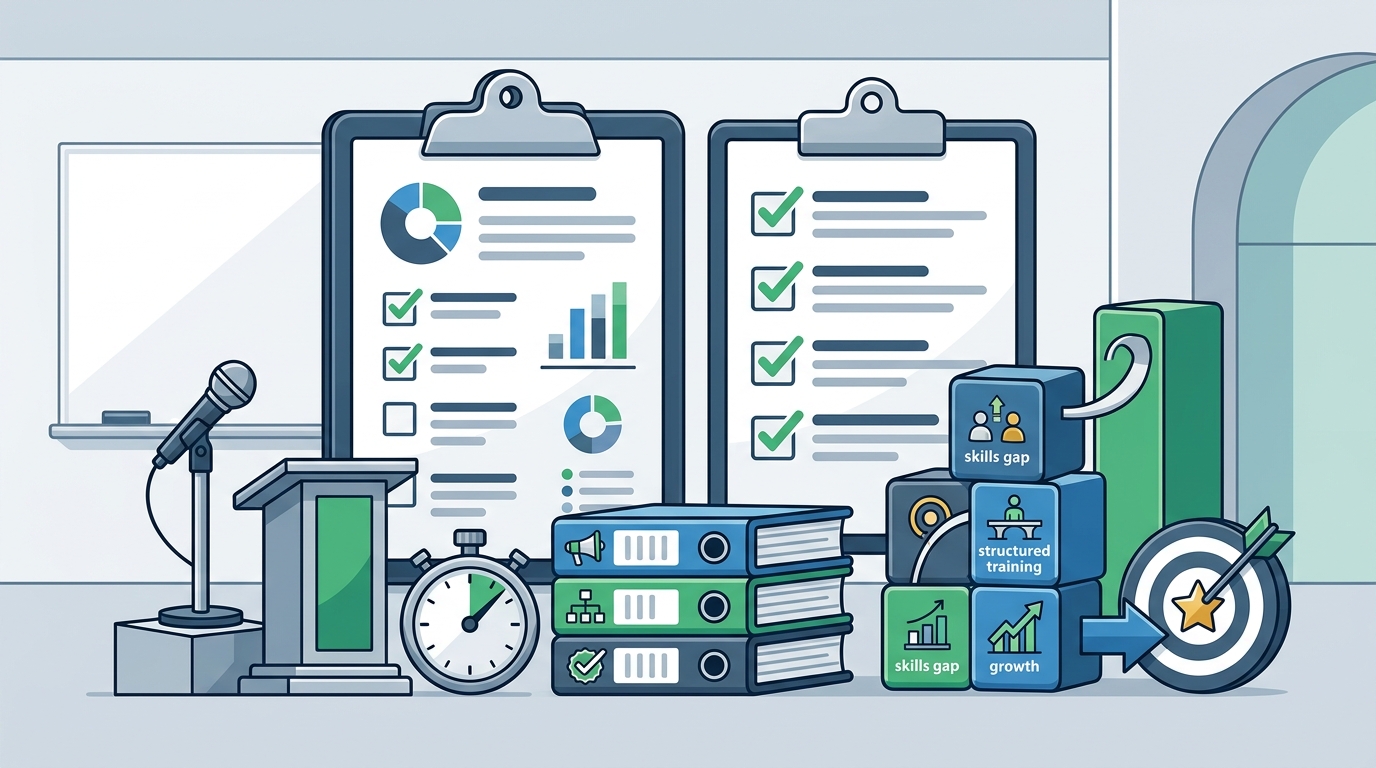
Identify your primary pain points. Do you freeze when put on the spot? Do you rush through slides without engaging the room? Or do you struggle with the logical flow of your arguments? Effective Presentations identifies that many professionals suffer from a "skill gap" rather than a personality issue. Skills can be trained, but only if the training targets the specific deficit. For instance, if your issue is nervousness, you need a program with heavy live practice components. If your issue is structure, you need a framework-based approach.
Consider the context of your presentations. Are you pitching to investors? Leading board meetings? Or training internal teams? The stakes and required techniques vary significantly. A pitch requires persuasive storytelling, while internal training requires clarity and instructional design. Aligning your training choice with your specific professional context is the first step toward mastery.
Comparing Training Methodologies and Delivery Formats
The format of the training dictates the intensity of the learning experience. Traditional seminars often involve large groups where individual feedback is minimal. In contrast, modern training hubs offer specialized workshops with limited seating to ensure personalized attention. For example, the Orange County Presenting With Impact Workshop limits seats to ensure every participant receives direct coaching.
Live in-person workshops provide immediate, real-time feedback on body language and vocal tone. This is critical because non-verbal cues account for a significant portion of how your message is received. However, for distributed teams, Corporate Virtual Training offers interactive sessions that replicate the engagement of in-person learning without the travel burden. Virtual training is particularly effective for teams that need to standardize their messaging across different regions.
Another emerging format is the eCourse. These self-paced online learning modules are ideal for individuals who need flexibility. They allow you to master the theoretical foundations of messaging and structure at your own pace. However, they lack the accountability and immediate correction of live coaching. The best approach often combines self-paced learning for theory with live workshops for practice.
Evaluating Instructor Expertise and Credentials
The quality of your training is directly proportional to the expertise of your instructor. Look for trainers who have decades of experience in high-stakes environments. Effective Presentations boasts over 20 years of training excellence, serving clients from Fortune 500 companies to fast-growing startups. This breadth of experience ensures that the methodologies taught are battle-tested across various industries.
Verify the trainer's background. Do they have experience in media, executive coaching, or sales? A trainer who understands the nuances of Media & On-Camera Training can help you translate stage presence into on-camera confidence. Similarly, trainers with a sales background can teach you how to structure pitches that convert. The right instructor does not just teach you to speak; they teach you to influence.
Check for testimonials and case studies. Programs that provide Real communication transformation stories demonstrate a commitment to results. Look for specific metrics in these case studies. Did the client improve their pitch conversion rates? Did they receive better feedback from their board? These tangible outcomes are strong indicators of instructor effectiveness.
Assessing Curriculum Depth and Practical Application
A robust curriculum must go beyond theory. It must provide a repeatable framework for leading meetings and presentations. Messaging & Structure is the process of organizing your thoughts into a clear, compelling narrative that drives action. Without this structure, even the most charismatic speaker will fail to persuade.
Look for programs that emphasize the "Presentation Performance Lab." This advanced coaching approach focuses on high-stakes scenarios where you must perform under pressure. The curriculum should include modules on reducing filler words, controlling pacing, and using pauses effectively. These are micro-skills that, when mastered, significantly enhance your credibility.
Practical application is non-negotiable. The best workshops include filmed sessions where you can review your own delivery. This objective feedback loop is crucial for identifying blind spots. You cannot improve what you cannot see. Programs that offer Pitch & RFP Partnership services also provide dedicated training for high-stakes pitches, ensuring you are prepared for your most critical moments.
Corporate Training vs. Individual Coaching
Choosing between corporate and individual training depends on your organizational goals and personal development needs. Corporate training is designed to elevate team communication. It focuses on standardizing messaging, improving group presence, and building a shared language of influence. This is ideal for organizations undergoing change or launching new products.
Individual coaching, such as the Ultimate Communicator Program, offers a more immersive transformation. It is tailored to the specific needs of the individual, addressing deep-seated anxieties and refining unique communication styles. This is particularly valuable for C-suite executives who need to communicate with precision and authority.
For teams, the Presentation Performance Lab provides advanced coaching ready to perform when it counts. This hybrid approach ensures that individual strengths are leveraged while maintaining team cohesion. The decision should be based on whether the primary goal is individual mastery or collective alignment.
Measuring Return on Investment and Outcomes
Investing in training is an investment in your career capital. To justify the cost, you must define what success looks like. For individuals, success might be the ability to speak without anxiety or to receive a promotion due to improved visibility. For organizations, success might be increased sales conversion rates or more efficient board meetings.
Effective Presentations offers a satisfaction guarantee, standing behind the results of their training. This confidence in their methodology is a strong signal of quality. When evaluating other programs, look for similar guarantees or clear outcome metrics. Programs that focus on Leadership Training often provide frameworks for communicating like a leader, which is directly linked to career advancement.
Consider the long-term value. The skills you learn in a workshop are not temporary. They are permanent assets that you apply daily. The Masterclasses offer bite-sized, high-impact sessions that reinforce these skills over time. Continuous learning ensures that your communication remains sharp and effective as your career progresses.
Key Takeaways
- Identify Your Gap: Determine if your primary issue is structure, delivery, or anxiety before selecting a program.
- Prioritize Practice: Choose programs with live feedback, such as the Orange County Presenting With Impact Workshop, for maximum impact.
- Verify Expertise: Look for trainers with 20+ years of experience and a track record with Fortune 500 clients.
- Match the Format: Use Corporate Virtual Training for teams and individual coaching for personal transformation.
- Focus on Structure: Ensure the curriculum includes robust Messaging & Structure frameworks.
- Check Outcomes: Review case studies and testimonials for evidence of real communication transformation.
- Invest in Continuity: Supplement workshops with Masterclasses for ongoing skill refinement.
Frequently Asked Questions
How do I know if I need corporate training or individual coaching?
If your team struggles with consistent messaging or needs to align on a new strategy, corporate training is the right choice. If you are facing specific challenges like executive presence or high-stakes pitching, individual coaching offers the depth required for personal growth.
What is the difference between a workshop and a masterclass?
Workshops are intensive, multi-day sessions focused on deep skill acquisition and live practice. Masterclasses are focused one-hour sessions on specific communication skills, ideal for targeted learning and reinforcement.
Can virtual training be as effective as in-person training?
Yes, when designed correctly. Corporate Virtual Training uses interactive tools and real-time feedback to replicate the engagement of in-person learning, making it highly effective for distributed teams.
How long does it take to see results from presentation training?
Results can be immediate for specific skills like structure and pacing. However, lasting confidence and fluency typically develop over weeks of practice. Programs like the Ultimate Communicator Program are designed for long-term transformation.
What should I look for in a presentation skills trainer?
Look for extensive experience, relevant credentials, and a focus on practical application. Trainers with backgrounds in media, sales, or executive coaching bring valuable real-world insights to their instruction.
Is there a guarantee for the training programs?
Effective Presentations stands behind their results with a satisfaction guarantee. This ensures that you will be more confident and persuasive after completing the program.
How can I improve my public speaking skills quickly?
Focus on mastering your structure and practicing your delivery in low-stakes environments. Public Speaking Coaching provides 1-on-1 personalized sessions that accelerate this process.
Start Your Transformation
Don't let communication gaps hold you back. Whether you need to elevate your team's performance or master your own executive presence, the right training program is the catalyst for change. Effective Presentations offers a comprehensive suite of solutions tailored to your needs. Explore our Training Options to find the perfect fit for your professional journey. Book a Consultation today to discuss your goals and take the first step toward confident, influential communication.