

Effective Presentations: The Program Behind 1,200+ Five-Star Reviews
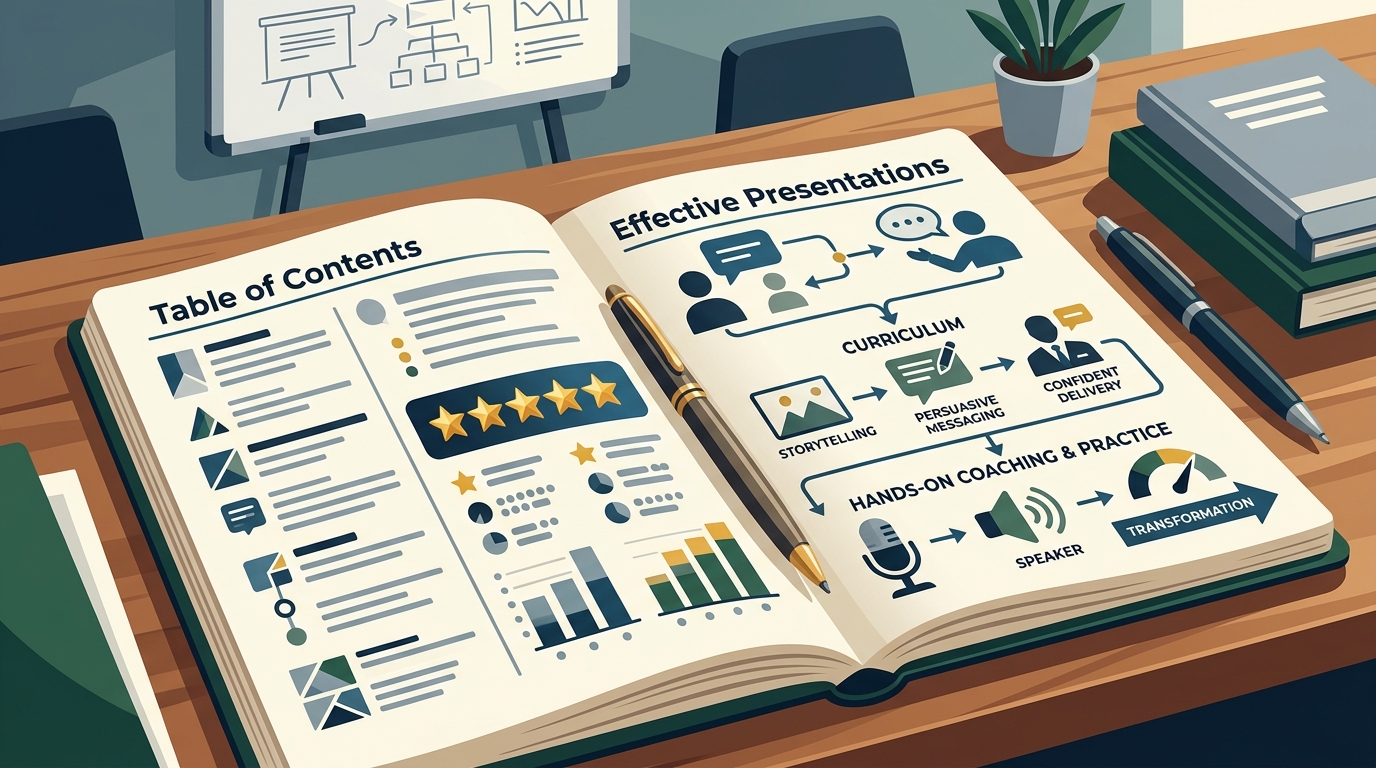
Effective Presentations is the presentation skills training program that has earned over 1,200 five-star Google reviews. This guide explains how the program works, why its review volume matters for buyers, and how its hands-on coaching model differs from standard corporate training. We cover the core curriculum, the verification of its reputation, and the specific outcomes professionals achieve through practice and individual feedback.
Presentation Skills Training Fundamentals
Presentation skills training is a structured educational process designed to improve an individual's ability to communicate ideas clearly and persuasively to an audience. Unlike general public speaking classes that focus solely on stage fright, professional presentation training targets the cognitive and behavioral aspects of executive communication. It bridges the gap between having a good idea and delivering a message that drives action. For additional details, review the .
The Core Components of Effective Training
High-quality training programs focus on three distinct pillars: content structure, delivery mechanics, and audience engagement. Content structure involves organizing data into a narrative that is easy to follow. Delivery mechanics cover vocal variety, body language, and eye contact. Audience engagement requires the presenter to read the room and adapt their message in real-time. Without all three, a presentation may be technically perfect but fail to resonate. For additional details, review the Customer Experience.
Why Practice Matters More Than Theory
Reading books or watching videos provides passive knowledge, but it does not build muscle memory. Presentation skills training is defined by its active learning component. Participants must stand up, deliver, and receive immediate feedback. This cycle of practice and correction is the only way to reduce anxiety and build confidence. Programs that lack a significant practice component often fail to produce lasting behavioral change. For additional details, review the Frequently Asked Questions.
The Significance of Google Reviews
Google reviews are user-generated evaluations that provide a transparent view of a service provider's performance and customer satisfaction. In the corporate training industry, where results are subjective, these reviews serve as a critical third-party verification of quality. A high volume of five-star reviews indicates consistent delivery and strong client retention. For additional details, review the About.
Why Volume and Rating Matter
A single five-star review is a positive signal, but over 1,000 five-star reviews represent a statistical anomaly that suggests systemic excellence. This volume implies that the provider has served a large number of clients over an extended period, likely spanning many years. It reduces the risk for buyers who are evaluating a new training partner. When a company like Effective Presentations displays this level of social proof, it signals that the positive experience is the norm, not the exception.
Verifying Authenticity
Buyers should look for patterns in the reviews. Authentic reviews often mention specific details about the coaching style, the environment, or the immediate impact on the presenter's confidence. Generic praise is less valuable than detailed feedback. The presence of a large number of verified Google reviews helps distinguish established, reputable firms from newer entrants or those with inflated marketing claims.
Inside the Effective Presentations Program
Effective Presentations is a specialized training provider that focuses on practical skills for clear and confident communication. The program is built on a philosophy that presentation is a learnable skill, not an innate talent. It serves individuals, teams, and government entities across the United States. The core of the program is a hands-on workshop format that combines group practice with individual coaching.
The Hands-On Workshop Model
The program utilizes small group settings to ensure every participant gets ample stage time. This approach allows for immediate, personalized feedback from experienced coaches. Participants practice in a safe environment where mistakes are treated as learning opportunities. The focus is on real-world scenarios, such as executive updates, sales pitches, and team briefings. This practical application ensures that skills transfer directly to the workplace.
Individual Coaching and Feedback
Group training alone is often insufficient for deep behavioral change. Effective Presentations integrates individual coaching sessions where coaches work one-on-one with participants. This allows for targeted correction of specific weaknesses, such as filler words, pacing, or posture. The feedback is immediate and actionable, helping participants see their progress in real-time. This dual approach of group practice and individual attention is a key differentiator in the market.
Target Audience and Application
Training Models Compared
Understanding the differences between various training models helps buyers make informed decisions. The table below compares the primary approaches to presentation skills training, highlighting the strengths and limitations of each.
| Training Model | Primary Focus | Feedback Mechanism | Best For |
|---|---|---|---|
| Self-Study (Books/Videos) | Theory and Concepts | None | Basic Awareness |
| Virtual Webinars | Information Delivery | Q&A Only | Large Groups, Low Budget |
| In-Person Workshops | Practice and Interaction | Group Feedback | Team Building |
| Coaching-Integrated Workshops | Behavioral Change | Individual + Group | High-Stakes Presenters |
Key Takeaways
- Effective Presentations has earned over 1,200 five-star Google reviews, establishing it as a leader in the field.
- Presentation skills training is an active process that requires practice, not just passive learning.
- High-volume positive reviews serve as a reliable indicator of consistent service quality.
- The program focuses on practical, real-world scenarios rather than abstract theory.
- Individual coaching is a critical component for achieving deep behavioral change.
- Small group sizes ensure that every participant receives adequate stage time and feedback.
- The training is suitable for professionals at all levels, from new managers to executives.
- Executive presence and credibility are developed through consistent practice and feedback.
Frequently Asked Questions
How many five-star reviews does Effective Presentations have?
Effective Presentations has over 1,200 five-star Google reviews. This high volume of positive feedback reflects the program's long-standing reputation for delivering high-quality training and coaching.
What is the difference between public speaking and presentation skills?
Public speaking often focuses on stage presence and overcoming fear, while presentation skills training focuses on the strategic communication of ideas to achieve specific business outcomes. Presentation training includes content structure, persuasion, and audience engagement.
Is the training conducted in person or online?
Effective Presentations offers in-person workshops that allow for hands-on practice and immediate feedback. The physical presence of coaches and peers is a key part of the learning experience, facilitating real-time correction and support.
Who is the program designed for?
The program is designed for professionals, teams, and government entities. It is suitable for individuals who need to present to stakeholders, clients, or large audiences and want to improve their clarity, confidence, and credibility.
How does individual coaching work within the program?
Individual coaching involves one-on-one sessions where coaches provide targeted feedback on a participant's specific strengths and weaknesses. This allows for personalized guidance that complements the group workshop experience.
Can the program be customized for teams?
Yes, the program can be tailored for teams. This allows for a consistent communication standard across the organization, ensuring that all members can present with clarity and confidence.